
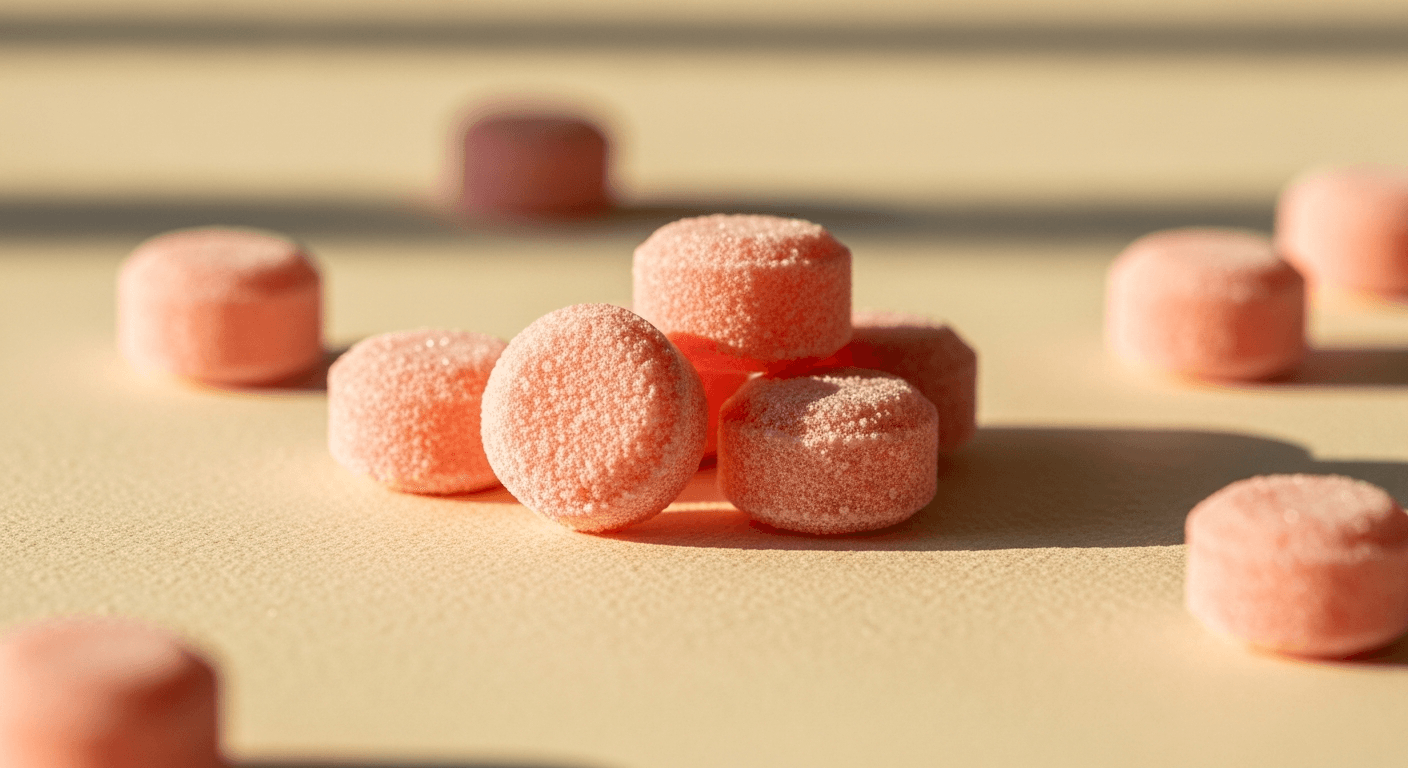
Creatine has spent decades trapped in the gym-bro narrative. Tubs of powder stacked next to protein shakes, marketing that speaks exclusively to men chasing bigger lifts. But the science has quietly been building a very different story, and the market has started to catch up. Creatine gummies are now mainstream. Sales of creatine supplements have grown across every demographic, with the global market projected to exceed $1.2 billion by 2027. The people buying it aren't all powerlifters.
Here's what the evidence actually says about what creatine does, beyond the squat rack.
What Creatine Actually Does in the Body
Creatine is a naturally occurring compound synthesized in the liver, kidneys, and pancreas from amino acids. About 95% of the body's creatine is stored in skeletal muscle. The remaining 5% is distributed across the brain, heart, and other tissues. That brain component matters more than most people have historically acknowledged.
Supplementing with creatine increases phosphocreatine stores, which act as a rapid energy buffer during high-demand activities. In muscle tissue, this is why creatine reliably improves strength and power output. But cells in the brain are also energy-hungry, and they use the same phosphocreatine system. This is where the emerging research gets interesting.
Creatine and Cognitive Performance
The link between creatine and brain function is no longer speculative. A growing body of research shows that creatine supplementation can improve working memory, processing speed, and performance on tasks requiring sustained mental effort. Effects appear most pronounced in populations with lower baseline creatine stores, including vegetarians, vegans, and older adults.
The most compelling recent evidence involves sleep deprivation. When sleep-deprived individuals took creatine, they showed significantly better cognitive performance compared to placebo groups facing the same sleep deficit. Brain creatine levels drop under sleep pressure, and supplementation appears to buffer that decline. If you're running on five hours regularly, creatine may be doing more for your mental output than your morning coffee.
This intersects with what researchers are learning about how the brain recovers during sleep. How Sleep Actually Repairs Your Brain, New Research outlines the critical role non-REM sleep plays in neuronal restoration. Creatine's role in energy buffering during waking hours may be a complement to that repair process, not a replacement for it.
There's also emerging interest in creatine's potential role in longer-term brain health. Some researchers are exploring its relationship to neurodegeneration, oxidative stress, and mitochondrial function. The evidence base here is early, but it's directionally consistent with other research on brain energy metabolism. For readers already thinking about cognitive longevity, pairing creatine with other evidence-based strategies, like those covered in Heart Coherence Breathing May Protect Your Brain, reflects where the field is heading.
Creatine, Aging, and Bone Density
The case for creatine in healthy aging has moved well past muscle preservation. Recent meta-analyses suggest that creatine supplementation, when combined with resistance training, produces meaningful improvements in lean mass, functional strength, and markers of physical performance in adults over 55. These aren't marginal effects. In some studies, older adults supplementing with creatine gained two to three times more lean mass than those training without it.
Bone density is the newer frontier. Research published in the last several years has found that creatine supplementation, again paired with resistance training, can reduce bone loss and in some cases improve bone mineral density. The mechanism isn't fully understood, but it likely involves creatine's influence on muscle force production and bone-loading signals, as well as potential direct effects on bone cell metabolism.
This makes creatine directly relevant to postmenopausal women, who face accelerated bone loss and are historically underrepresented in sports nutrition research. The overlap with resistance training is worth underscoring. Strength Training: The New Rules for 2026 covers the updated recommendations for frequency and load in older populations, and pairing that guidance with creatine use is increasingly supported by the evidence.
For anyone thinking about longevity, the combination of lifting, adequate protein, and creatine supplementation is one of the better-studied interventions available. It's accessible, cheap relative to most wellness products (a one-month supply of quality creatine monohydrate typically runs $20 to $35), and backed by decades of safety data.
Women and Creatine: A Different Physiology
Women have been systematically underincluded in creatine research. Most foundational studies used male subjects. That's changing, and the emerging picture suggests women don't just experience creatine identically to men at the same doses.
Here's the key difference: women naturally have lower baseline creatine stores than men, roughly 70 to 80% of male levels on average. This means the ceiling for creatine saturation is actually more accessible with supplementation, and the relative benefit of reaching full saturation may be proportionally larger. In other words, women may have more to gain from creatine supplementation than the standard research suggested, precisely because they're starting from a lower baseline.
There's also evidence that creatine's effects on mood and mental fatigue may be particularly relevant for women. Studies have found benefits in reducing symptoms of depression and mental exhaustion in female populations, with one mechanism potentially involving creatine's role in brain energy metabolism and serotonin synthesis.
Dosing considerations for women are still being refined. The standard protocol of 3 to 5 grams per day of creatine monohydrate appears effective, but some researchers suggest women may benefit from slightly lower loading doses due to body weight differences and baseline saturation levels. The loading phase (20 grams per day for five to seven days) that many protocols recommend was designed around male physiology. A more conservative approach for women would be to skip loading entirely and go straight to a 3-gram daily maintenance dose, reaching saturation within three to four weeks rather than one.
Timing relative to the menstrual cycle is another emerging consideration. Some preliminary research suggests creatine's benefits on energy and mood may be most pronounced in the luteal phase, when progesterone is elevated and energy demands on the brain increase. This is still an early area, but it's a meaningful shift from treating women as smaller versions of men in supplementation protocols.
The Gummy Problem and Quality Control
The rise of creatine gummies has made the supplement more approachable and more marketable to demographics who found powder inconvenient or unappealing. That's broadly positive. The problem is that gummies present real formulation challenges for creatine.
Creatine monohydrate is sensitive to heat and moisture. Many gummy manufacturing processes involve both. Independent lab testing has found that some creatine gummies deliver significantly less creatine than their labels claim. A product advertising 5 grams per serving may be delivering closer to 2 or 3 grams of active creatine after degradation during manufacturing or shelf storage.
If you're choosing gummies for convenience, look for products that have been third-party tested (NSF Certified for Sport or Informed Sport are the relevant certifications) and check the actual creatine monohydrate content on the label, not just the total "creatine blend" weight. Creatine monohydrate remains the most studied form, with the strongest safety and efficacy record. Newer forms like creatine HCl or buffered creatine are marketed aggressively but don't have comparable evidence behind them.
Practical Guidance for 2026
If you're considering creatine, here's what the current evidence supports:
- Form: Creatine monohydrate is still the standard. Don't pay more for proprietary blends without strong evidence backing them.
- Dose: 3 to 5 grams daily is effective for most adults. Women may start at 3 grams. A loading phase is optional, not required.
- Timing: Post-workout appears marginally superior to pre-workout in some studies, but consistency matters far more than timing. Take it when you'll actually remember to take it.
- Who benefits most: Vegetarians and vegans (lowest dietary creatine intake), older adults, women with cognitive fatigue or mood-related concerns, and anyone dealing with chronic partial sleep deprivation.
- Safety: Decades of research support long-term use at standard doses. Concerns about kidney damage are not supported by evidence in healthy individuals.
Creatine doesn't require cycling. It doesn't need to be taken around workouts to be effective for cognitive benefits. And it doesn't need to be part of a stack with five other supplements to work.
Recovery culture is increasingly sophisticated about what actually drives results over time. As Recovery Is Fitness's New Status Symbol explores, the shift toward evidence-based recovery tools has moved the conversation far beyond ice baths and foam rolling. Creatine fits naturally into that broader picture: inexpensive, well-studied, and meaningful across multiple dimensions of health.
The muscle benefits are real, and they're not going away. But in 2026, limiting creatine to a conversation about gym performance means ignoring a substantial and growing part of the evidence. Whether you're a woman managing energy through your cycle, an older adult thinking about bone health, or someone navigating chronic sleep pressure at work, the science is telling you something worth listening to.