
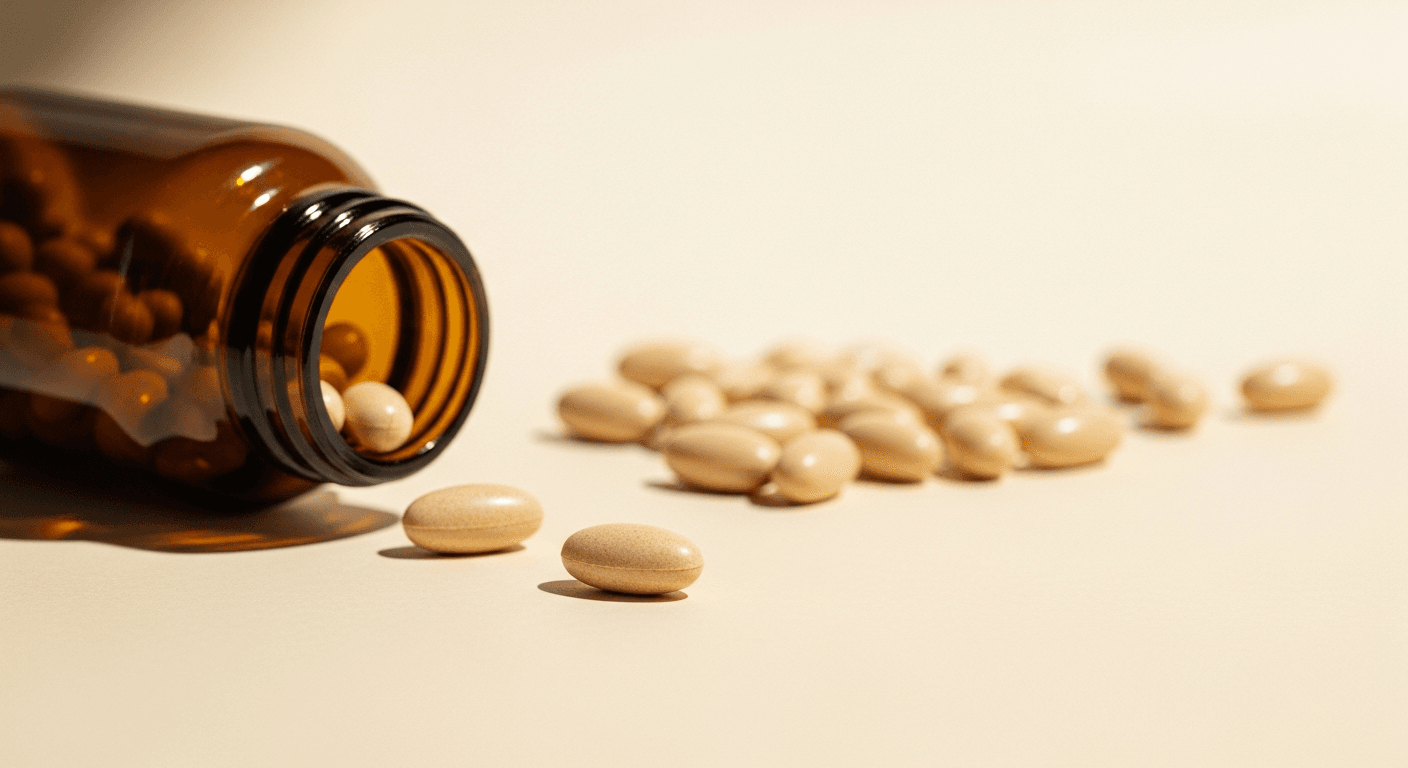
Black Market has relaunched Cuts Heat. Dozens of reformulated fat burners are hitting shelves and landing in your social feeds with new ingredient stacks, sleek packaging, and claims that sound increasingly precise. The marketing has gotten smarter. The science, largely, has not caught up.
Before you spend $50 to $70 on a month's supply of any thermogenic, here's what the current evidence actually supports, what it doesn't, and why the most important sentence in any fat burner's product copy is usually buried in the fine print.
The Two Ingredients That Actually Have Evidence
Strip away the proprietary blends and the trademarked compound names, and most fat burner formulas rest on the same foundation they've used for two decades: caffeine and green tea extract. These are the only two ingredients with consistent, replicated evidence for a modest thermogenic effect in healthy adults.
Caffeine increases energy expenditure through sympathetic nervous system activation. Multiple meta-analyses confirm it elevates resting metabolic rate by roughly 3 to 11 percent, depending on dose and individual tolerance. That effect is real. It's also dose-dependent, tolerance-dependent, and relatively short-lived in habitual users.
Green tea extract, specifically its catechin content (primarily EGCG) combined with caffeine, shows a similarly modest but replicated effect on fat oxidation. A widely cited analysis of 11 trials found the combination produced an average increase in energy expenditure of about 4.7 percent compared to placebo. That translates to roughly 80 to 100 extra calories burned per day at best. Meaningful for a caloric math standpoint. Not transformative on its own.
Both ingredients are well-characterized in terms of safety at typical doses. Both have been studied in isolation and in combination. Neither requires a proprietary delivery system or a trademarked name to work. When a product charges a premium because it contains a "superior form" of either, you're paying for branding.
What 2026 Formulas Are Adding and What the Evidence Shows
The reformulation wave hitting the market in 2026 leans heavily on a cluster of newer or repackaged ingredients. Two that appear most frequently deserve scrutiny.
Grains of Paradise (Aframomum melegueta) is a West African spice that has generated genuine research interest. Early studies suggest it may activate brown adipose tissue and increase energy expenditure. One small human trial found a statistically significant increase in energy expenditure at a dose of 40 mg daily. That's a single trial, in a small cohort, over a short duration. The data is not replicated at scale. Long-term safety data at the doses used in commercial products, often 20 to 80 mg per serving, is not established. Promising is not the same as proven.
TeaCrine (theacrine) is positioned as a caffeine alternative that delivers stimulant-like effects without tolerance build-up. The available human research is sparse. Most studies have been short-term, industry-funded, or conducted in combination with caffeine, making it hard to isolate the compound's independent contribution. Its safety profile at the doses found in stacked formulas, particularly when combined with multiple other stimulants, hasn't been characterized in long-term independent research.
Other additions appearing in 2026 reformulations include synephrine (bitter orange extract), various B-vitamin complexes, and amino acid derivatives like L-carnitine. Synephrine has a modest evidence base but also a flagged cardiovascular risk profile when combined with caffeine at higher doses. L-carnitine has been studied extensively and has not demonstrated meaningful fat loss effects in people who are not clinically deficient.
The pattern is consistent. Ingredients cycle through the supplement industry from "emerging" to "clinically studied" to "proven" in marketing language well ahead of what the peer-reviewed literature actually supports. The 2026 product cycle is no different from previous ones.
The Fine Print Most Brands Don't Want You to Read
No over-the-counter fat burner produces meaningful fat loss independent of a caloric deficit. This is not a controversial claim in nutrition science. It is, however, a fact that the vast majority of product relaunches bury in fine print, disclaim in small text under transformation photos, or frame as "best results when combined with diet and exercise."
That last phrase is doing enormous work. It's acknowledging, without saying plainly, that the product is not responsible for the result. The caloric deficit is. The training program is. The consistency is. The supplement is a vehicle for caffeine you could get from coffee, at a fraction of the cost.
A $60 per month thermogenic stack might contribute 80 to 100 extra calories burned per day in the best-case scenario. Over a month, that's roughly 2,400 to 3,000 extra calories, or less than one pound of fat. A moderate dietary adjustment, a consistent resistance training routine, or better sleep hygiene produces more measurable change without the financial outlay or the stimulant load.
Speaking of sleep: if you're relying on a high-stimulant fat burner taken in the afternoon or evening, you may be actively undermining one of the most powerful metabolic regulators you have. Poor sleep consistency is directly linked to dysregulated hunger hormones, increased appetite, and reduced fat oxidation. Sleep consistency is one of the most overlooked levers for improving body composition and recovery, and no supplement addresses that.
The Social Media Problem Making This Worse
The 2026 fat burner market isn't just a supplement industry problem. It's a content ecosystem problem. The same platforms amplifying product launches are also amplifying physique ideals that most people cannot and should not try to achieve, particularly through supplementation shortcuts.
The pressure to pursue rapid fat loss often isn't grounded in health. It's grounded in comparison. The distorted body ideals circulating on social platforms are already creating measurable psychological harm among young men, and the fat burner category feeds directly into that ecosystem by promising a faster path to aesthetics that are often the product of lighting, editing, and in many cases, pharmaceutical assistance that no supplement disclosure will ever mention.
That context matters when you're evaluating a product relaunch. The marketing is calibrated to a specific anxiety. The science isn't nearly as targeted.
What Actually Moves the Needle on Fat Loss
This is not a novel list. It's novel only in how consistently it gets crowded out by supplement marketing.
- Sustained caloric deficit: The non-negotiable foundation. No supplement overrides energy balance.
- Resistance training: Preserves lean mass during a deficit and supports long-term metabolic rate. This matters more than thermogenic supplements over any meaningful timeframe.
- Protein intake: High protein diets increase satiety, preserve muscle, and carry a slightly higher thermic effect of food than carbohydrates or fats. Optimizing protein is more effective than adding a fat burner on top of a low-protein diet.
- Sleep quality and consistency: Directly affects hunger regulation, cortisol levels, and body composition outcomes.
- Stress management: Chronically elevated cortisol promotes fat retention, particularly visceral fat. Chronic stress has downstream effects on both cognitive health and metabolic function that no thermogenic addresses.
- Structured training with a qualified coach: If you're newer to exercise, working with someone who understands your specific starting point matters far more than your supplement stack. Knowing how to choose a personal trainer as a fitness beginner can help you build the foundation that actually produces lasting body composition change.
How to Evaluate Any Fat Burner Before You Buy
If you're considering a product, run it through these questions before purchasing.
Are the active ingredients dosed transparently? Proprietary blends that list ingredients without individual dosages tell you nothing about whether the amounts present are clinically relevant. A product might contain 500 mg of a "blend" that includes 480 mg of caffeine and 20 mg of everything else.
Is there independent research on the key novel ingredients? Not white papers from the ingredient supplier. Peer-reviewed, independently conducted human trials. For most 2026 reformulation ingredients, this bar is not cleared.
What does the fine print say about results? If the transformation claims are contingent on diet and exercise, the supplement is not the variable producing the result.
What's your total stimulant load? Many people take fat burners on top of two or three daily coffees without calculating their aggregate caffeine intake. At high doses, caffeine increases blood pressure and disrupts sleep. If you're already caffeinated throughout the day, a thermogenic stack may be adding risk without adding meaningful benefit.
The honest answer to whether Cuts Heat or any other reformulated fat burner in 2026 is worth your money is: probably not, unless you're looking for a convenient way to consume caffeine in a format that also improves your gym sessions psychologically. That's a legitimate use case. Just don't confuse the stimulant effect with fat-burning efficacy, and don't let a polished relaunch convince you that the underlying science has changed.
It hasn't. The fundamentals still outperform the formula. They always have.