
Sports nutrition has a hierarchy problem. Protein gets the headlines. Carbohydrates get the debate. Supplements get the marketing budgets. And fiber, one of the most evidence-backed dietary components for long-term health and athletic performance, gets almost nothing.
The result is predictable. Most athletes are chronically under-eating fiber, not because they're ignoring their diet, but because nobody's telling them it matters. That's a mistake worth correcting.
The Gap Between What You Need and What You're Getting
Current guidelines recommend 25 grams of fiber per day for women and 38 grams for men. Most adults, including active ones, consume somewhere between 10 and 15 grams. That's less than half the target, consistently, across populations in the US, UK, Canada, and Australia.
For athletes, this gap is often wider than it appears. High training volumes can increase caloric demands significantly, but when those calories come primarily from processed carbohydrates, lean proteins, and engineered supplements, fiber intake doesn't scale up with food volume. You can eat a lot and still be fiber-deficient.
The consequences aren't abstract. Fiber regulates gut transit time, feeds the microbiome, blunts post-meal glucose spikes, and contributes to satiety. Each of those functions has downstream effects on how well you train, recover, and adapt.
Your Gut Microbiome Is a Recovery Organ
This is where the sports nutrition case for fiber gets genuinely compelling. Prebiotic fibers, found in foods like oats, garlic, onions, leeks, asparagus, and legumes, serve as fuel for beneficial gut bacteria. When those bacteria ferment prebiotic fiber, they produce short-chain fatty acids (SCFAs), particularly butyrate, propionate, and acetate.
SCFAs aren't just digestive byproducts. They regulate the immune system, reduce inflammatory signaling, and help maintain the integrity of the gut lining. For athletes training at high volumes, systemic inflammation is a constant background variable. It influences how quickly you recover between sessions, how effectively you adapt to training stress, and how often you get sick during heavy blocks.
Research consistently shows that higher fiber intake is associated with lower markers of systemic inflammation, including C-reactive protein. A well-fed microbiome doesn't eliminate inflammation, but it does appear to keep it better calibrated, which is exactly what athletes need during sustained training cycles.
If you've been optimizing your recovery stack and still feel like something's missing, it's worth checking your fiber intake before adding another supplement. The supplement stack you actually need in 2026 may be simpler than you think, and fiber is one of the foundational pieces most people skip.
Bone Health: The Performance Benefit Nobody Talks About
Bone density doesn't appear on most athletes' radar until something breaks. That's a costly oversight, and emerging research on fiber is making the conversation harder to ignore.
Studies in recent years have found associations between higher dietary fiber intake and improved bone mineral density, particularly in weight-bearing skeletal sites. The proposed mechanism runs through the gut: SCFAs produced during fiber fermentation appear to support calcium absorption and reduce bone resorption. A healthier microbiome also modulates the immune responses that regulate bone turnover.
This matters most for endurance athletes, female athletes, and anyone training in a caloric deficit, all populations already at elevated risk for low bone density. Stress fractures are a significant cause of training interruption. If fiber intake is one modifiable variable that nudges bone health in the right direction, it deserves serious attention alongside calcium and vitamin D in any athletic nutrition plan.
The connection between systemic health and athletic longevity runs deeper than most people expect. Much like how exercise activates cellular recycling systems that slow aging, dietary fiber appears to work through biological pathways that have far-reaching effects beyond simple digestion.
Fiber and Energy: The Sustained Output Advantage
Athletes focus heavily on glycogen, and for good reason. But the obsession with fast-acting carbohydrates often crowds out fiber-containing foods that provide a steadier energy release pattern.
High-fiber foods generally have lower glycemic indices. They slow the absorption of glucose, which means more stable blood sugar across a training day. Fewer energy crashes between sessions. Better cognitive clarity during training. Reduced likelihood of reaching for quick sugar fixes that spike energy and then drop it.
This doesn't mean you should load up on fiber before a race or a hard session. That would be a problem. But as a baseline dietary habit, consistently eating fiber-rich meals across the week supports the kind of metabolic stability that helps you train hard day after day without running on fumes by Thursday.
The relationship between gut health and sustained performance is also starting to receive more scientific attention in the context of inflammation control. Poor recovery practices can quietly undermine training adaptations, and as explored in research on popular recovery approaches that may be counterproductive, the details of how you fuel and recover matter more than most athletes realize.
Timing Fiber Around Training: The Practical Reality
Here's where strategy matters. Fiber is beneficial, but it's not timing-neutral. Eating a large dose of fiber in the two to three hours immediately before intense training is a reliable way to cause gastrointestinal distress. Bloating, cramping, slow digestion, and urgency are all possible when the gut is working hard on a high-fiber meal while you're simultaneously asking your cardiovascular system to perform.
The fix isn't to avoid fiber. It's to distribute it intelligently across the day.
- Morning and midday meals are ideal for higher-fiber foods. Oats, fruit, vegetables, legumes, and whole grains fit naturally into breakfast and lunch.
- Pre-training meals (two to three hours before a hard session) should be lower in fiber. Think white rice, bananas, or easily digestible carbohydrate sources.
- Post-training meals can reintroduce fiber without issue. A substantial dinner with vegetables, legumes, or whole grains after training is both practical and beneficial.
- Snacks throughout the day are an underused opportunity. An apple, a handful of almonds, or raw vegetables with hummus can add five to ten grams of fiber without requiring any major dietary restructuring.
The goal is roughly 25 to 38 grams spread across the day, not front-loaded or clustered around workouts. Once you start tracking for a few days, most athletes find they're eating ten to fifteen grams and have significant, easy-to-fix gaps at breakfast and lunch.
The Best Food Sources to Build From
You don't need exotic foods or expensive specialty products. The highest-fiber, most accessible options are largely inexpensive staples that work in almost any dietary pattern.
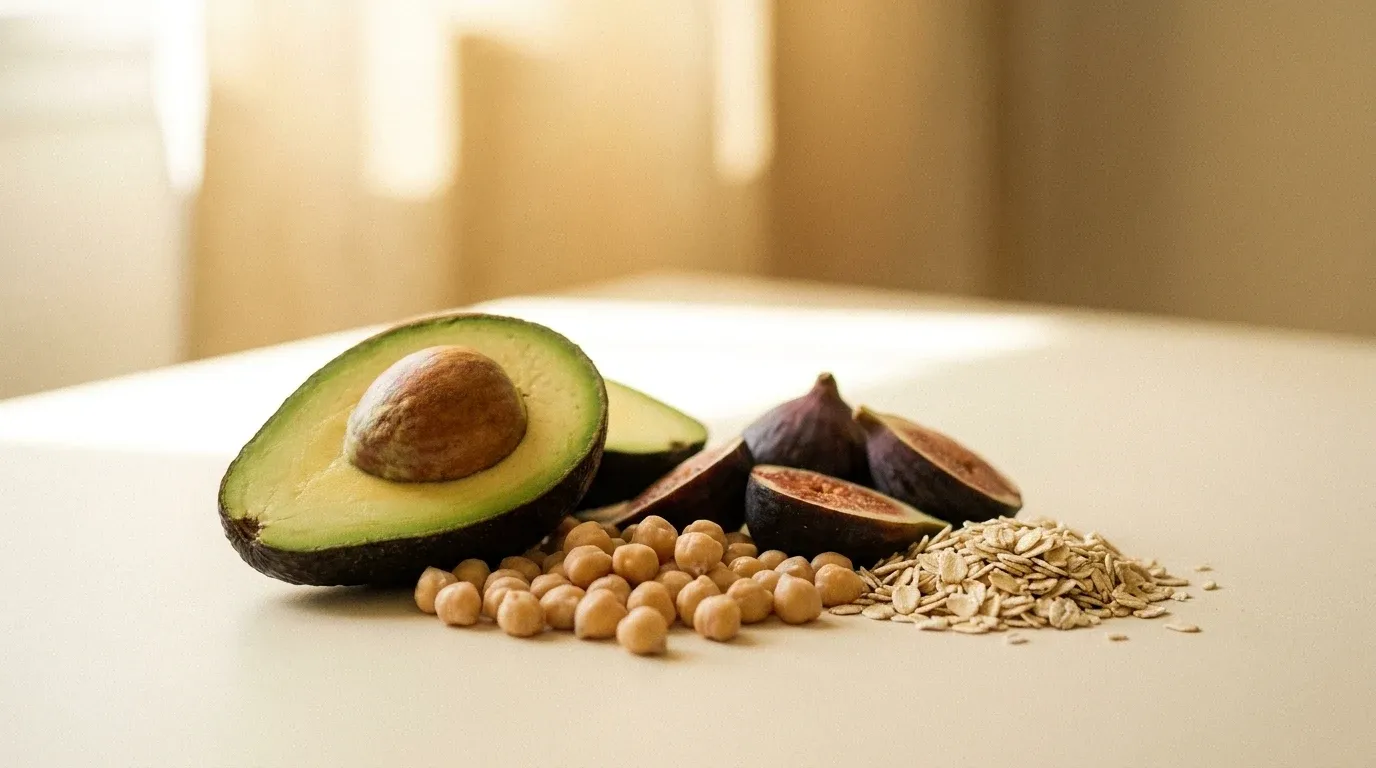
- Legumes: lentils, black beans, chickpeas, and kidney beans provide seven to nine grams of fiber per half-cup cooked. They're also high in protein, making them especially efficient for athletes.
- Whole grains: oats, quinoa, farro, and whole wheat bread. A cup of cooked oats delivers about four grams. Two slices of genuine whole grain bread add another three to four.
- Vegetables: broccoli, Brussels sprouts, carrots, and sweet potatoes are particularly fiber-dense. Aim for variety rather than relying on one or two vegetables repeatedly.
- Fruit: raspberries (eight grams per cup), pears, apples (with skin), and avocados are among the highest-fiber options. Fruit juice provides almost none.
- Nuts and seeds: chia seeds deliver ten grams per ounce. Flaxseed, almonds, and sunflower seeds are also solid contributors.
If your current diet is very low in fiber, increase intake gradually over two to three weeks. Jumping from ten grams to thirty-eight grams overnight will cause significant digestive discomfort as your gut microbiome adapts. Steady increments of three to five grams per week are more sustainable and give your system time to adjust.
Why This Keeps Getting Overlooked
Part of the problem is cultural. Sports nutrition is dominated by the supplement industry, and fiber doesn't have a compelling marketing angle. You can't patent oats. There's no premium product to sell at $60 a tub. Whole foods don't have influencer deals.
Part of it is also practical. Athletes often eat quickly, rely on convenient high-protein options, and don't build meals around vegetables and legumes the way endurance athletes building around carbohydrates might. When the priority is hitting protein targets and managing caloric intake, fiber rarely gets a line on the tracking sheet.
But the evidence is consistent. Higher fiber intake is associated with better gut function, lower systemic inflammation, improved bone health, and more stable energy. These are not marginal benefits. For an athlete already dialing in training, sleep, and recovery, fiber is one of the highest-return dietary changes most people aren't making.
Nutrition science is clearest when multiple mechanisms point in the same direction. With fiber, they do. The question isn't whether it matters. It's whether you're willing to count it.