
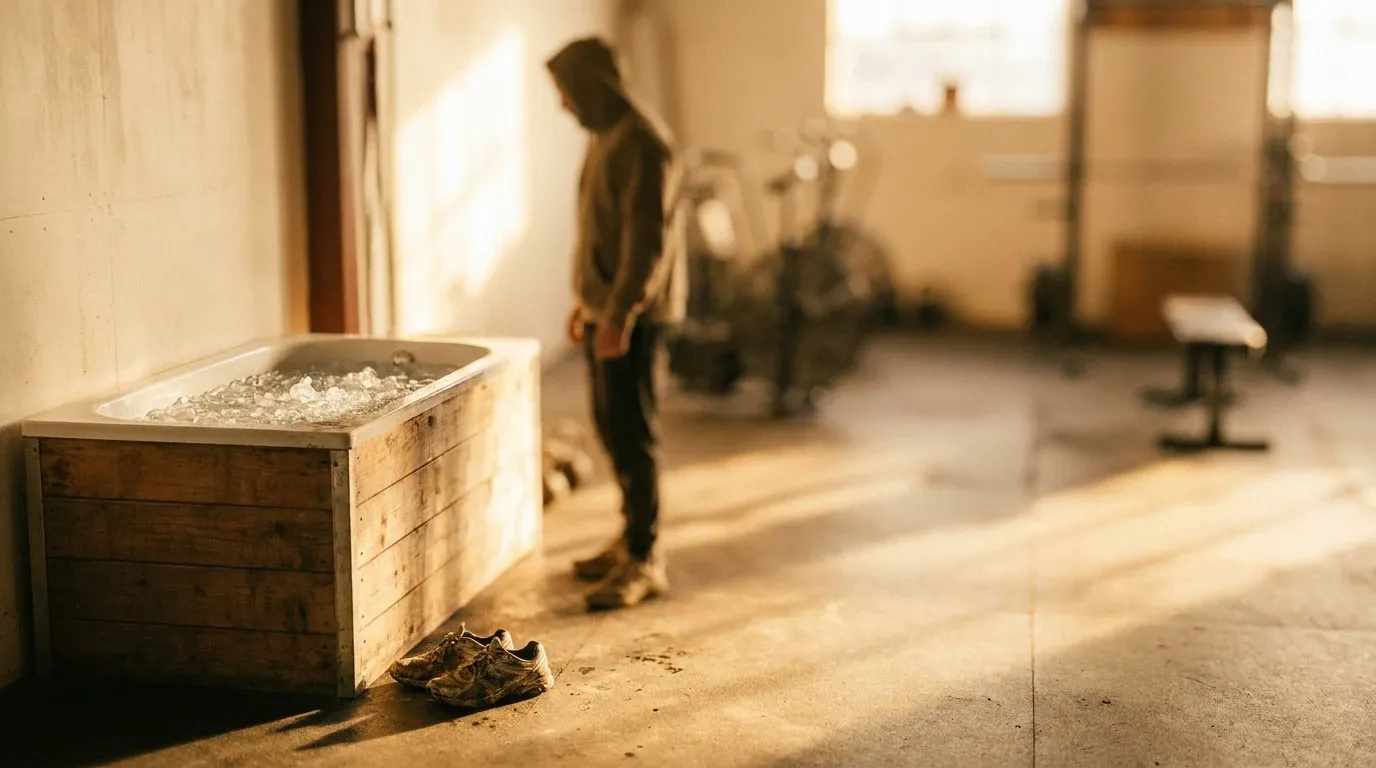
You finish a brutal leg session, muscles screaming, and you reach for the ice bath, the massage gun, and a fistful of anti-inflammatory supplements. It feels responsible. It feels like you're doing everything right. But a growing body of research suggests that some of your most expensive recovery habits may be quietly working against you.
The uncomfortable truth is that muscle growth depends on inflammation. And the recovery industry has built a billion-dollar business selling you ways to suppress it.
Why Inflammation Is Not the Enemy
When you lift weights, you create microscopic damage to muscle fibers. Your body responds with an acute inflammatory cascade: immune cells flood the area, cytokines signal repair, and satellite cells get activated to rebuild tissue thicker and stronger than before. This process is not a side effect of training. It is training. It's the mechanism through which adaptation happens.
The problem is that many popular recovery tools are designed to blunt exactly this response. Ice baths constrict blood vessels and reduce immune cell infiltration. High-dose anti-inflammatory supplements like ibuprofen or large amounts of vitamin C and E can suppress the signaling pathways tied to muscle protein synthesis. Even aggressive massage applied too early may interfere with the localized inflammation driving repair.
That's not a fringe concern. Research published in October 2026 formally flagged these modalities as potentially overrated or counterproductive for long-term hypertrophy, adding weight to earlier findings that had already raised red flags about cold water immersion in particular.
The Ice Bath Problem
Cold water immersion has become a cultural phenomenon, pushed by everyone from elite athletes to wellness influencers. The appeal is real: it reduces soreness, lowers perceived fatigue, and gives you a genuinely powerful sense of recovery. But those short-term benefits may come at a measurable long-term cost.
Studies comparing groups who used cold water immersion after resistance training against those who didn't have consistently shown blunted gains in muscle mass and strength in the cold therapy groups. The leading explanation is vascular. Cold immersion reduces blood flow to the muscle at the exact moment when nutrient delivery and immune signaling are most critical. You feel better. You grow less.
This doesn't mean cold therapy is universally useless. For athletes in heavy competitive seasons who prioritize short-term performance over long-term hypertrophy, strategic cold use may still make sense. But if your goal is to build muscle, regular post-workout ice baths are a trade-off most people haven't consciously agreed to make.
Supplements That May Work Against You
The antioxidant supplement category is where this issue gets most counterintuitive. Vitamins C and E are widely taken for general health, and their benefits in other contexts are legitimate. But in the specific window following a resistance training session, high doses of these antioxidants appear to interfere with reactive oxygen species. Those molecules sound harmful, but they're actually key signaling agents in muscle adaptation.
Similarly, non-steroidal anti-inflammatory drugs (NSAIDs) like ibuprofen, taken routinely after workouts, have been associated in multiple trials with reduced muscle protein synthesis and impaired satellite cell activity. Occasional use for genuine pain management is a different conversation. Using them habitually as a recovery tool is not supported by the evidence.
It's worth noting that not all supplements are implicated. Creatine monohydrate, for example, has a strong evidence base for enhancing recovery and performance without suppressing adaptive inflammation. Protein and carbohydrate intake post-workout remain firmly in the beneficial column. The issue is specifically with antioxidant and anti-inflammatory compounds used at high doses, at the wrong time.
For a deeper look at how individual compounds behave differently depending on form and timing, Broccoli vs. Sulforaphane Supplements: What's Actually Better? breaks down how bioavailability and context change the entire equation.
What the Evidence Actually Supports
Here's where things get boring, and intentionally so. The most effective recovery stack in the literature remains the same three things it has always been: sleep, nutrition, and time. No $300 recovery device required.
Sleep is where the bulk of growth hormone secretion occurs, where protein synthesis peaks, and where the nervous system consolidates the motor patterns trained during the session. Cutting sleep to six hours or less has been shown to reduce anabolic hormone levels and increase cortisol. There is no cold plunge, compression boot, or infrared mat that compensates for chronic under-sleeping.
The relationship between exercise quality and sleep quality also runs both ways. 10 Minutes of Daily Exercise Unlocks Deeper Sleep outlines how even modest movement creates measurable improvements in sleep architecture, which in turn amplifies recovery.
Nutrition timing and adequacy matter more than most people realize. Muscle protein synthesis requires sufficient leucine-rich protein in the hours surrounding training. Carbohydrate intake post-workout replenishes glycogen, reduces cortisol, and supports the anabolic environment. Chronic caloric restriction, regardless of training load, will cap your recovery ceiling regardless of what modalities you layer on top.
Time is the most underrated variable. Most recreational lifters train muscle groups before they've fully recovered from the previous session. Actual hypertrophic adaptation continues for 48 to 72 hours after a training stimulus. Programming that respects this timeline, rather than chasing daily soreness as a signal of productive training, produces better long-term results.
Timing Is Everything
The nuance that most recovery content ignores is timing. Inflammatory suppression is not inherently bad. It's bad when it happens in the acute post-exercise window, typically the first four to six hours, when adaptive signaling is most active. The same ice bath that blunts gains when used immediately post-workout may be largely neutral or even helpful when used the following morning.
The same logic applies to NSAIDs and antioxidants. Taking vitamin C with breakfast on a rest day is categorically different from taking high-dose vitamin C within an hour of finishing a heavy training session. Context and timing determine whether a tool is helping or hurting.
This is also relevant for older athletes, where recovery capacity naturally shifts. How to Train After 30 Without Getting Injured covers how recovery windows lengthen with age and why the strategies that worked at 22 require recalibration as you move through your 30s and beyond. And for those navigating training later in life, How a Trainer Would Coach You in Your 60s offers a practical framework for prioritizing recovery without sacrificing adaptation.
What to Actually Do With This Information
You don't need to abandon every recovery tool you own. You need to be more deliberate about when and why you use them. Here's a framework grounded in current evidence:
- Prioritize sleep above everything else. Seven to nine hours for most adults. Address sleep quality issues directly. If you suspect disrupted sleep is limiting your recovery, the options for assessment and treatment have expanded significantly. Sleep Apnea Treatment Is Getting Personal in 2026 covers how diagnosis and intervention have become far more accessible and personalized.
- Eat enough protein and carbohydrates. Aim for 0.7 to 1 gram of protein per pound of bodyweight daily, distributed across meals. Don't under-eat around your training sessions.
- Avoid anti-inflammatory interventions in the first four to six hours post-workout. If you want to use cold therapy, massage, or high-dose antioxidants, time them away from your training window rather than immediately after it.
- Reserve NSAIDs for genuine pain management. Habitual use after every training session is not supported by the evidence for either recovery or long-term joint health.
- Build in adequate rest between training the same muscle groups. Soreness is not a reliable indicator of recovery. Use 48 to 72 hours as a baseline for high-intensity resistance sessions targeting the same muscles.
- Be skeptical of expensive modalities that promise accelerated recovery. Infrared mats, PEMF devices, and similar tools exist in a much thinner evidence environment than their price tags suggest. For an honest assessment, Infrared PEMF Recovery Mats: What Science Actually Supports separates the signal from the marketing.
The Real Cost of Comfort-Chasing
The fitness industry profits when recovery feels like something you purchase. Ice baths, percussion massagers, compression systems, antioxidant stacks. These aren't inherently fraudulent products. Many have legitimate uses in specific contexts. But the framing that more recovery intervention equals more results is not what the evidence supports.
What the evidence supports is less glamorous. Sleep consistently. Eat adequately. Train intelligently. Give your body time to complete the processes your workout started. Let the inflammation do its job.
The most productive thing you can do after a hard training session is often the least satisfying: nothing aggressive. Eat a solid meal, get to bed on time, and trust that the discomfort you're feeling is the process working, not a problem to be suppressed.