
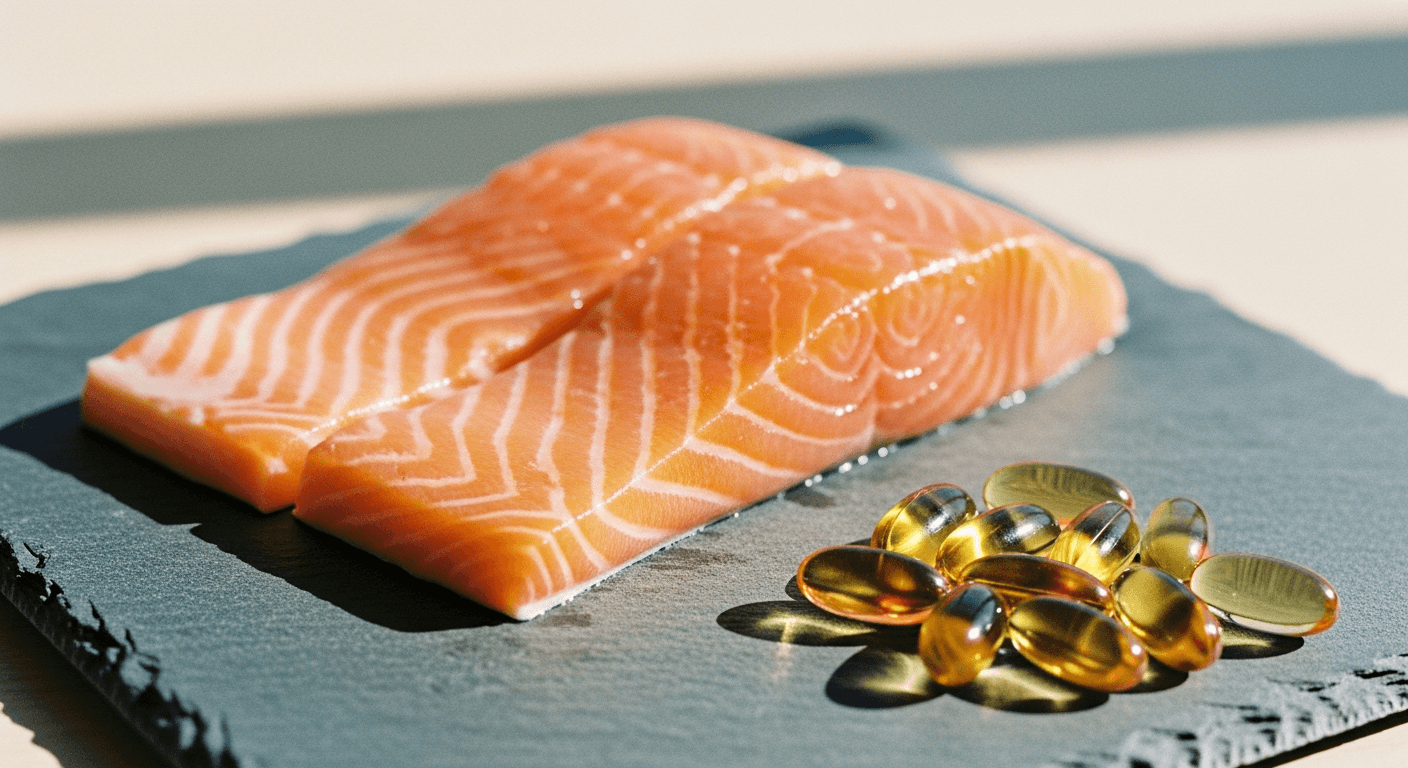
We already knew fish oil helped overweight and obese people improve insulin sensitivity. A 2026 study significantly expands that picture: EPA and DHA omega-3 fatty acids reduce insulin resistance even in people with normal body weight.
For athletes optimizing their nutrition, this is a meaningful shift in the evidence base.
Key takeaways
- Omega-3s (EPA/DHA) reduce insulin resistance independently of body weight, per new 2026 research
- Insulin resistance affects energy availability, muscle protein synthesis, and recovery
- Effective dose in studies: 2-4g of combined EPA+DHA per day
- Food sources: salmon, mackerel, sardines (1-2g EPA+DHA per 100g cooked)
What insulin resistance actually means
Insulin is the hormone that allows blood glucose to enter your cells and be used as energy. When your cells become less responsive to that signal — that's insulin resistance — your body compensates by producing more insulin. Over time, this deteriorates both glucose and fat metabolism.
What most people miss is that insulin resistance isn't exclusive to overweight people. It can develop in normal-weight individuals through poor-quality diets, chronic sleep deprivation, or persistent stress. And it directly affects athletic performance: when insulin sensitivity drops, your capacity to store and use muscle glycogen drops with it.
What the new study found
The 2026 research examined the effect of fish oil supplementation on insulin resistance markers in a cohort that included normal-weight participants — not just obese subjects as in earlier studies.
The result: a significant improvement in insulin sensitivity, measured by reduction in HOMA-IR score (the gold standard marker for insulin resistance). The likely mechanism: EPA and DHA incorporate into cell membranes, increasing their fluidity and improving the responsiveness of insulin receptors.
2.5 = possible resistance. -->
Dose and sources
Studies on omega-3s and insulin sensitivity typically use 2-4g of combined EPA+DHA per day. That's more than most people get through food alone.
To hit that through diet:
- Wild salmon: roughly 2g EPA+DHA per 100g — 2-3 servings per week covers part of the target
- Mackerel: 2.5g EPA+DHA per 100g — one of the densest sources
- Canned sardines: 1.5g EPA+DHA per 100g — cheap and practical
Getting 2-4g EPA+DHA daily from food alone means eating fatty fish every day. Supplementing with concentrated fish oil (look for IFOS-certified products with stated EPA+DHA content) is the more practical path to therapeutic doses.
What this means for your training
Better insulin sensitivity translates directly to:
- Faster muscle glycogen resynthesis after training
- Potentially faster recovery between sessions
- Better blood lipid profile (lower triglycerides)
- Reduced chronic low-grade inflammation — an underrated recovery factor
If you're not in the classic insulin resistance risk group — not overweight, not sedentary — this study shows omega-3s are still relevant for you. Insulin sensitivity isn't binary. Optimizing it, even from a decent baseline, has real effects on performance and recovery.