
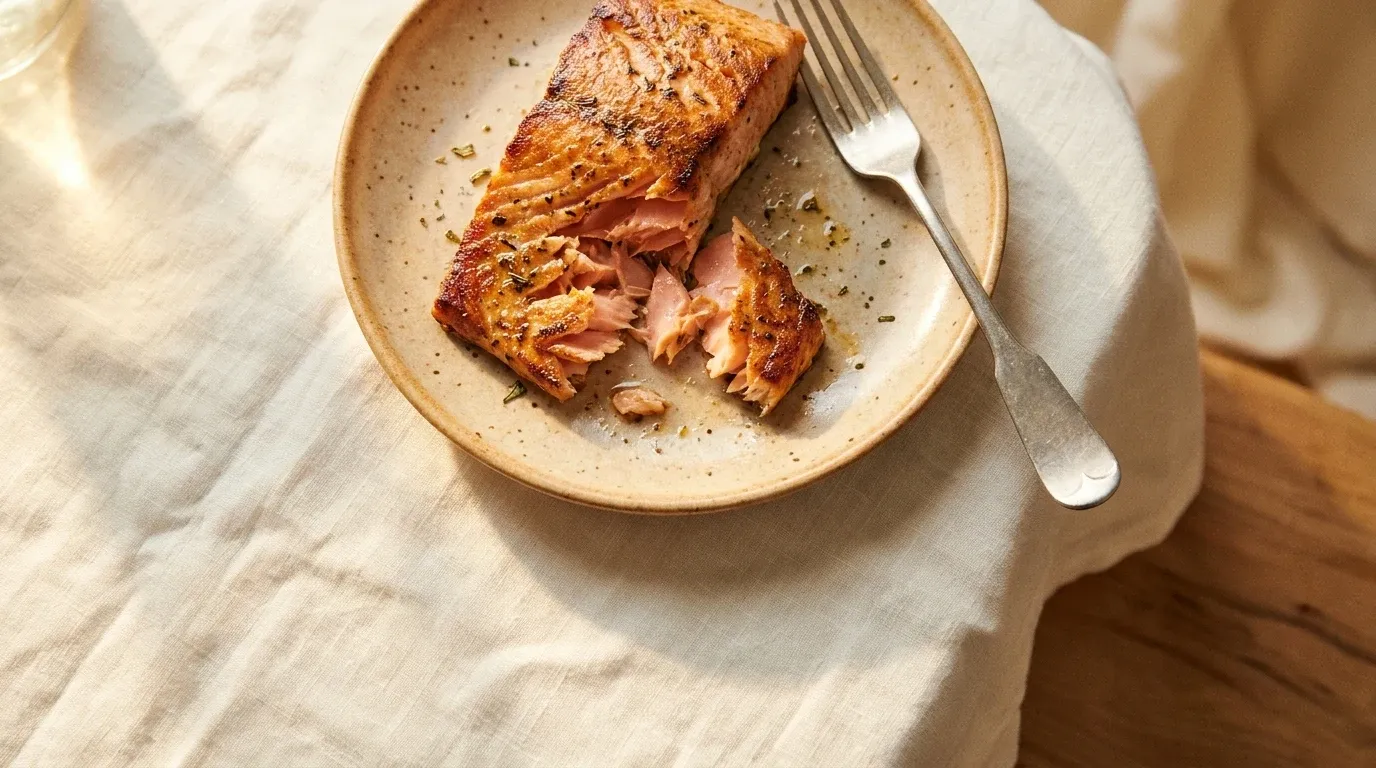
Most conversations about omega-3s and inflammation eventually land on the same question: are you taking a supplement? That framing has quietly pushed whole food sources into the background, even though fish remains one of the most studied dietary sources of EPA and DHA on the planet. A 2026 study published in the Journal of Clinical Nutrition Research is pushing back on the supplement-first narrative, and it's doing so with a finding that most people haven't considered: how you cook your fish may matter just as much as how often you eat it.
What the 2026 Research Actually Found
The study followed adults who consumed fish at least twice per week over a 16-week period. Researchers tracked circulating levels of inflammatory markers, including C-reactive protein and interleukin-6, alongside dietary patterns and, critically, cooking methods. The results showed that participants who regularly ate small pelagic fish, think sardines, mackerel, anchovies, and herring, without high-temperature frying maintained significantly lower inflammatory marker profiles than those eating the same species of fish prepared in oil at high heat.
The distinction wasn't subtle. High-heat frying was associated with measurable degradation in the EPA and DHA content of the fish, the two omega-3 fatty acids with the strongest anti-inflammatory and cardiovascular evidence behind them. What you start with nutritionally is not necessarily what ends up on your plate.
This finding matters because it reframes the question. It's not just "are you eating fish?" It's "are you eating fish in a way that preserves its nutritional value?"
Why High Heat Is the Problem
EPA (eicosapentaenoic acid) and DHA (docosahexaenoic acid) are polyunsaturated fatty acids. That structure, with multiple double bonds along the carbon chain, is exactly what makes them biologically active and anti-inflammatory. It's also what makes them chemically vulnerable to heat and oxidation.
When fish is submerged in oil and cooked at temperatures above 350°F (180°C), those double bonds begin to break down. Some of the omega-3 content oxidizes. Some converts into compounds that carry a different, potentially pro-inflammatory, biological profile. The fish may still taste good. It may still deliver protein, selenium, and vitamin D. But the specific anti-inflammatory benefit you were counting on has been partially cooked out of it.
Earlier research had hinted at this, but the 2026 study is one of the first to track it longitudinally with real dietary intake data rather than isolated lab conditions. That distinction gives the findings considerably more practical weight.
Small Pelagic Fish: Why This Category Specifically
The study's focus on small pelagic fish, species that live near the ocean surface and travel in schools, is worth unpacking. Sardines, mackerel, anchovies, and herring are naturally high in EPA and DHA relative to their size. They're also lower on the food chain, which means they accumulate far less mercury and other contaminants than larger predatory fish like tuna or swordfish.
That combination makes them an efficient anti-inflammatory food source, when they're prepared correctly. A can of sardines in water or olive oil, consumed at room temperature or warmed gently, preserves most of its omega-3 content. Grilled mackerel, baked herring, or lightly steamed salmon all represent lower-heat methods that the research suggests are significantly more effective at delivering intact EPA and DHA.
If you've been reaching for the deep-fried fish fillet and counting it as your omega-3 intake for the week, the data suggests you're likely overestimating what you're actually getting.
The Athlete Recovery Angle
For athletes and active people, this research has a direct application. Omega-3 fatty acids are central to post-exercise recovery because of their role in resolving exercise-induced inflammation. Training creates controlled inflammatory stress. EPA and DHA help the body move efficiently through that inflammatory cycle and into repair.
If preparation method is degrading the EPA and DHA in your fish, you're not getting the recovery support you think you are. This is particularly relevant for endurance athletes, who tend to eat higher volumes of food and may assume that frequency of fish consumption is doing the work, regardless of how it's cooked.
It's also worth considering how fish preparation fits into your overall nutrition strategy. If you're already optimizing around meal timing and pre-training nutrition, the quality of fat sources deserves the same attention. Meal Timing Myths: What Science Actually Says in 2026 covers how the timing of nutrient intake interacts with recovery, which complements what the 2026 fish data is showing about nutrient quality.
How This Relates to Omega-3 Supplementation
Keedia has previously covered the case for omega-3 supplements in capsule form. That piece examined the evidence base for fish oil and algae-derived DHA, dosing thresholds, and the quality variance across commercial products. If you haven't read it, The Nutrition Lab: Omega-3 and Sport. What the Science Actually Shows is the place to start for that conversation.
The 2026 whole-food research doesn't undercut the supplement argument. What it does is fill a gap that supplementation discussions often skip: the value of getting omega-3s from food sources when those sources are prepared in ways that preserve their active compounds. Supplements and whole food sources aren't competing. They're addressing different points in the same dietary strategy.
For people who eat fish regularly but don't supplement, this research is relevant because it suggests your current approach might be delivering less than you assume. For people who supplement but also eat fish, it adds nuance around whether your dietary habits are actually complementing your capsule intake.
Practical Cooking Guidance Based on the Evidence
The research points toward a few clear preparation principles:
- Avoid deep-frying fish entirely if your goal is anti-inflammatory benefit. The combination of high temperature and oil immersion creates the most damaging conditions for EPA and DHA.
- Choose lower-heat methods such as baking at or below 350°F, steaming, poaching, or eating cold-smoked or canned fish in water or olive oil.
- Prioritize small pelagic species that start with a higher omega-3 concentration, giving you more intact EPA and DHA even if modest degradation occurs during cooking.
- Eat fish at least twice per week, as the 16-week study design reinforced that consistency of intake alongside preparation method produced the most favorable inflammatory marker outcomes.
- Canned sardines and mackerel are among the most practical options in this category. They're affordable, shelf-stable, and require no additional cooking, which means no heat degradation at the point of consumption.
None of this requires a significant overhaul of how you eat. It requires paying attention to one more variable when you're making choices about protein sources.
The Broader Context: Personalization and Dietary Patterns
One finding that emerged from the 2026 study is that individual responses to fish consumption varied based on baseline inflammatory status, existing dietary patterns, and physical activity levels. That's consistent with a broader shift in nutritional research toward recognizing that population-level dietary averages don't always translate to individual outcomes.
If you're interested in how personalized approaches to diet are changing the way researchers and practitioners think about inflammation and recovery, Precision Nutrition: Is One-Size-Fits-All Eating Finally Dead? covers the current state of that science in depth.
It's also worth situating this fish research within the wider recovery conversation happening in wellness right now. Nutrition is one lever. Sleep, stress management, and training load are others. Recovery Is Becoming the Biggest Wellness Trend of 2026 maps out how those pieces are being integrated in both elite sport and general wellness contexts, which gives the dietary data more practical framing.
What You Should Take Away From This
The 2026 Journal of Clinical Nutrition Research findings don't ask you to eat more fish. They ask you to eat fish more deliberately. Choosing sardines over a deep-fried fillet, baking instead of pan-frying, reaching for canned mackerel in water rather than a fast food fish sandwich, these are small decisions with meaningful downstream effects on what your body actually receives.
EPA and DHA are biologically active only when they're intact. High heat compromises that. That's the core message of this research, and it's one that holds whether you're an athlete managing recovery load, someone dealing with chronic inflammation, or simply trying to get more nutritional value out of a dietary habit you already have.
The fish is only doing the job you think it's doing if the preparation method lets it.