
For decades, the conversation around cardiovascular health has been hijacked by single nutrients. Fat was the enemy, then sugar, then sodium, then red meat. Each cycle produced a wave of products, diets, and headlines promising protection through elimination. A landmark review published September 30, 2026, in the Journal of the American College of Cardiology (JACC) closes the book on that approach. The verdict is clear: no single nutrient determines your heart disease risk. Your overall dietary pattern does.
This isn't a minor refinement of existing guidance. It's a structural shift in how clinicians are being asked to counsel patients, and it has real implications for how you think about eating every day.
Why the Single-Nutrient Era Failed
The appeal of targeting one nutrient is obvious. It's simple, marketable, and easy to test in a controlled trial. But the human body doesn't eat nutrients in isolation. It eats food, in combinations, across years and decades. When researchers began analyzing long-term cardiovascular outcomes against actual eating patterns rather than isolated dietary variables, the picture changed dramatically.
The JACC review synthesized evidence from large-scale cohort studies and clinical trials covering diverse populations across multiple continents. Its core finding: diet quality, measured as an integrated pattern, is the primary driver of cardiovascular risk. Individual macronutrients like total fat, dietary protein, or carbohydrate intake showed weak or inconsistent associations with heart disease when analyzed independently. The pattern those nutrients appear in was what mattered.
This helps explain why decades of low-fat dietary advice produced limited cardiovascular benefit at the population level. Removing fat from processed foods and replacing it with refined carbohydrates didn't improve diet quality. It just shifted one variable while leaving the underlying pattern intact.
What the Evidence Actually Points To
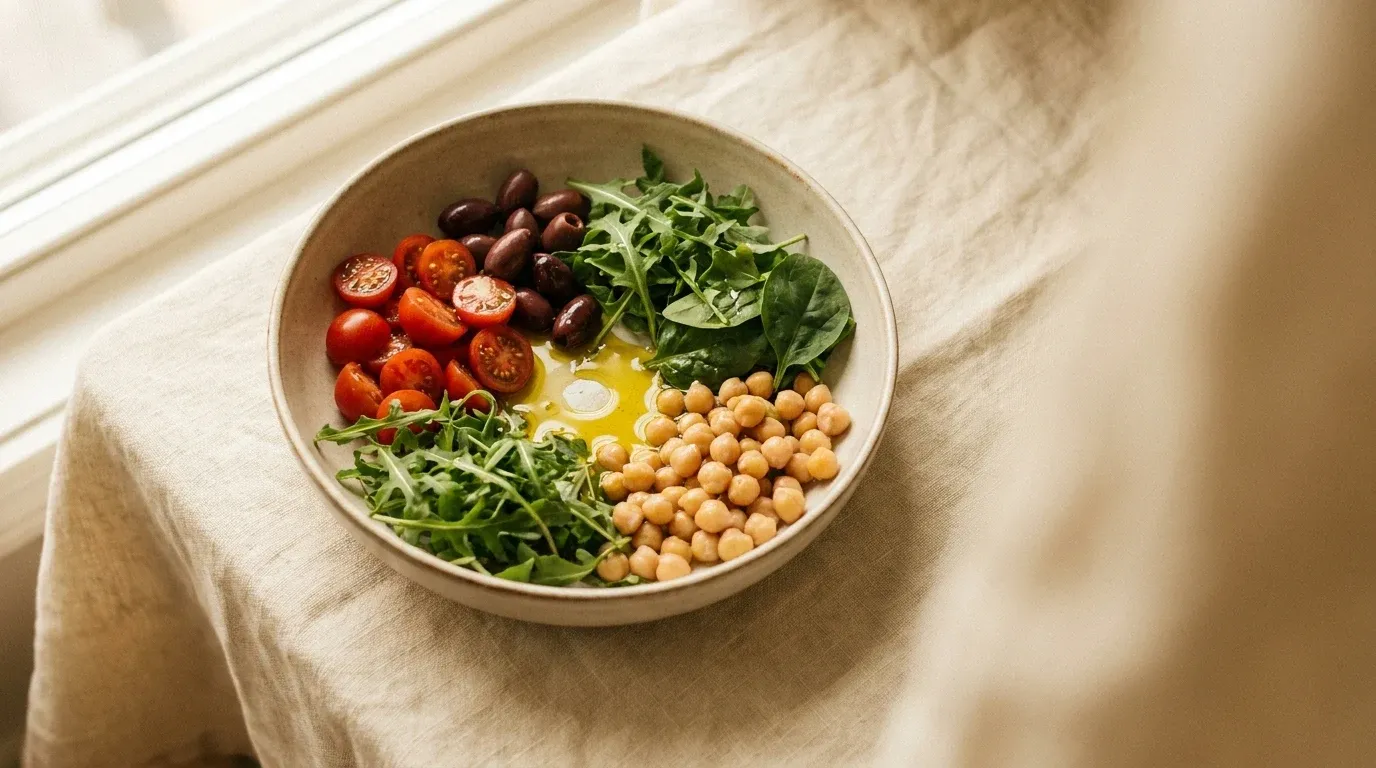
The JACC review identifies two dietary frameworks with the strongest cardiovascular evidence base: the Mediterranean diet and the DASH (Dietary Approaches to Stop Hypertension) diet. Neither is a rigid prescription. Both are patterns built around similar structural principles.
- Abundant vegetables, legumes, whole grains, and fruit forming the foundation of daily intake
- Plant-based protein sources, including beans, lentils, nuts, and seeds, prioritized over animal protein
- Unsaturated fats, primarily from olive oil, nuts, and fatty fish, replacing saturated and trans fats
- Moderate consumption of fish and poultry, with red and processed meat consumed minimally
- Low intake of ultra-processed foods, added sugars, and refined grains
What these patterns share is not a specific macronutrient ratio. A Mediterranean-style diet can be relatively high in fat if that fat comes from olive oil and oily fish. A DASH-style approach can be moderate in carbohydrates if those carbohydrates come from whole grains and legumes. The ratio isn't the point. The food quality and pattern structure are.
The Role of Processing: More Important Than Macros
One of the most significant findings in the review is the emphasis on food processing level as an independent predictor of cardiovascular risk, separate from macronutrient content. Minimally processed foods, regardless of whether they're high in fat, protein, or carbohydrate, are consistently associated with better heart outcomes than their ultra-processed equivalents.
A handful of walnuts and a walnut-flavored protein bar are not interchangeable from a cardiovascular standpoint, even if their macronutrient profiles look similar on paper. The matrix of the food, how its nutrients are packaged, what's been removed or added during manufacturing, and how it interacts with your gut microbiome and metabolic systems matters in ways that a nutrition label doesn't capture.
This framing puts minimally processed foods at the structural foundation of a heart-protective diet. You can optimize protein sources, fat types, and carbohydrate quality all you want, but if the majority of your calories are coming from ultra-processed products, the pattern is compromised regardless of the macros involved.
If you're managing your diet alongside a medication protocol, this distinction matters even more. On GLP-1s? Here's How to Eat to Keep Your Muscle covers how food quality choices intersect with appetite-suppressing treatments where total food volume is reduced and every calorie carries more weight.
How Clinicians Are Being Asked to Change Their Approach
The JACC review includes direct guidance for healthcare providers, marking a shift in how nutrition counseling is expected to function in clinical practice. Rather than advising patients to limit specific nutrients, such as saturated fat or dietary sodium in isolation, clinicians are now directed to guide patients toward Mediterranean or DASH-style patterns as a whole.
That's a meaningful change in framing. Telling someone to "reduce saturated fat" often produces fragmented, compensatory behavior. People swap butter for margarine and consider the job done. Telling someone to build their eating around vegetables, legumes, whole grains, and minimally processed foods with olive oil as a primary fat source creates a different cognitive framework. It's additive rather than restrictive, and the evidence suggests it produces better long-term adherence and outcomes.
Plant protein, specifically, receives elevated emphasis in the review's recommendations. Substituting plant protein sources for red and processed meat is described as one of the most consistently supported dietary modifications for cardiovascular risk reduction. This doesn't require eliminating animal protein entirely. It means shifting the ratio so that legumes, tofu, nuts, and seeds are doing more of the heavy lifting most of the time.
Where Exercise Fits Into This Picture
Diet doesn't operate in a vacuum. The cardiovascular protection offered by dietary patterns is compounded by physical activity, and the interaction between the two is meaningful. If you're thinking about heart health comprehensively, your movement habits belong in that conversation.
The evidence on exercise modality and cardiovascular outcomes has also been evolving. Cardio vs. Strength: What Actually Protects Your Heart breaks down what the research shows when you separate aerobic and resistance training in terms of cardiovascular mortality, and the findings may shift how you structure your training week.
The two levers, diet quality and physical activity, are not substitutes for each other. A high-quality dietary pattern doesn't cancel out a sedentary lifestyle, and vigorous training doesn't override chronic consumption of ultra-processed foods. Both matter independently, and both matter together.
What This Means for How You Eat Day to Day
The practical implication of the JACC review isn't that you need a new diet plan. It's that you need a different unit of analysis. Stop auditing individual nutrients and start evaluating your overall pattern.
A useful diagnostic: look at a typical week of eating and ask what proportion of your meals are built around vegetables, legumes, whole grains, and minimally processed proteins. If that proportion is low, that's where the leverage is. Not in switching from one protein powder to another, or from butter to a specific type of margarine, but in shifting the structural foundation of your daily eating.
A few practical anchors worth considering:
- Make legumes a regular protein source. Lentils, chickpeas, black beans, and edamame are among the most consistently supported foods in the cardiovascular literature. They're also inexpensive and versatile.
- Use olive oil as your default cooking fat. The evidence for extra virgin olive oil in cardiovascular protection is among the strongest for any single food.
- Treat whole grains as the baseline, not the upgrade. Swapping refined grains for whole grain equivalents is one of the lowest-effort, highest-return changes you can make to diet quality.
- Audit ultra-processed food exposure honestly. It's easy to underestimate how much of your daily intake comes from packaged products with long ingredient lists. Tracking for even a few days tends to be clarifying.
- Don't optimize supplements before optimizing food. Supplement Format Matters as Much as the Ingredient Inside is worth reading, but supplement strategy should be built on top of a solid dietary pattern, not used to compensate for one that's lacking.
The Bigger Picture
The JACC review represents a maturation of nutritional science. The field has moved through decades of reductive thinking, chasing single compounds and single mechanisms, and arrived at a more sophisticated understanding: the whole is not just greater than the sum of its parts. It's fundamentally different from them.
For you, that's actually useful news. It means you don't need to track every gram of saturated fat or obsess over the omega-6 to omega-3 ratio in your cooking oil. You need to build a dietary pattern that looks, in broad strokes, like the Mediterranean and DASH frameworks the evidence consistently supports. More plants, more whole foods, more minimally processed proteins, more unsaturated fats. Less ultra-processed everything.
That's not a diet. It's a structure. And according to the best available cardiovascular evidence, it's the structure that protects your heart over a lifetime.
Stress and sleep also interact with dietary patterns in ways that affect cardiovascular risk. If you're working on the full picture, Mindfulness for Stress: What the Evidence Actually Says offers a grounded look at what behavioral tools have demonstrated real physiological benefit, without the noise.