
GLP-1 receptor agonists like semaglutide and tirzepatide are delivering real, significant weight loss for millions of people. But there's a catch that most prescribers aren't spending enough time on: a large portion of that weight loss isn't fat. It's muscle. And without a deliberate nutrition strategy, you're setting yourself up for a body composition outcome that's far worse than the scale suggests.
Here's what the data shows, and what you need to do about it.
The Muscle Loss Problem Nobody Warned You About
GLP-1 medications reduce caloric intake by roughly 20 to 35% on average. That's a meaningful deficit, and it produces rapid weight loss. The problem is that most users don't adjust the quality of what they're eating. They just eat less of everything, which means protein intake drops proportionally.
In a caloric deficit, your body turns to muscle tissue for fuel when protein intake is insufficient. Research on GLP-1 trial participants has consistently found that 25 to 40% of total weight lost can come from lean mass, depending on diet composition and activity level. That's not a minor side effect. Loss of muscle mass slows your resting metabolic rate, increases your risk of rebound weight gain, and undermines long-term metabolic health.
The suppressed appetite that makes GLP-1s so effective is the same mechanism that puts your muscle at risk. When you're simply not hungry, high-protein eating requires deliberate strategy. It doesn't happen by default.
Your Protein Target on a GLP-1
The general population guideline of 0.8g of protein per kilogram of bodyweight is not adequate when you're in a significant caloric deficit. For GLP-1 users specifically, the evidence supports a target of 1.6 to 2.2g of protein per kilogram of bodyweight per day. For a 180-pound (82kg) person, that translates to roughly 130 to 180g of protein daily.
On a suppressed appetite, that's a substantial amount to work toward. The key is to stop thinking about protein in terms of large daily totals and start thinking about it meal by meal.
Distributing your protein intake across four to five smaller meals is more effective than concentrating it in two or three larger ones. This matters for a practical reason: muscle protein synthesis has a leucine threshold. Each meal needs to deliver approximately 2 to 3 grams of leucine to meaningfully trigger muscle building. If your meals are small and protein-light, you may not be hitting that threshold at any point in the day, regardless of your total intake.
Leucine is found in high concentrations in animal proteins. A 4-ounce serving of chicken breast delivers around 2.5g of leucine. The same amount of Greek yogurt provides roughly 1.2g. This is why protein-dense foods and targeted supplementation matter more on a GLP-1 than they do for someone eating at maintenance.
Protein-Dense Foods That Work With a Suppressed Appetite
When your stomach empties more slowly and you feel full faster, caloric density becomes your enemy but protein density becomes your best tool. You need foods that deliver the highest protein payload in the smallest volume.
- Cottage cheese (low-fat): 25g protein per cup, soft texture, easy to eat in small amounts
- Greek yogurt (plain, 2%): 17 to 20g protein per cup, pairs with fruit or protein powder
- Eggs and egg whites: Flexible, fast, and easy to tolerate when appetite is low
- Canned fish (tuna, salmon, sardines): 20 to 25g protein per serving, minimal prep required
- Lean ground turkey or chicken: High protein-to-calorie ratio, works in small portions
- Edamame: One of the few plant foods with a complete amino acid profile, 17g protein per cup
- Whey or casein protein powder: 20 to 25g protein per scoop with roughly 2.5g leucine, practical when appetite limits whole-food intake
If you're exploring other supplementation strategies alongside your GLP-1 regimen, it's worth reading about Urolithin A, a compound showing early promise for mitochondrial and muscle health. The research is still developing, but it's relevant context for anyone focused on preserving lean mass.
The Role of Resistance Training. Non-Negotiable.
Nutrition alone won't fully protect your muscle. You need to give your body a reason to hold onto it. Resistance training does exactly that by sending a direct anabolic signal that tells your body to spare lean tissue even in a deficit.
Current trial data suggests that combining high-protein intake with structured resistance training reduces GLP-1-related muscle loss by up to 50% compared to diet alone. That's a substantial effect, and it's achievable with two to three sessions per week of progressive strength work. You don't need to be in a gym five days a week. You need to be consistent and you need to be progressively challenging your muscles over time.
For women in the 50 to 75 age range, where GLP-1 prescriptions are increasingly common and muscle loss risk is already elevated due to hormonal changes, the combination of protein optimization and resistance training is particularly critical. The full nutrition framework for this group is covered in detail in what women 50 to 75 actually need from nutrition to stay strong.
One note on recovery: cold water immersion after lifting has become popular, but the evidence suggests it may blunt the acute anabolic signaling that makes strength training effective. If muscle retention is your primary goal on a GLP-1, be strategic about when and how you use cold exposure. The tradeoff between cold immersion and muscle growth is worth understanding before you make it a post-training habit.
What a 1,400-Calorie Day Looks Like When Optimized for Muscle
1,400 calories is a realistic intake level for many GLP-1 users, particularly in the first several months of treatment. Here's how to structure it to maximize protein distribution and hit the leucine threshold across meals.
Meal 1 (approx. 7am): 350 calories, 35g protein 3 whole eggs scrambled with 2 egg whites, cooked in olive oil spray, with half a cup of cottage cheese on the side. Add sliced tomato or cucumber if tolerated.
Meal 2 (approx. 11am): 300 calories, 30g protein One cup of plain Greek yogurt mixed with one scoop of unflavored or vanilla whey protein. Top with a small handful of berries. Eat slowly. This is easy to tolerate even on days when appetite is very low.
Meal 3 (approx. 2pm): 350 calories, 35g protein 4 ounces of canned tuna or salmon mixed with a small amount of avocado or olive oil mayo, served over a bed of spinach or mixed greens. Add cucumber and a boiled egg if you can manage it.
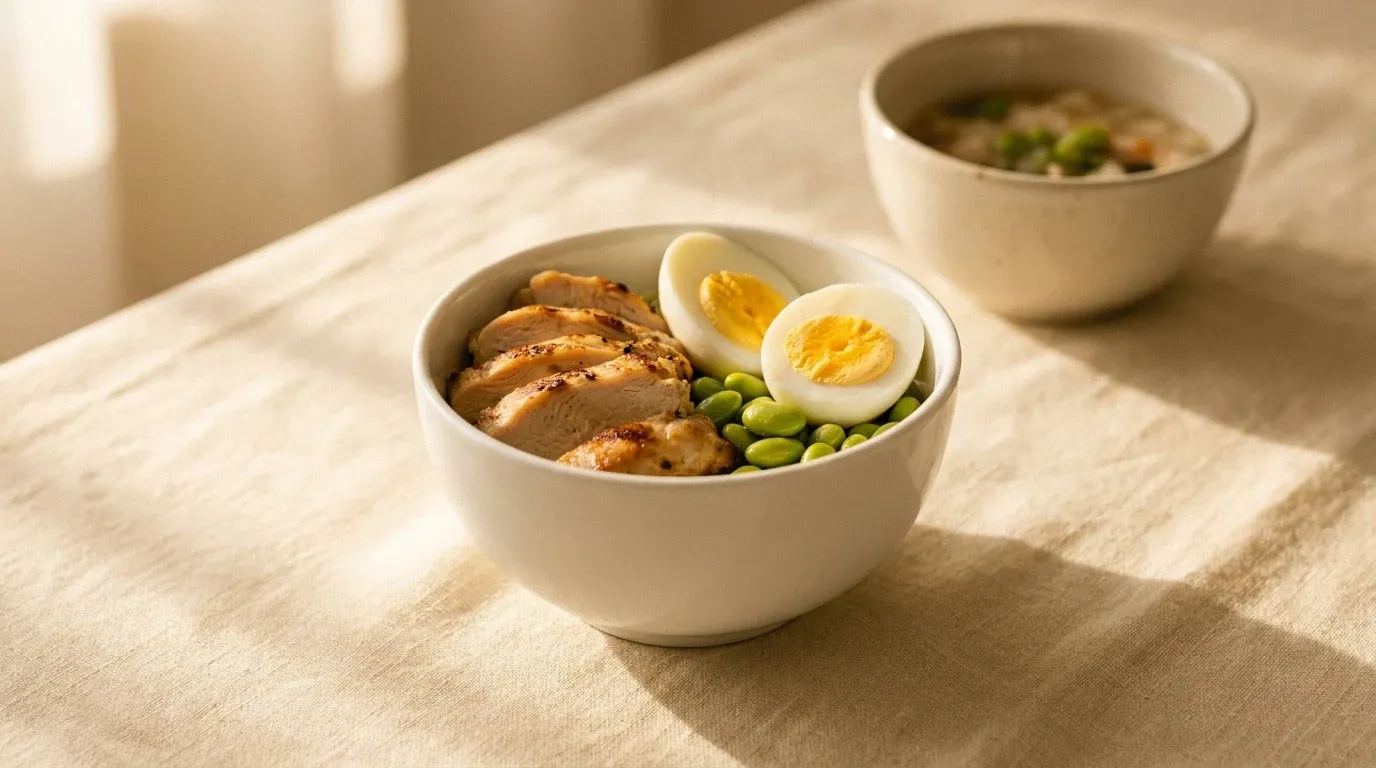
Meal 4 (approx. 6pm): 400 calories, 40g protein 5 ounces of lean ground turkey or chicken breast, cooked simply with herbs and seasoning, with half a cup of edamame and a small portion of roasted vegetables. Keep the starch minimal to preserve room for protein.
Total: approximately 1,400 calories, 140g protein
This structure delivers roughly 30 to 40g of protein per meal, which is sufficient to clear the leucine threshold at each eating occasion. It also keeps meals small enough to work within the reduced gastric capacity that most GLP-1 users experience.
Sleep quality is another factor that directly affects muscle protein synthesis and recovery. If you're on a GLP-1 and also dealing with sleep-disordered breathing, that intersection has its own evidence base worth reviewing. Tirzepatide's effects on sleep apnea are documented but limited in specific ways, and understanding those limits matters for managing your overall recovery.
Practical Adjustments When Appetite Is Especially Low
On high-dose weeks or after injection days, appetite suppression can be severe enough that even the meal plan above feels unmanageable. Here's how to adapt without abandoning your protein targets.
- Prioritize liquid or semi-liquid protein sources: Greek yogurt, protein shakes, and smoothies are far easier to consume when solid food feels unappealing
- Front-load protein early in the day, before nausea or satiety peaks
- Use protein powder strategically as a bridge, not as a permanent replacement for whole foods
- Don't skip a meal entirely. Even a small protein-forward snack (100 to 150 calories, 20g protein) maintains the muscle protein synthesis signal better than nothing
- Track your protein for at least the first four to six weeks until hitting your target becomes habitual
GLP-1 medications are a legitimate and effective tool for weight management. But the number on the scale doesn't tell you what's actually being lost. If you're not eating strategically, you're likely losing muscle alongside fat, and that has real consequences for your metabolism, your strength, and your long-term health. The protocol above isn't complicated. It just requires intention at a time when your body's hunger signals are working against you.
That's exactly why having a plan matters before you start. Not after you've already lost the muscle.