
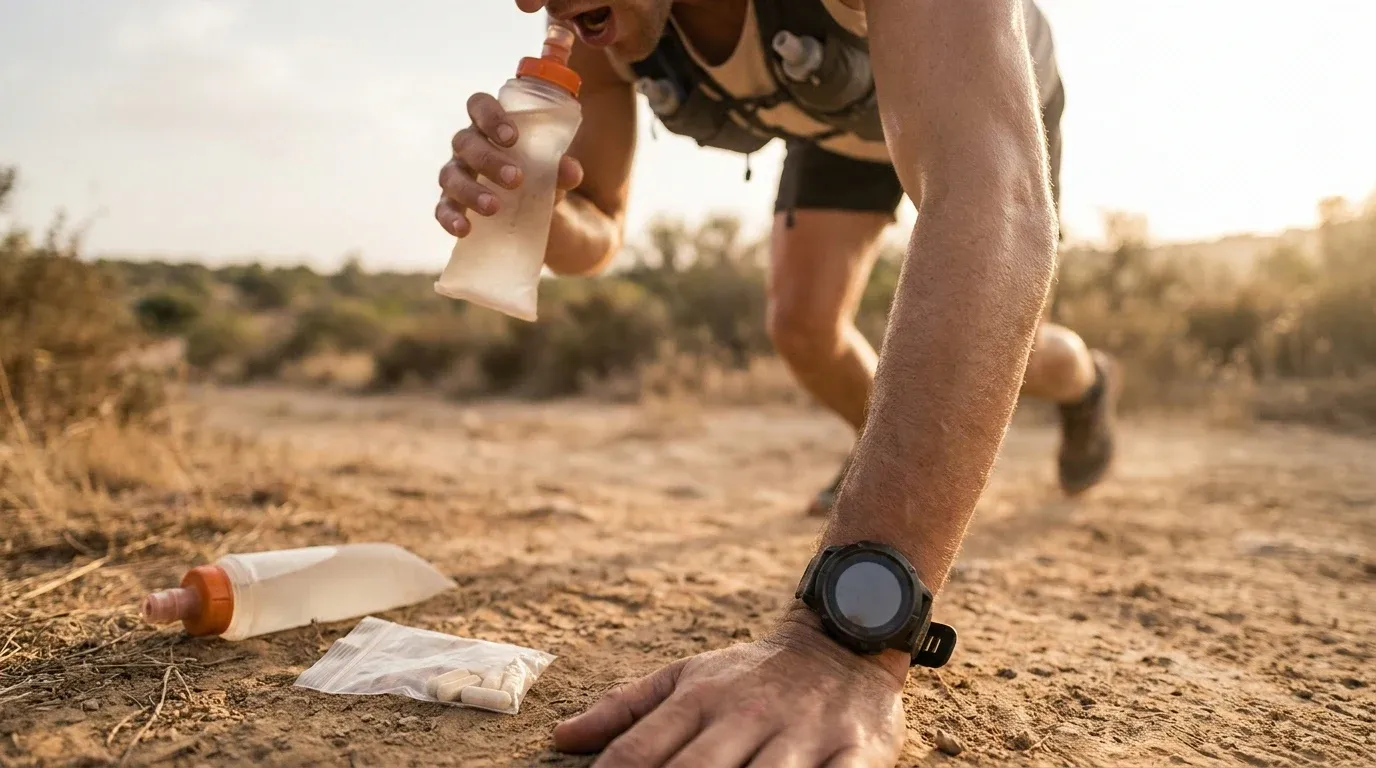
Every summer, race medical tents fill up with athletes who thought they were doing everything right. They drank when they were thirsty. They grabbed water at every aid station. Some even carried electrolyte tablets. And yet they still cramped, faded, or collapsed. The problem isn't effort. It's that most hydration advice endurance athletes receive is built for average conditions and average bodies. Neither applies when you're running 26 miles in July heat.
With fall marathon season approaching and heat-related incidents at endurance events rising year over year, it's worth getting specific about what the science actually says. Generic advice can hurt you. Here's what to know instead.
Thirst Lies to You in the Heat
The instinct to drink when you're thirsty works reasonably well in everyday life. During intense exercise above 28 degrees Celsius (82 degrees Fahrenheit), it becomes unreliable. Research consistently shows that measurable physiological impairment, including reduced plasma volume and declining cognitive function, begins before your brain registers the sensation of thirst.
By the time you feel thirsty during a hard effort in the heat, you may already be 1.5 to 2 percent dehydrated. That threshold corresponds to a meaningful drop in endurance performance and thermoregulation. Waiting to feel thirsty is a reactive strategy in a situation that demands a proactive one.
This doesn't mean you should drink as much as possible. It means you need a plan built around timing rather than sensation.
Sodium Is the Electrolyte That Actually Determines Your Outcome
Of all the electrolytes lost in sweat, sodium is the one that limits performance most directly. It governs fluid balance between cells, drives plasma volume maintenance, and sets the conditions under which your muscles and nervous system can keep firing. Lose too much of it and the wheels come off fast.
The challenge is that sweat sodium concentration varies enormously between individuals. Studies using sweat patch analysis show a range from roughly 230 mg per liter on the low end to 1,150 mg per liter for heavy, salty sweaters. That's a fivefold difference. A standard electrolyte tablet containing 200 to 300 mg of sodium might fully replace one athlete's losses and cover about 20 percent of another's.
You can identify which category you're in without a lab. Salt crusting on your skin or clothing after a long run, persistent cramping despite adequate fluid intake, and feeling disproportionately wrecked after hot efforts are all practical signals of high sweat sodium loss. If that sounds like you, generic electrolyte products are not enough.
Over-Hydrating with Plain Water Can Be More Dangerous Than Not Drinking Enough
This is the point most athletes miss completely, and it's the one with the most serious consequences. Exercise-associated hyponatremia (EAH) occurs when serum sodium drops below 135 mmol/L, typically because an athlete has consumed large volumes of plain water without replacing sodium losses. It's more common at longer events, particularly marathons and triathlons, and it disproportionately affects slower runners who spend more time on course and have more opportunity to over-drink.
Symptoms of EAH include nausea, headache, swelling, and in severe cases, seizures and respiratory arrest. Critically, mild hyponatremia can be mistaken for dehydration, leading well-meaning medical staff or the athlete themselves to administer more plain water, which makes it worse. Mild dehydration is uncomfortable and slows you down. Severe hyponatremia can kill you.
The correction is straightforward: drink to thirst rather than on a rigid schedule if you're consuming plain water, and always replace sodium alongside fluids during efforts lasting longer than 60 to 90 minutes.
Pre-Exercise Sodium Loading Works and Here's Why
One of the more evidence-backed strategies in endurance nutrition that hasn't fully crossed into mainstream practice is sodium loading before long efforts in heat. Consuming 400 to 1,000 mg of sodium in the 60 to 90 minutes before exercise triggers a fluid retention response that measurably expands plasma volume. A higher starting plasma volume delays the dehydration cascade and keeps cardiac output higher for longer into an effort.
In practical terms, this might look like a sodium-rich meal two hours before a long run, followed by 500 to 700 mg of supplemental sodium 60 to 90 minutes before the start. High-sodium foods include pickles, broth, and certain crackers. Electrolyte capsules or tablets can fill the gap precisely if you know your sweat rate.
This approach is particularly valuable for athletes preparing for races in climates hotter than their training environment. Flying from Chicago to run a race in Phoenix in September is a meaningful heat stress jump. Sodium loading as part of your race-week protocol is one lever that's often overlooked when planning that kind of transition. If you're working with a coach to structure your fall build, this is the kind of individualized detail that a quality coaching consult should address from the start.
Sports Drinks Are a Functional Tool, Not a Marketing Gimmick
The skepticism around sports drinks is understandable. The industry has spent decades marketing them in contexts that don't require them, such as to casual gym-goers doing 30-minute sessions in air-conditioned facilities. That marketing excess has led some athletes to dismiss them entirely, which is also a mistake.
During endurance exercise, gastric emptying rate matters. The faster fluid leaves your stomach and reaches the small intestine for absorption, the more effectively you rehydrate. Research on gastric emptying shows that carbohydrate-electrolyte solutions at 4 to 8 percent concentration empty from the stomach at rates comparable to or faster than plain water during exercise, largely because of the osmotic and neural signaling effects of the sodium and carbohydrate combination.
Plain water in large volumes can actually slow gastric emptying during high-intensity effort. A well-formulated sports drink at the right concentration delivers fluid, sodium, and fuel simultaneously, and does it more efficiently than water alone. That's a physiological argument, not a commercial one.
It's also worth noting that sodium requirements during exercise interact with other micronutrient gaps. If your recovery between sessions is poor, magnesium status is worth examining alongside your electrolyte strategy, as magnesium losses in sweat compound over high-volume training blocks.
How to Actually Measure Your Sweat Rate
All of this advice becomes more precise when you know your individual sweat rate. The field method is straightforward and requires nothing more than a scale.
- Weigh yourself nude before your run, after using the bathroom and before consuming any fluids.
- Complete a measured effort in representative conditions, typically 60 minutes, and track exactly how much you drink during it.
- Weigh yourself nude again immediately after, before showering or eating.
- Calculate your loss. One kilogram of body weight equals approximately one liter of sweat. Add the volume of fluid consumed to get total sweat output.
A 70 kg athlete who loses 1.4 kg during a 60-minute run and drank 500 ml has a sweat rate of roughly 1.9 liters per hour. That's on the high end and would require an aggressive sodium and fluid replacement strategy for any effort lasting more than 90 minutes.
Repeat this test across different temperature ranges. Your sweat rate at 20 degrees Celsius and your sweat rate at 32 degrees Celsius will differ significantly, and your hydration plan should reflect that. Heading into a structured fall training block is an ideal time to collect this data systematically. If you're rebuilding your training schedule around the September race calendar, structuring your sessions with data like this in hand puts you ahead of most athletes on the start line.
Putting It Together for Race Day
Here's a framework you can apply immediately:
- Know your sweat rate using the pre- and post-run weigh-in method across different heat conditions.
- Sodium-load before long efforts in heat. Aim for 400 to 1,000 mg in the 60 to 90 minutes before the start, adjusted for your individual sweat sodium concentration if you've had it tested.
- Use a 4 to 8 percent carbohydrate-electrolyte solution during efforts longer than 60 minutes rather than relying on plain water at aid stations.
- Don't drink on a fixed schedule divorced from conditions. Adjust intake based on temperature, intensity, and your known sweat rate, not a generic formula.
- Recognize hyponatremia risk. If you feel off during a long effort and have been consuming large volumes of plain water, sodium is the first thing to consider, not more fluid.
Heat performance in endurance sport is ultimately a logistics problem. The physiology is well understood. What separates athletes who execute well in hot conditions from those who fall apart is preparation, individualization, and the willingness to treat hydration as a trainable skill rather than an afterthought. Start collecting your data now, before the race season demands it.
If you're unsure how to layer these strategies into a broader training plan, finding a coach with specific endurance and nutrition experience is worth the investment, particularly if you're targeting a goal race in variable or hot conditions.