
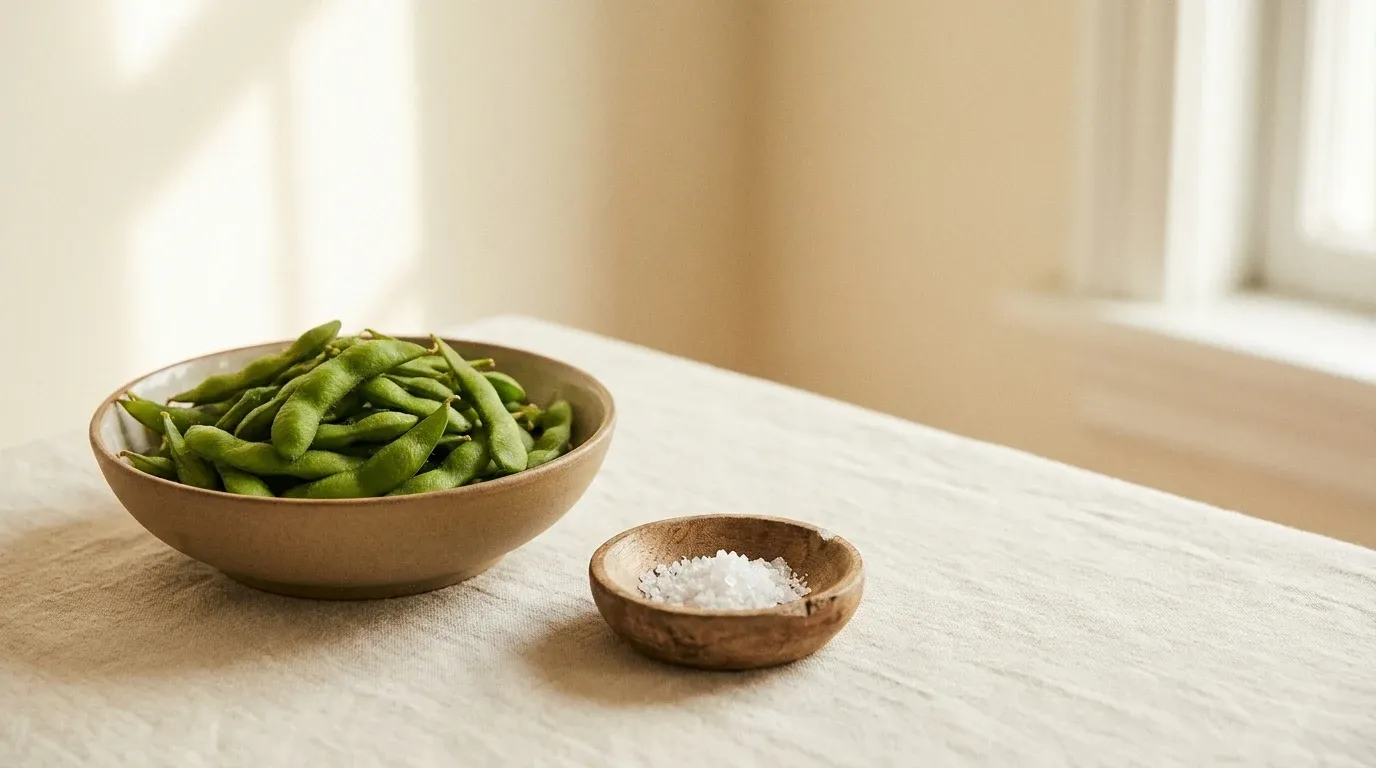
Most people know excess sodium raises blood pressure. Fewer realize it may also quietly erode memory and social cognition over time. A new line of research out of Japan suggests that a compound found in soy could interrupt that process at both the cardiovascular and neurological level.
The findings are early. They involve mice, not people. But they point toward something worth understanding, especially if you're already eating soy for the protein and wondering whether it's doing anything else for you.
What Researchers Found
Japanese scientists identified a soy-derived compound called LPC70 and tested it on mice placed on a high-salt diet. High sodium intake in rodents reliably produces measurable cardiovascular stress and cognitive decline, making it a useful model for studying the downstream effects of the kind of diet many active adults actually eat.
Animals that received LPC70 showed meaningfully better outcomes across multiple markers. Their blood pressure was lower. They performed better on memory tasks. And they demonstrated improved social behavior compared to control animals on the same high-sodium diet without the compound.
That last point matters more than it might seem. Cognitive decline doesn't always show up first as forgetting words or losing keys. Social withdrawal and reduced engagement are often early indicators that something neurological is shifting. The fact that LPC70 appeared to preserve social behavior suggests it may be acting on brain function at a fairly fundamental level.
Why High Salt Damages More Than Your Heart
The cardiovascular risks of high sodium intake are well established. Excess salt raises blood pressure, stiffens arteries, and over time increases the risk of stroke and heart disease. What's less discussed is the cognitive dimension.
Research has shown that hypertension itself reduces blood flow to the brain. Chronically elevated blood pressure is associated with accelerated cognitive aging, reduced white matter integrity, and higher dementia risk. In other words, what damages your heart over decades tends to damage your brain on roughly the same timeline.
For active adults, this is worth sitting with. Doctors should prescribe exercise for heart health, and many now do, but exercise doesn't fully neutralize a high-sodium diet. It mitigates some of the damage. It doesn't reverse the structural effects of consistently elevated blood pressure on cerebral vasculature.
The Hidden Sodium Load of an Active Lifestyle
Here's where things get counterintuitive. People who train regularly often carry a higher sodium load than they realize, precisely because of the habits built around training.
Sports drinks are the obvious example. A standard 20-ounce bottle can contain 270 milligrams of sodium or more. Protein bars, which many athletes use daily, often add another 200 to 400 milligrams per serving. Add in restaurant meals around busy training weeks, grab-and-go processed snacks, and post-workout convenience foods, and it's not difficult for an active person to regularly exceed 3,500 to 4,500 milligrams of sodium per day, well above the American Heart Association's recommended ceiling of 2,300 milligrams.
The issue isn't that you're eating poorly. It's that the infrastructure of a high-volume training lifestyle, including the products specifically marketed to support it, tends to be sodium-dense. This is especially relevant for those pushing performance in high-intensity formats like HYROX, where electrolyte products are practically standard equipment.
What LPC70 Actually Is and How It May Work
LPC70 stands for lysophosphatidylcholine, a class of bioactive lipids found naturally in soy. These compounds are not synthetic. They occur in whole soy foods, including edamame, tofu, tempeh, and miso, though the concentration and bioavailability vary depending on how the food is processed and prepared.
The proposed mechanism involves how LPC70 interacts with vascular and neural tissue under sodium stress. High-salt diets appear to promote inflammation and oxidative stress in blood vessels, reducing their elasticity and impairing circulation to the brain. LPC70 seems to modulate some of these pathways, preserving vascular function in a way that protects both cardiovascular performance and cognitive output.
It's a plausible mechanism. Lysophosphatidylcholines have been studied in other contexts for their roles in lipid transport, inflammation regulation, and cell membrane integrity. The LPC70 finding builds on an existing body of biochemical evidence rather than arriving from nowhere.
The Limits of This Research
You should know what this study is not. It is not clinical trial data in humans. It is not evidence that eating more soy will protect your memory or lower your blood pressure. And it is not a reason to start taking an LPC70 supplement, which, as of now, does not exist as a standardized commercial product anyway.
Mouse models are useful precisely because they let researchers isolate variables and observe mechanisms that would be unethical or impractical to test directly in people. But the leap from rodent physiology to human outcomes is never automatic. Compounds that perform well in animal studies frequently fail to replicate in human trials, or do so only at doses that aren't realistic through food or safe through supplementation.
What the research does is establish a biologically plausible pathway and give scientists a target worth investigating further. Human studies will need to follow before any dietary recommendations can be made with confidence.
What This Means for How You Think About Soy
Even setting aside LPC70 specifically, the broader picture of soy's health profile continues to strengthen. Soy protein is complete, meaning it contains all nine essential amino acids, making it one of the few plant proteins that functions comparably to animal sources for muscle protein synthesis. That alone makes it worth including if you're plant-based or simply trying to diversify your protein sources.
Beyond protein, soy isoflavones have been associated with modest reductions in LDL cholesterol and some evidence of cardiovascular benefit. Fermented soy products like miso and tempeh carry prebiotic and probiotic properties that support gut health. And now, the emerging LPC70 research adds a potential neuroprotective dimension to the picture.
For older adults especially, this convergence is meaningful. If you're adjusting your training approach after 35, the cardiovascular and cognitive risks that come with aging deserve the same strategic attention as muscle preservation and recovery. Food choices are part of that equation, not a footnote to it.
If you're helping an aging parent navigate fitness and nutrition, the same logic applies. The overlap between dietary patterns that support brain health and those that support cardiovascular resilience is significant enough to inform practical recommendations. Resources on how to find a trainer for an aging parent increasingly emphasize that nutrition literacy is part of the package, not a separate conversation.
Practical Takeaways Without Overstating the Science
You don't need to overhaul your diet based on a single animal study. But there are a few things worth considering if this research resonates with how you eat and train.
- Audit your training-adjacent sodium sources. Sports drinks, protein bars, and recovery snacks are often the biggest contributors to a high sodium load in active adults. Check labels, not just on processed snacks, but on the products specifically marketed for performance.
- Include whole soy foods regularly. Edamame, tofu, tempeh, and miso are all practical, accessible options. You don't need to eat soy at every meal. Consistent inclusion a few times per week is a reasonable starting point.
- Favor fermented soy where possible. Miso and tempeh retain bioactive compounds and add gut health benefits that more processed soy products may not deliver at the same level.
- Don't conflate supplements with whole foods. If and when LPC70 becomes available in supplement form, it won't automatically carry the same risk-benefit profile as eating whole soy. The food matrix matters in ways that isolated compounds often can't replicate.
- Treat diet as part of a cardiovascular strategy, not separate from it. Sleep, stress management, and exercise all intersect with how sodium affects your brain and blood pressure. Deep sleep, for instance, plays a direct role in brain waste clearance, a process that's disrupted by chronic hypertension.
The Bigger Picture
Nutrition research rarely delivers clean, immediate answers. Most meaningful findings arrive as incremental additions to a larger body of evidence, each study narrowing the uncertainty a little further. The LPC70 discovery fits that pattern. It doesn't resolve the question of how soy affects human cognition. It sharpens the question considerably and gives researchers a specific compound to pursue.
What it reinforces, right now, is that the foods you eat regularly carry effects beyond macronutrients and calories. Soy, already justified by its protein profile, may be doing considerably more. That's not a reason to treat it as medicine. It's a reason to keep it on the plate.