
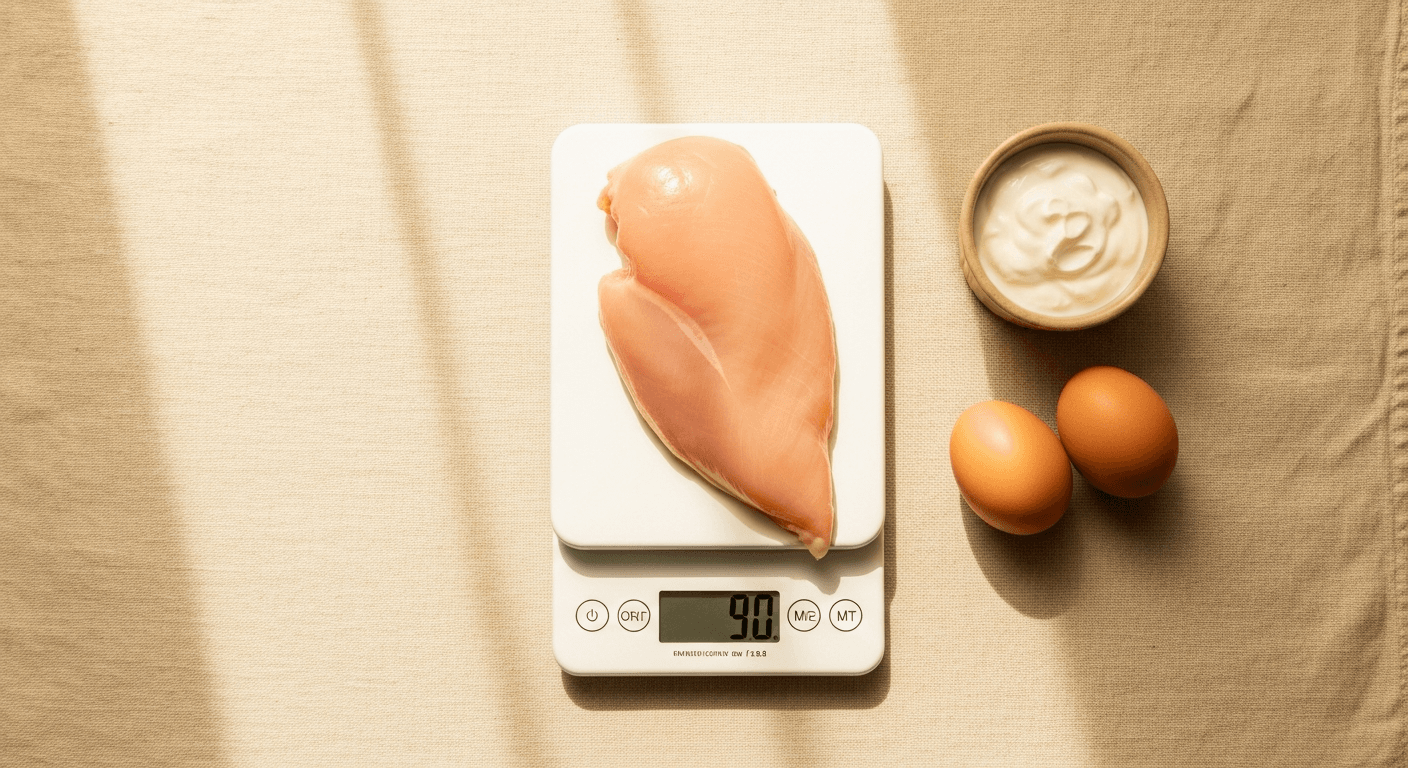
For years, the standard advice was simple: eat 0.8 grams of protein per kilogram of body weight and you're covered. That number came from research designed to prevent deficiency, not to support the kind of active, health-conscious life most people reading this are actually living. The 2025-2030 Dietary Guidelines have shifted that baseline significantly, and if you're still using the old number, you're likely leaving results on the table.
Here's what the updated science says, what it means for your daily meals, and how to hit your targets without overcomplicating everything.
The New Protein Targets: What Changed and Why
The revised federal guidelines now recommend 1.2 to 1.6 grams of protein per kilogram of body weight per day for active adults. For someone weighing 75 kg (about 165 lbs), that's 90 to 120 grams of protein daily. Compare that to the old 0.8g per kg recommendation, which would put that same person at just 60 grams. The difference is substantial.
The shift reflects a growing body of research showing that the previous standard was adequate only for sedentary individuals and failed to account for what active bodies actually need to maintain and build muscle tissue. The new range also better supports metabolic health, immune function, and body composition goals across different age groups and activity levels.
If you're training regularly, whether that's lifting, running, or a combination of both, landing in the 1.4 to 1.6g per kg range is a reasonable target. Sedentary adults can work toward the lower end of 1.2g per kg and still see meaningful improvements over the outdated baseline.
This matters even more as you age. Muscle protein synthesis becomes less efficient after 40, meaning older adults often need to consume more protein to achieve the same anabolic response younger people get from a smaller dose. If you're concerned about muscle loss over time, Muscle Loss After 40: How to Actually Stop It breaks down the mechanisms and what you can do about them practically.
Timing Matters More Than You Think
Getting enough total protein each day is step one. Step two is spreading that protein across your meals. Research consistently shows that distributing intake across three to four meals produces better muscle protein synthesis outcomes than front- or back-loading most of your daily protein into one or two sittings.
The reason comes down to how your body processes amino acids. There's a ceiling effect, sometimes called the "muscle full" effect, where your muscles can only use so many amino acids at once for synthesis. Eating 120 grams of protein in a single meal doesn't produce twice the anabolic signal of eating 60 grams. Spreading it out gives your body repeated opportunities to respond and build.
A practical target is 30 to 40 grams of protein per meal, with a smaller protein-containing snack if needed to hit your daily total. Post-workout timing still matters too. Consuming protein within a couple of hours of resistance training supports recovery and muscle repair, though the so-called "anabolic window" is wider than older advice suggested. For a full breakdown of how timing interacts with your training, Sports Nutrition Timing: The 2026 Practical Guide covers the current evidence in detail.
Animal vs. Plant Protein: Both Work, But the Rules Differ
One of the more persistent debates in nutrition is whether plant-based protein sources are as effective as animal sources for supporting muscle and overall health. The honest answer is that both can work, but they don't work identically, and plant-based eaters need to be more deliberate about how they build their intake.
Animal proteins, including meat, fish, eggs, and dairy, are complete proteins. They contain all nine essential amino acids in proportions your body uses well, and they're particularly high in leucine, the amino acid that acts as the primary trigger for muscle protein synthesis. A threshold of roughly 2.5 to 3 grams of leucine per meal appears to be needed to maximally stimulate that process.
Most plant protein sources are either low in leucine or incomplete in their amino acid profile. Soy, quinoa, and hemp are notable exceptions, as they're considered complete proteins. But if you're relying on sources like lentils, chickpeas, rice, or most nuts and seeds, you'll want to combine complementary proteins across your meals to fill in the gaps. Pairing rice with legumes, or adding a leucine-rich source like edamame or tofu to a grain-based meal, covers most of the ground.
Plant-based eaters should also consider that the protein in many plant foods is less bioavailable than animal sources, meaning you absorb and use a smaller percentage of what you consume. A practical adjustment is to aim toward the higher end of the recommended range, 1.6g per kg or slightly above, to account for this difference.
Protein Supplements: Useful, Not Essential
Protein powders, bars, and shakes can be convenient tools for hitting your daily targets, especially on busy days or when whole food options are limited. But they're not magic, and the supplement industry isn't always straightforward about what's inside the products it sells.
Whey protein remains the most researched and bioavailable option for non-vegans. For plant-based athletes, pea protein combined with rice protein offers a more complete amino acid profile than either source alone. Before spending money on premium products, it's worth understanding what to look for and what to avoid. How to Spot Fake Supplement Claims in 2026 gives you a practical filter for evaluating what's actually in the products you're buying.
If you're curious about more personalized approaches to supplementation beyond protein, Personalized Supplements in 2026: What Actually Works walks through how individual factors like genetics, training load, and diet quality affect which products are actually worth your money.
Calories Still Run the Show
Here's a point that often gets buried under all the protein optimization talk: your total calorie intake still determines the context in which protein does its job. Hitting 1.6g of protein per kg per day while eating in a significant caloric surplus will drive muscle gain, but it will also drive fat gain if the surplus is too large. Hitting the same protein target in a steep caloric deficit will cause your body to burn some of that protein for fuel instead of using it for muscle repair.
Protein targets don't replace calorie awareness. They work inside it. A moderate deficit of around 300 to 500 calories per day combined with adequate protein intake is a well-supported approach for losing fat while preserving muscle. A modest surplus of a similar size supports muscle building without excessive fat gain.
Simply adding protein shakes and high-protein meals on top of an already excessive or poorly structured diet won't produce the results you're after. Getting your energy intake roughly aligned with your goals first, then building your protein targets into that structure, is the sequence that actually works.
Practical Targets by Body Weight
To make this concrete, here are simplified daily protein targets based on the 1.2 to 1.6g per kg range:
- 60 kg (132 lbs): 72 to 96 grams per day
- 70 kg (154 lbs): 84 to 112 grams per day
- 80 kg (176 lbs): 96 to 128 grams per day
- 90 kg (198 lbs): 108 to 144 grams per day
- 100 kg (220 lbs): 120 to 160 grams per day
Use the lower end if you're lightly active or just starting out. Use the upper end if you're training four or more days per week, in a caloric deficit, or over 40.
How Protein Fits Into a Broader Health Picture
Protein intake is one variable inside a larger system. It interacts with your training stimulus, your sleep quality, your stress levels, and your overall diet quality. Getting your protein right will accelerate results from resistance training, but it won't compensate for a training program that isn't providing adequate stimulus.
If you're building your routine from scratch and want a framework that pairs strength work with cardiovascular health efficiently, The Minimum Cardio + Lifting Combo That Actually Works offers a practical starting structure. Combined with solid protein habits, it gives you most of the physiological benefits of a more complex program without the time investment.
It's also worth keeping the longer view in mind. Protein and muscle mass aren't just about aesthetics or performance in your 30s. They're foundational to how well your body functions across decades. Research increasingly links adequate muscle mass to better metabolic health, lower fall risk, and greater independence later in life, all key components of what's now called healthspan. For a broader look at why this matters, Health Span vs Lifespan: Why Lifters Need to Know the Difference puts the muscle-longevity connection in clear terms.
The Bottom Line
The updated guidelines aren't a marketing push from the supplement industry. They reflect a meaningful shift in how nutrition science understands protein's role in active adults' health and body composition. The 0.8g per kg figure was never designed for people who train, age actively, or have ambitious physical goals.
Your targets are 1.2 to 1.6g per kg per day, spread across three to four meals, with attention to leucine content if you're plant-based, and structured inside an appropriate calorie intake. That's the framework. The rest is execution.