
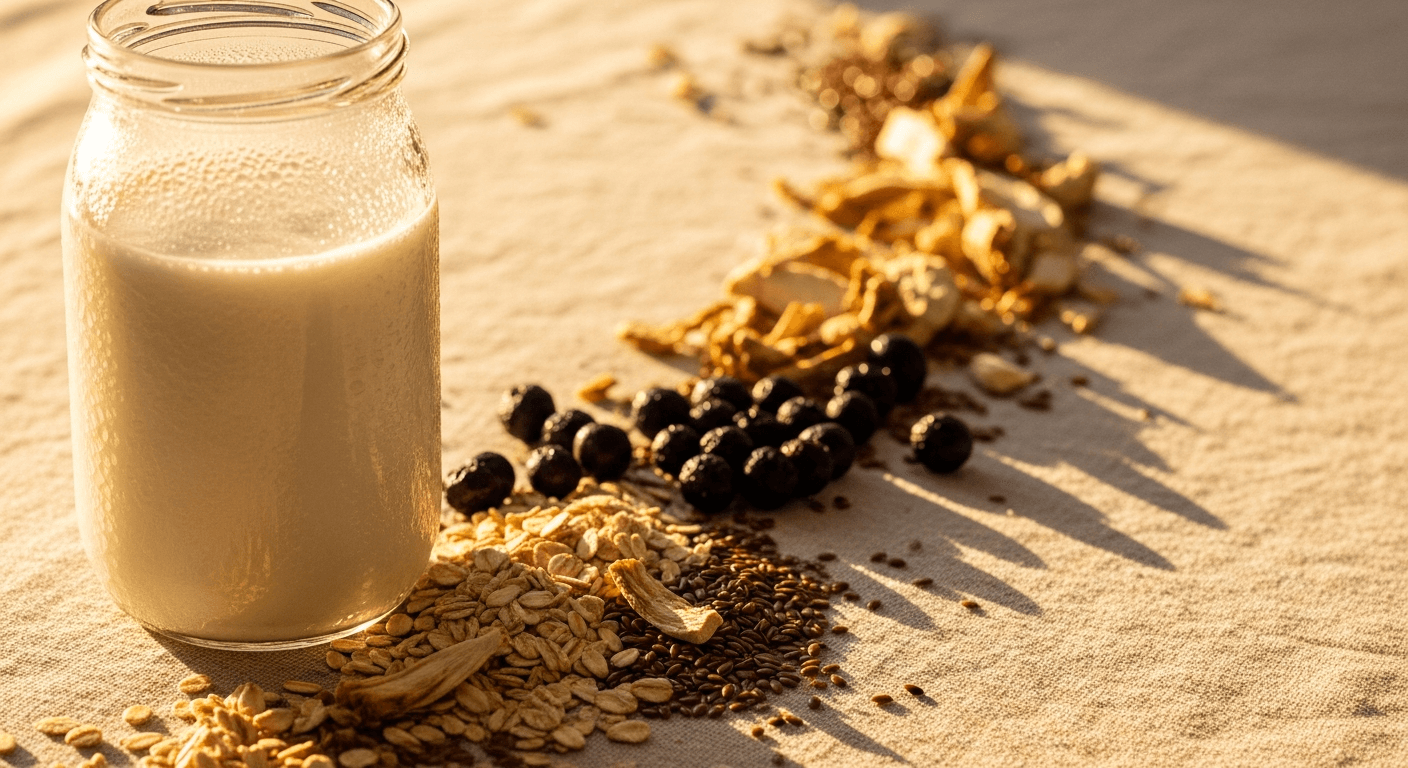
Kefir Plus Fiber Outperformed Omega-3 for Inflammation in New Study
If your go-to strategy for managing inflammation involves reaching for a fish oil capsule, a new study suggests you might be leaving significant results on the table. Research published in February 2026 from the University of Nottingham found that combining kefir with a diverse prebiotic fiber mix produced greater reductions in systemic inflammation than omega-3 supplementation alone. That's not a small finding. It challenges one of the most deeply embedded assumptions in sports nutrition and general wellness: that isolated supplements are your most powerful lever.
The real story here isn't that omega-3 doesn't work. It's that food matrix combinations, specifically the pairing of fermented foods with varied dietary fibers, may produce effects that isolated compounds simply can't replicate. Here's what the research actually showed, and what it means for how you eat.
What the Study Found
The University of Nottingham trial ran for six weeks and compared three intervention groups: one taking omega-3 supplements, one consuming a diverse prebiotic fiber mix, and one combining daily kefir with that same fiber mix. Participants' systemic inflammation was tracked using a panel of established biomarkers throughout the trial.
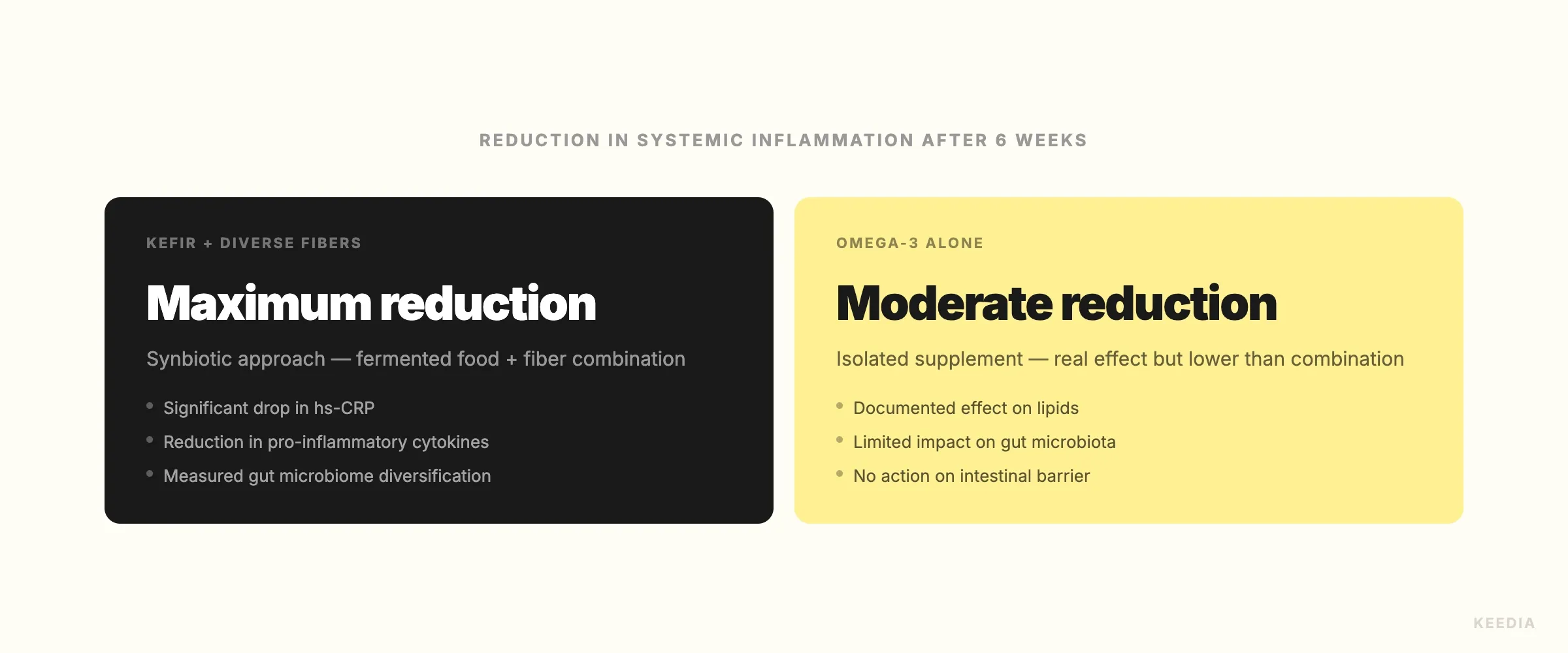
The kefir-plus-fiber group showed the most significant reduction in whole-body inflammation. Critically, the fiber-only group also outperformed the omega-3 group, but the combination of live fermented cultures from kefir alongside the diverse fiber mix produced results that neither intervention achieved independently.
That dose-response pattern matters. It strongly implies the mechanism isn't additive in a simple sense. Kefir and fiber appear to work synergistically. You're not just stacking two mild effects. You're triggering a fundamentally different gut environment.
The Mechanism: Why the Combination Works
To understand why this pairing is so effective, you need to understand how the gut interacts with inflammation at a systemic level.
Dietary fiber, particularly diverse fiber from varied plant sources, is fermented by gut bacteria into short-chain fatty acids (SCFAs) including butyrate, propionate, and acetate. These SCFAs are not just local actors. They signal through multiple pathways that regulate immune response throughout the body. Crucially, butyrate is the primary fuel source for colonocytes, the cells lining your intestinal wall. When colonocytes are well-fed, intestinal barrier integrity holds. When the barrier is compromised, bacterial endotoxins enter circulation and trigger the kind of chronic, low-grade inflammation associated with metabolic disease, cardiovascular risk, and impaired recovery.
Kefir adds a layer this fiber-only model can't replicate. The live cultures in kefir, when they survive transit to the colon, act as both direct anti-inflammatory agents and as environmental architects. They create conditions that favor the growth of beneficial resident bacteria already in your gut.
In the Nottingham trial, participants consuming kefir showed measurable increases in Lactococcus lactis, Bifidobacterium breve, and several other species associated with reduced inflammatory signaling. These aren't transient visitors. The kefir cultures appear to stimulate the proliferation of resident strains that produce SCFAs at higher rates. Add a rich, diverse fiber substrate as fuel for those bacteria, and you amplify the effect substantially.
That's the mechanism in plain terms: fiber feeds bacteria, bacteria produce SCFAs, SCFAs protect the gut barrier, a healthy gut barrier reduces systemic inflammation. Kefir accelerates that process by seeding and supporting the microbial environment that drives it.
Why Omega-3 Falls Short Here
Omega-3 fatty acids have a well-documented anti-inflammatory effect. EPA and DHA modulate the production of prostaglandins and cytokines, and the evidence base for cardiovascular benefits is substantial. This study isn't a refutation of that work.
What the comparison reveals is a ceiling on what isolated supplementation can do when the gut microbiome is the missing variable. Omega-3 acts downstream. It modulates inflammatory signaling after it's already been initiated. The kefir-fiber combination acts upstream, at the level of gut barrier integrity and the microbial production of SCFAs that precede the inflammatory cascade in the first place.
Think of it this way. You can dampen a fire with water after it's started, or you can reduce the available fuel before ignition. Both strategies have value, but they're not equivalent.
The Practical Protocol
The study's design points toward a protocol that's straightforward to implement. You don't need specialty supplements or expensive interventions.
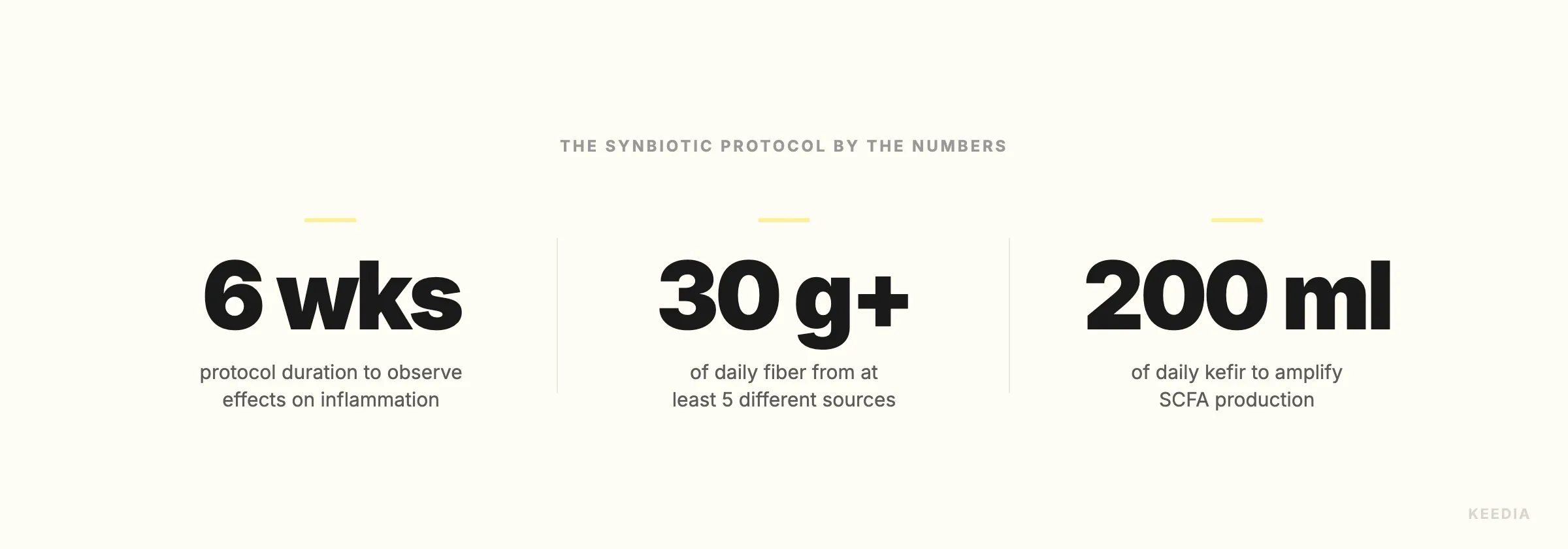
- Daily kefir consumption: The intervention used kefir as the fermented food base, typically one to two servings per day. Full-fat, traditionally fermented kefir from dairy sources was used, not kefir-flavored beverages with added sugars.
- 30g or more of diverse fiber daily: This is the point most people miss. The fiber mix used in the study was intentionally varied, drawing from multiple plant sources rather than a single supplement like psyllium husk. Think legumes, oats, vegetables, berries, and seeds across the day. Diversity of fiber sources translates directly to diversity of bacterial species fed.
- The synbiotic approach: When you combine a probiotic source (kefir) with prebiotic substrates (diverse fiber), you're applying what researchers call a synbiotic strategy. The probiotic introduces and reinforces beneficial species. The prebiotic feeds them. The two together produce outcomes neither achieves alone.
This isn't a dramatic dietary overhaul. It's a structural shift in how you think about your baseline eating pattern. Kefir with breakfast, a consistently high and varied fiber intake throughout the day. That's the protocol in its simplest form.
If you're already tracking your nutrition carefully, you're probably familiar with protein targets and carbohydrate timing. Applying the same rigor to fiber diversity is the logical next step. It's also worth noting that high fiber intake tends to support satiety and stable energy, which matters if you're navigating appetite changes from GLP-1 medications. The gut-health dynamics are discussed in depth in our piece on GLP-1 and Muscle Loss: What Training Can and Can't Fix.
The Kefir Quality Problem
Here's the significant caveat the study's authors raised directly: not all kefir is the same.
The microbial composition of kefir varies substantially depending on the starter grains used, the fermentation temperature, and the fermentation time. Commercial kefir products sold in supermarkets are often produced under standardized conditions that prioritize shelf stability and consistent flavor over microbial diversity and viable colony counts.
Artisan or traditionally fermented kefir, particularly products using authentic kefir grains rather than powdered starter cultures, typically contains a broader spectrum of bacterial and yeast species. The difference in live culture count and species diversity between a high-quality traditional kefir and a mass-market product can be considerable.
This means that replicating the study's results at home isn't as simple as buying any kefir on the shelf. If you're sourcing commercially, look for products that list specific live culture strains, have a short ingredient list, and ideally are stored cold throughout distribution. Home fermentation with authentic grain-based kefir cultures gives you the most control over the final product.
The same principle of quality-sourcing applies to fiber. A single fiber supplement doesn't replicate the diversity of whole food sources. The goal is variety across plant families, not volume from one source.
Rethinking the Inflammation Conversation
The supplement industry has a strong incentive to frame inflammation management as a single-compound problem with a single-compound solution. Omega-3 capsules, curcumin extracts, and high-dose antioxidants are easy to package, easy to sell, and easy to study in isolation. But the gut microbiome doesn't operate in isolation, and neither does systemic inflammation.
This study adds to a growing body of evidence that the food matrix, the combination, timing, and co-presence of nutrients rather than their individual doses, is where meaningful physiological outcomes are often determined. It's a pattern that appears in recovery research, sleep research, and cardiovascular work as well. For example, the interaction between dietary habits and cardiovascular outcomes is a consistent theme in research covered in our article on Sauna and Cardiovascular Health: What the Research Says in 2025.
Omega-3 supplementation isn't obsolete. But if inflammation is a priority for you, whether for recovery, metabolic health, or longevity, the evidence increasingly points toward building a gut environment that reduces the inflammatory load before it escalates. That starts with daily fermented foods and a structurally varied fiber intake.
Nutrition interventions that target the microbiome also tend to interact with energy metabolism, sleep quality, and recovery in ways that compound over time. If you're exploring how dietary changes fit into a broader recovery and performance picture, our piece on Magnesium and Sleep for Athletes: Which Form, What Dose, What Results covers another nutritional intervention with significant downstream effects that are often underestimated.
The kefir-fiber finding is a prompt to audit your current nutrition strategy. You might be spending money on the supplement aisle while the more effective intervention is sitting in the dairy section and the produce aisle. The research, at least right now, supports that reframe.