
Updated: June 7, 2026
Most sports nutrition research was conducted on male subjects. For decades, recommendations for female athletes were simply scaled-down versions of male recommendations. Research over the past decade has corrected this gap and identified genuinely distinct needs — not in fundamental principles, but in dosages, timing, and specific watchpoints.
Female Athlete Specific Needs
- Iron: 18mg/day (vs 8mg for men) — deficiency rate 15-35% in active women
- Protein: 1.6-2.0g/kg/day — same as men, but chronically under-consumed
- Follicular phase: better carbohydrate tolerance and training recovery capacity
- Luteal phase: higher resting metabolic rate (+100-300 kcal/day), slightly higher protein needs
- RED-S (Relative Energy Deficiency in Sport): chronic underfueling — the top nutritional risk
Iron: The #1 Priority
Iron is the most commonly deficient mineral in active women — and the one with the most direct performance consequences. Iron deficiency (even without declared anemia) reduces oxygen transport, increases perceived fatigue, and degrades aerobic endurance.
Female athletes' iron needs are elevated for three reasons:
- Menstrual losses: approximately 15-30mg of iron lost per cycle
- Impact hemolysis: runners destroy red blood cells on foot strike (mechanical lysis)
- Sweat losses: intensive training increases iron losses through perspiration
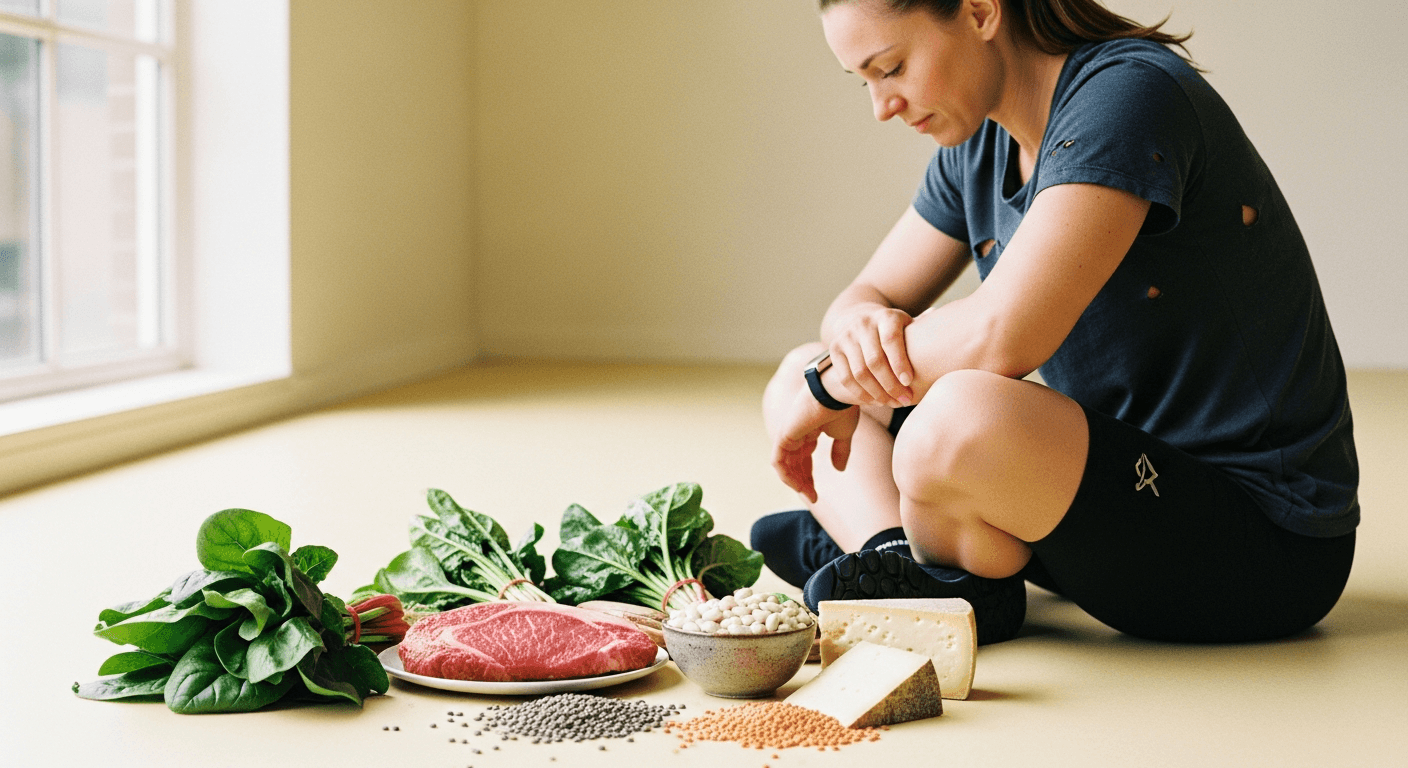
Most bioavailable food sources: red meat, poultry (heme iron, 25-35% absorption), legumes + vitamin C (non-heme iron, improved to 8-15% absorption with vitamin C). Avoid coffee and tea in the hour around iron-rich meals — tannins inhibit absorption.
Protein: Same Needs as Men — But Chronically Under-Consumed
Female athletes' protein needs are identical to men's: 1.6-2.0g per kg of body weight per day to maintain and develop muscle mass. The difference isn't in the recommendation — it's in practice.
Studies show female athletes consume on average 20-30% less protein than recommended, often influenced by cultural representations that associate high protein intake with "getting bulky." This under-consumption contributes to higher injury risk, chronic fatigue, and lean mass loss during caloric restriction.
Nutrition and the Menstrual Cycle
The menstrual cycle divides the month into two phases with different physiological characteristics that influence nutritional needs:
Follicular phase (day 1-14, from start of period to ovulation):
- Estrogen dominant — higher insulin sensitivity
- Better carbohydrate tolerance and post-exercise recovery
- The ideal phase for most intense sessions and increasing training loads
Luteal phase (day 15-28, from ovulation to period):
- Progesterone dominant — resting metabolic rate increases by 100-300 kcal/day
- Greater fat use as fuel (slightly less efficient for very intense efforts)
- Slightly higher protein needs to counteract increased catabolism
- Lower heat tolerance — progesterone raises basal body temperature
RED-S: The Most Underestimated Risk
RED-S (Relative Energy Deficiency in Sport, formerly the "female athlete triad") is a syndrome caused by chronic energy insufficiency — eating too little relative to training expenditure. It affects elite-level and recreational athletes alike.
Consequences of untreated RED-S:
- Period loss (amenorrhea) — often minimized but a serious warning sign
- Reduced bone density (stress fracture risk)
- Performance decline and increased injury rates
- Immune and hormonal disruption
The baseline rule: if you're training intensely, you must eat accordingly. Excessive caloric restriction during intensive training blocks is the fastest path to RED-S.