
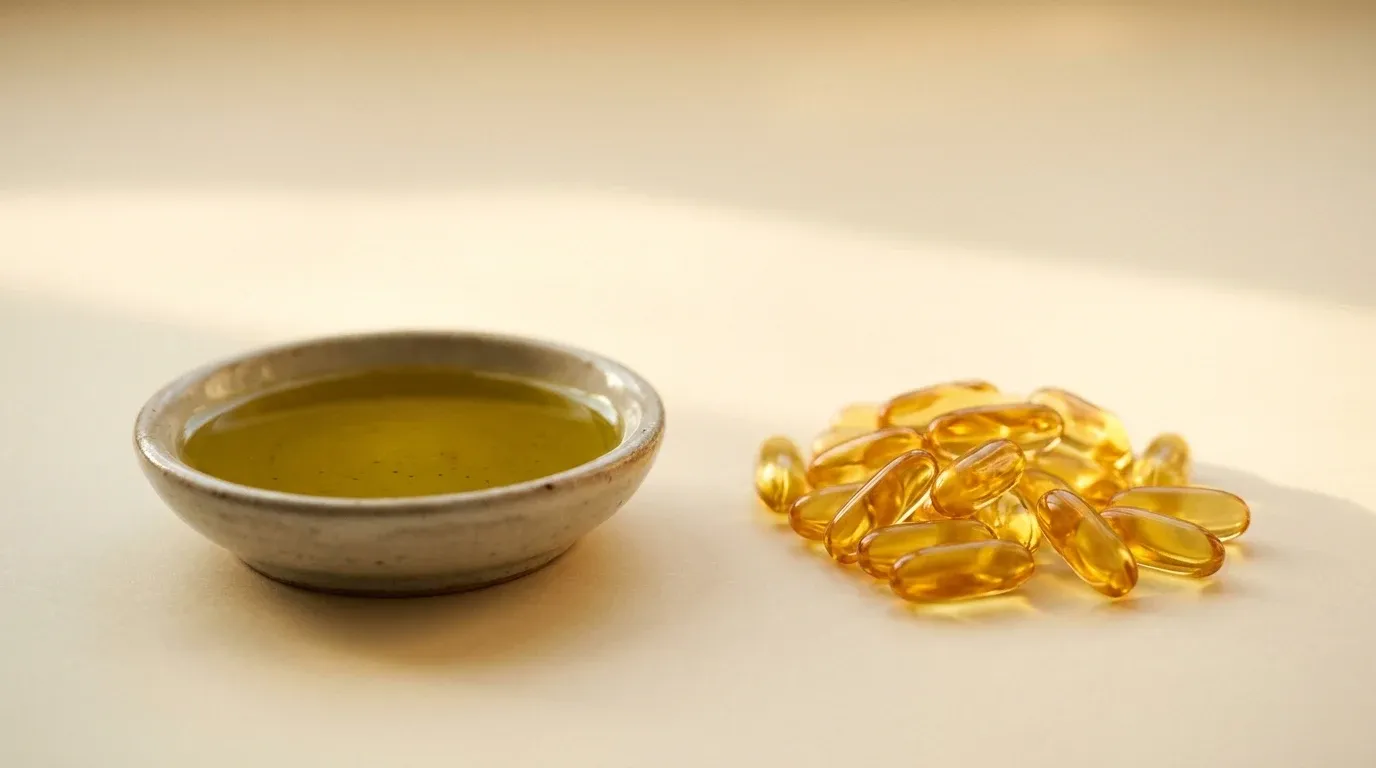
Two of the most debated fat sources in nutrition just got a closer look. Research published on August 19, 2026, examined how olive oil and fish oil perform as fat sources in clinical nutritional support settings, adding meaningful data to a conversation that affects anyone spending money on omega-3 supplements or reaching for extra virgin olive oil at the grocery store.
If you're an active adult trying to make smarter choices about dietary fat, this is the evidence check you've been waiting for.
What the New Research Examined
The August 2026 findings focused on how olive oil and fish oil function as fat sources in controlled clinical nutrition contexts. Rather than looking at general population diet patterns, researchers evaluated these oils under rigorous conditions, measuring how each one performs when fat quality and delivery method are tightly controlled.
This kind of clinical scrutiny matters because most of what people believe about these oils comes from observational studies, which can't fully isolate causation. A controlled clinical setting strips away a lot of the noise.
The study contributes to a growing body of evidence suggesting that the type of fat you consume, not just the total amount, has measurable effects on inflammation, recovery, and metabolic function. That distinction is especially relevant if you train regularly.
Olive Oil: What It Actually Delivers
Olive oil's primary claim to nutritional fame is its high concentration of monounsaturated fatty acids, particularly oleic acid. These fats have a well-established association with cardiovascular health and are a cornerstone of the Mediterranean diet, one of the most studied dietary patterns in the world.
Extra virgin olive oil also contains polyphenols, plant compounds with antioxidant and anti-inflammatory properties. Oleocanthal, one of the most studied polyphenols in olive oil, has been shown in laboratory settings to inhibit the same inflammatory pathways targeted by ibuprofen. That's a meaningful mechanism, even if the doses required in food form are far higher than in isolated studies.
What olive oil doesn't deliver in significant amounts is EPA and DHA, the long-chain omega-3 fatty acids that have the strongest human evidence for reducing systemic inflammation. That's where fish oil enters the picture.
Fish Oil: The Omega-3 Evidence Base
Fish oil is the primary dietary source of eicosapentaenoic acid (EPA) and docosahexaenoic acid (DHA). These are the omega-3 fatty acids that your body uses directly, unlike the ALA found in plant sources like flaxseed, which must be converted and typically does so at low efficiency rates of around 5 to 15 percent.
The evidence behind EPA and DHA is substantial. Meta-analyses have linked adequate omega-3 intake to reduced triglycerides, improved arterial function, lower resting heart rate, and measurable reductions in inflammatory markers including C-reactive protein. For cardiovascular health specifically, the research is among the strongest available for any dietary supplement.
If you want to understand how to evaluate those claims critically before spending money, The Supplement Trust Gap: How to Know What's Worth Buying is a practical framework for separating strong evidence from marketing noise.
Why Athletes Should Pay Attention to the Distinction
For people who train consistently, the difference between these two fat sources is more than academic. Exercise-induced inflammation is a normal part of adaptation, but when it's chronic or excessive, it slows recovery and increases injury risk. That's where omega-3s from fish oil have a specific and documented role.
Multiple randomized controlled trials have shown that EPA and DHA supplementation can reduce delayed onset muscle soreness, lower markers of exercise-induced muscle damage, and support the resolution of acute inflammation after hard training sessions. Olive oil's polyphenols contribute to antioxidant defense, but the mechanism and magnitude of effect are different.
Fish oil also has a stronger evidence base for supporting cardiovascular function in athletes, including improvements in heart rate variability and blood pressure response to exercise. For endurance athletes especially, that's not a trivial distinction.
Recovery optimization is increasingly understood as a performance variable in its own right. If you want the broader picture on how recovery connects to long-term health outcomes, Recovery Is Now a Longevity Strategy, Not an Afterthought covers the emerging science well.
Fat Quality and Hormonal Health in Active Adults
Beyond inflammation, dietary fat quality has measurable effects on hormonal health. Testosterone and other steroid hormones are synthesized from cholesterol, and the type of fat in your diet influences the lipid environment that supports that process. Chronically low fat intake, or diets dominated by poor-quality processed fats, can suppress testosterone production in both men and women.
Both olive oil and fish oil contribute positively here, but through different pathways. Monounsaturated fats from olive oil support the overall lipid profile that underpins hormone synthesis. Omega-3s from fish oil reduce the inflammatory load that can otherwise interfere with hormonal signaling over time.
This isn't a theoretical concern. Research in active populations has shown that omega-3 supplementation is associated with improved testosterone levels in some contexts, and that overall fat quality correlates with markers of hormonal health across genders.
Sleep quality is another variable that interacts with both fat intake and hormonal balance. Disrupted sleep amplifies inflammation and suppresses recovery hormones. AI Is Finding Sleep Insights Doctors Routinely Miss looks at how new technology is identifying patterns in sleep data that traditional clinical approaches often overlook.
Whole Foods vs. Supplements: A Real Difference
One of the more practically useful takeaways from clinical nutrition research is that isolated supplements rarely replicate the full effect of whole food sources. This applies directly to both olive oil and fish oil.
Extra virgin olive oil, consumed as a food rather than a capsule, delivers polyphenols, vitamin E, and squalene alongside its monounsaturated fats. Refined olive oil, or olive oil in encapsulated supplement form, loses much of that polyphenol content during processing. The therapeutic potential is considerably reduced.
Similarly, fatty fish like salmon, mackerel, sardines, and anchovies provide EPA and DHA alongside protein, vitamin D, selenium, and astaxanthin, a potent antioxidant. A fish oil capsule delivers the omega-3s but none of the surrounding micronutrient context.
That doesn't mean supplements are worthless. For people who don't eat fatty fish two to three times per week, a high-quality fish oil supplement is a reasonable and well-supported intervention. But it's worth understanding what you're getting and what you're not.
For a broader look at which recovery supplements actually have credible evidence behind them, 7 Recovery Supplements: Which Ones Actually Work? runs through the evidence across the most popular options.
Practical Takeaways for Active Adults
Here's how to apply the current evidence to your actual diet and supplement routine:
- Don't treat these as competitors. Olive oil and fish oil serve different functions. Using both, in appropriate amounts, is a coherent nutritional strategy. Aim for extra virgin olive oil as your primary cooking and dressing fat, and prioritize fatty fish or a high-quality fish oil supplement for omega-3s.
- Prioritize whole food sources when you can. Two to three servings of fatty fish per week covers your EPA and DHA baseline for most people. Use extra virgin olive oil liberally on salads, vegetables, and finished dishes where the polyphenols are preserved at lower temperatures.
- Check your supplement quality. Fish oil oxidizes. Rancid fish oil not only tastes bad but may generate harmful byproducts. Look for products with third-party testing, nitrogen-flushed packaging, and a clear expiration date. Expect to pay $25 to $45 for a month's supply of a credible product.
- Match your omega-3 dose to your training load. General health guidelines suggest 1,000 to 2,000 mg of combined EPA and DHA daily. Athletes in heavy training blocks may benefit from doses closer to 3,000 to 4,000 mg, based on clinical trial data in exercise populations.
- Dietary fat isn't the only recovery variable. Sleep, stress management, and training load management all interact with how well your body uses dietary fat. Addressing only nutrition while ignoring those factors limits your results.
The Bottom Line
The August 2026 research adds clinical weight to what nutrition science has been pointing toward for some time. Both olive oil and fish oil have legitimate and meaningful roles in a performance-oriented diet. They're not interchangeable, and understanding the specific mechanisms behind each one helps you use both more deliberately.
If you train hard and recover slowly, omega-3 supplementation from fish oil is one of the better-supported interventions available to you. If your diet already includes regular fatty fish, you may not need to supplement at all. And if your olive oil is the cheap, heavily refined variety sitting in a clear plastic bottle, switching to a quality extra virgin product is a straightforward upgrade with real polyphenol benefits.
Fat quality is one of the more controllable variables in a training diet. The research gives you a clear enough signal to act on it.