
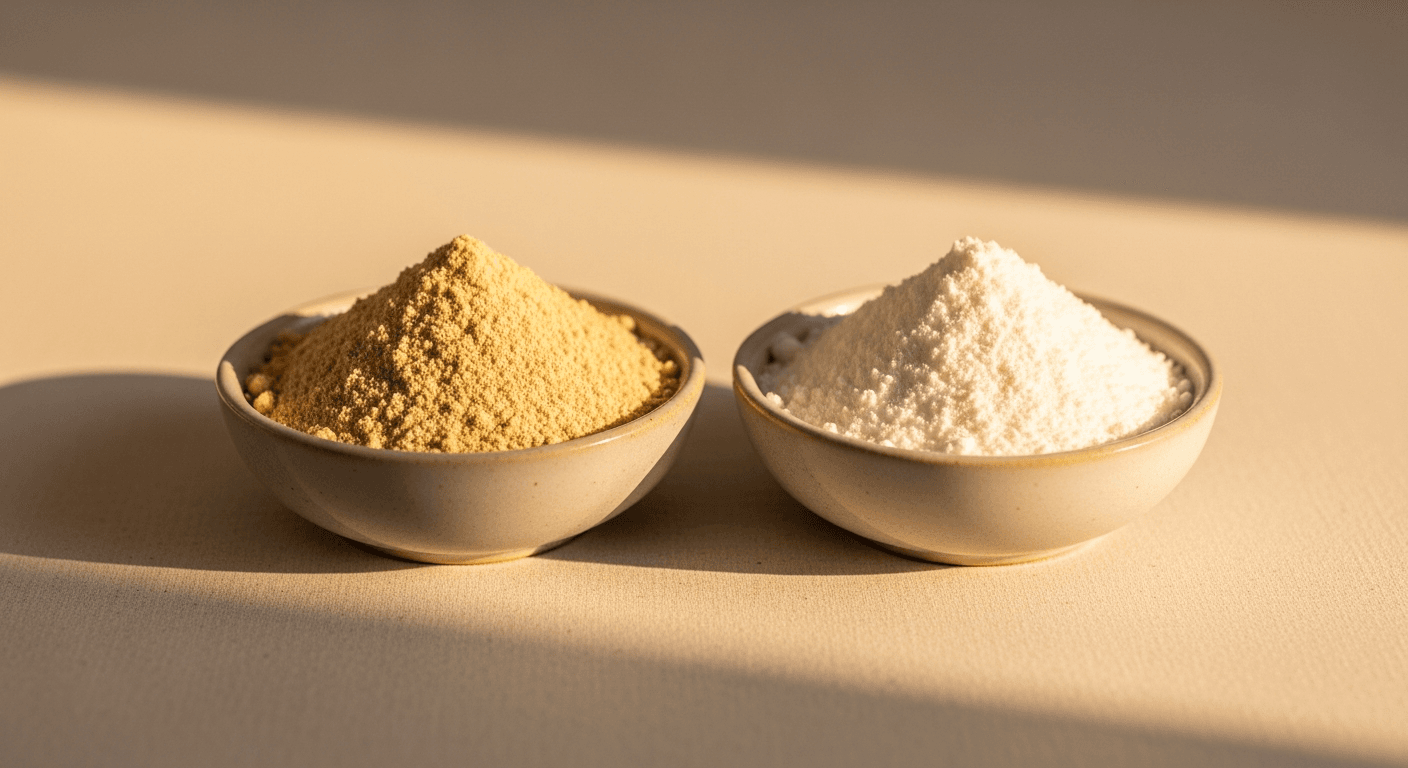
If you've spent any time in the supplement aisle recently, you've noticed the shelves are no longer dominated by whey alone. Plant-based proteins have carved out serious space, and the marketing behind them is loud. But louder marketing doesn't mean better results. Here's what the science actually says.
Key Takeaways
- Whey slightly outperforms plant proteins in leucine, the key amino acid for muscle synthesis
- Pea-rice blends achieve a PDCAAS score close to 1.0, rivaling animal proteins
- At equal total daily intake, muscle gains are comparable between whey and plant-based per recent meta-analyses
The Case for Whey Protein
Whey has been the gold standard in sports nutrition for decades, and it earned that reputation honestly. It's a complete protein, meaning it contains all nine essential amino acids your body can't produce on its own. It also digests quickly, flooding your muscles with amino acids during the critical post-workout window.
What really sets whey apart is its leucine content. Leucine is the amino acid that most directly triggers muscle protein synthesis, the process your body uses to build new muscle tissue. Whey typically delivers around 10-11% leucine by weight, which consistently puts it ahead of most single-source plant proteins in head-to-head studies.
Research published in nutrition journals has repeatedly shown that whey outperforms casein and many plant proteins in acute muscle protein synthesis responses, particularly in younger adults. If you're optimizing for speed of absorption and anabolic signaling, whey checks every box.
ILLUSTRATION: comparison-table | Comparative nutritional profiles (protein, lactose, price, digestibility)
The Case for Plant Protein
Plant proteins used to carry a reputation for being inferior for muscle building. That reputation is increasingly outdated. The gap between plant and whey has narrowed significantly as research has matured and formulations have improved.
A well-cited study found that when total protein intake is matched and leucine is equalized, pea protein produces muscle gains comparable to whey over a 12-week resistance training program. The key phrase there is "when matched." You can close most of the gap with the right strategy.
Pea protein is currently the most studied plant source, but blends combining pea with rice protein are particularly effective. Rice is higher in certain amino acids that pea lacks, and together they create a more complete amino acid profile. That complementary approach is why you'll see so many plant protein products listing multiple sources on the label.
Plant proteins also come with fiber, phytonutrients, and lower levels of saturated fat. For people managing cholesterol, digestive sensitivities, or simply aligning their diet with environmental values, those factors aren't minor. They're part of the full picture.
Amino Acid Profiles: Where the Real Difference Lives
ILLUSTRATION: tip-box | How to choose based on your profile and goals
This is where whey still holds a measurable edge. Most single-source plant proteins are either low in one or more essential amino acids, or they deliver a lower total leucine dose per gram. Soy is the exception. It's a complete protein with a solid amino acid profile, though its leucine content still trails whey.
If you're relying on a plant protein, you need to be deliberate about your leucine intake. Some experts suggest targeting at least 2.5-3 grams of leucine per serving to reliably trigger muscle protein synthesis. That might mean increasing your serving size, choosing a blend, or combining your protein shake with a leucine-rich food like edamame or tofu.
Digestibility also matters. Whey has a PDCAAS (Protein Digestibility Corrected Amino Acid Score) of 1.0, the maximum possible. Many plant proteins score lower, meaning a portion of the protein you consume doesn't get fully absorbed and utilized. That's a real variable to account for when planning your intake.
What the Long-Term Studies Show
Short-term studies often favor whey because they measure acute muscle protein synthesis. But long-term studies, which track actual muscle mass and strength gains over weeks and months, tell a more nuanced story.
ILLUSTRATION: stat-card | Protein content by product type
Multiple trials lasting 8-12 weeks show no statistically significant difference in lean mass gains between whey and plant protein groups when total daily protein targets are met. Your body doesn't care much about where the protein came from once it's broken down into amino acids. What it cares about is whether those amino acids showed up in sufficient quantities.
The practical takeaway is straightforward. If you're hitting your daily protein target, which most research places at 1.6-2.2 grams per kilogram of body weight for active individuals, the source matters less than the consistency. Whey gets you there efficiently. Plant proteins can get you there too, with slightly more planning.
How to Choose the Right Protein for You
There's no universal answer here, because your choice depends on more than just muscle-building potential. Here are the factors worth weighing.
- Dietary restrictions: If you're vegan or lactose intolerant, whey isn't a realistic option. A high-quality pea-rice blend is your most evidence-backed alternative.
- Budget: Whey concentrate is typically the most cost-effective protein per gram. Premium plant blends often run higher in price for equivalent protein content.
- Digestive tolerance: Some people experience bloating or discomfort with whey, particularly whey concentrate. Others have similar issues with certain plant proteins. It's worth testing both.
- Sustainability goals: Plant protein production generally has a lower environmental footprint than dairy-derived whey. If that aligns with your values, it's a legitimate factor in your decision.
- Total daily intake: If you're consistently hitting your protein targets through whole foods and supplementing strategically, the difference between whey and plant protein becomes almost negligible in terms of muscle outcomes.
The Bottom Line
Whey protein still holds a slight edge in terms of leucine content, digestibility, and acute anabolic response. If you're a competitive athlete or bodybuilder squeezing every percentage point out of your training, those differences are real and worth considering.
But for most people training consistently and eating enough total protein, plant proteins, especially well-formulated blends, deliver results that are functionally equivalent. The best protein is the one you'll actually use, digest well, and afford to take every day.
Don't let the perfect be the enemy of the effective. Whether you're shaking up whey or pea protein after your next session, what matters most is that you're hitting your numbers and staying consistent. That's what builds muscle over time. Not the label on the tub.
Want to dig deeper into optimizing your protein intake? Explore our nutrition guides for evidence-based strategies tailored to your training goals.
Frequently Asked Questions
Does plant protein build as much muscle as whey?
At equal total daily intake, muscle gains are comparable per recent meta-analyses. Whey has a slight leucine edge per serving, but this closes with a higher plant dose.