
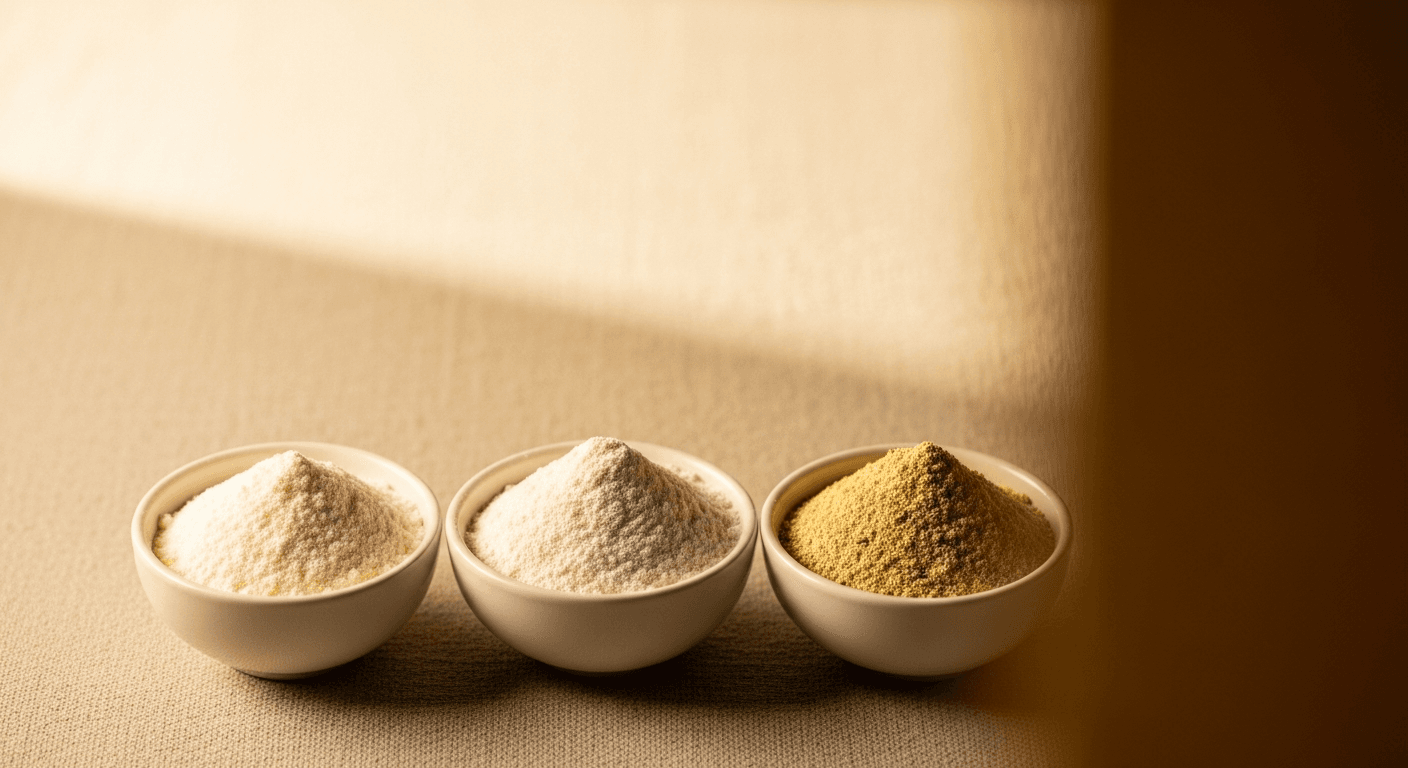
The protein powder aisle hasn't gotten simpler. You're staring at tubs of whey isolate, slow-release casein, and a growing wall of plant-based options, each with claims bold enough to fill a billboard. The truth is, the right choice depends on your goals, your digestion, your diet, and your budget. Here's how each type actually stacks up.
Key Takeaways
- Whey remains the gold standard for fast post-workout absorption with a complete amino acid profile
- Plant proteins (pea + rice) now offer comparable amino acid profiles to whey
- Casein is the best choice for sustained release, ideal as a snack or before bed
Amino Acid Profiles Compared
Amino acids are the building blocks your body uses to repair and build muscle tissue. Of the 20 amino acids, nine are essential, meaning your body can't produce them and you have to get them through food or supplementation. Of those nine, three branched-chain amino acids (BCAAs) — leucine, isoleucine, and valine — do the heaviest lifting when it comes to muscle protein synthesis.
Whey protein is derived from milk and is considered a complete protein. It contains all nine essential amino acids and is particularly high in leucine, typically delivering around 10–11% of its amino acid content as leucine. That matters because leucine is the primary trigger for muscle protein synthesis. Whey also has a high Protein Digestibility Corrected Amino Acid Score (PDCAAS) of 1.0, the maximum possible rating.
Casein is also derived from milk and is equally complete in its amino acid profile. Its leucine content is slightly lower than whey, sitting around 9–10%, but it still scores a PDCAAS of 1.0. The amino acid quality between whey and casein is close. The bigger difference shows up in digestion speed, which we'll cover shortly.
Plant-based proteins are where things get more complex. Most individual plant sources are incomplete or relatively low in one or more essential amino acids:
- Pea protein is high in BCAAs and lysine but low in methionine.
- Rice protein is the opposite: higher in methionine but low in lysine.
- Hemp protein is technically complete but delivers lower overall BCAA concentrations.
- Soy protein is a complete protein with a PDCAAS of 1.0 and a leucine content comparable to casein.
A blended plant protein that combines pea and rice, for example, can cover each other's amino acid gaps. Research published in Sports found that a pea-rice blend can achieve an amino acid profile that closely rivals whey when total protein intake is adequate. The key word is "blended." A single-source plant protein won't give you the same coverage.
ILLUSTRATION: comparison-table | Comparative nutritional profiles (protein, lactose, price, digestibility)
Digestion Speed and When It Matters
How fast a protein is digested changes when you should take it, not just whether it works. Digestion speed affects how quickly amino acids appear in your bloodstream and how long they stay there.
Whey is a fast-digesting protein. Studies show that whey can raise blood amino acid levels within 60–90 minutes of ingestion, making it well-suited for post-workout recovery when your muscles are primed for repair. That rapid spike in leucine is part of why whey is so frequently studied in resistance training contexts.
Casein digests slowly. It forms a gel-like clot in the stomach, which slows gastric emptying and creates a sustained, steady release of amino acids over four to seven hours. That makes it a strong candidate for a pre-sleep supplement. Research in the Medicine and Science in Sports and Exercise journal has shown that consuming casein before bed supports overnight muscle protein synthesis without interfering with fat metabolism.
Plant-based proteins fall in the middle of the spectrum depending on the source. Pea protein digests at a moderate pace, slower than whey but faster than casein. Soy protein is also moderately fast-digesting and has been shown in some studies to produce muscle protein synthesis rates that are lower than whey but meaningful, particularly over the course of a full day of adequate protein intake.
Here's the practical takeaway:
- Use whey post-workout when you want a fast amino acid surge.
- Use casein before bed for overnight recovery support.
- Use plant-based blends throughout the day as a flexible, diet-inclusive option.
If you're only using one protein supplement and timing isn't a priority, the differences in digestion speed matter less than your total daily protein intake. Most research supports a target of 1.6–2.2 grams of protein per kilogram of body weight for people engaged in regular resistance training.
Taste and Mixability
ILLUSTRATION: tip-box | How to choose based on your profile and goals
This matters more than the fitness industry likes to admit. A supplement you don't enjoy is a supplement you'll stop using.
Whey, especially whey concentrate, has a mild, slightly sweet dairy flavor that mixes well in water or milk. Whey isolate tends to be lighter and less creamy due to lower fat content. Most people find whey easy to incorporate into shakes, oats, or baked recipes. The texture is generally smooth with minimal grittiness.
Casein is thicker. Because of how it behaves in liquid, casein shakes have a pudding-like consistency that some people love and others find unpleasant. It's actually well-suited for mixing into Greek yogurt or overnight oats where thickness is an advantage. It doesn't mix as cleanly in plain water.
Plant-based proteins have historically been harder to enjoy. Pea protein on its own can taste earthy or chalky, and rice protein can have a slightly grainy texture. Modern formulations have improved considerably with the addition of natural flavors and gums that smooth the texture. Blended plant proteins tend to taste and mix better than single-source options. Soy protein generally has the cleanest taste profile of the common plant options.
If you're lactose intolerant, whey isolate is nearly lactose-free due to the filtering process, and casein is relatively low in lactose as well. But if you have a dairy sensitivity or follow a vegan diet, plant-based is your clear answer regardless of taste preferences.
Plant-Based Can Match Whey If You Choose Right
There's a persistent belief that plant protein is categorically inferior to animal-based protein for building muscle. The evidence doesn't fully support that position anymore.
ILLUSTRATION: stat-card | Protein content by product type
A 2020 study published in the Journal of the International Society of Sports Nutrition found that a pea-rice blend produced comparable gains in muscle thickness and strength to whey protein over an eight-week resistance training program when total protein intake was equated. The difference in outcomes was not statistically significant.
Where plant-based proteins do fall short on paper, it's usually in one of two areas: lower leucine content per serving and lower overall protein density by weight due to higher fiber or carbohydrate content in the powder. You can address both by slightly increasing your serving size or choosing a more concentrated plant isolate product.
Soy protein isolate specifically holds up well in direct comparisons with whey. It's complete, it has a high PDCAAS, and its anabolic response, while slightly lower acutely, produces similar results over time with consistent use. If you're plant-based and not using soy due to personal preference, a pea-rice blend is your next best option.
The bottom line: plant protein works. You may need to be more deliberate about the blend you choose and the dose you take, but the gap with whey is smaller than most people think.
Price Per Gram of Protein Compared
Let's look at cost in the most useful unit: price per gram of protein, not price per tub.
- Whey concentrate is typically the most affordable. You're generally looking at $0.03 to $0.05 per gram of protein depending on the source and quantity purchased.
- Whey isolate costs more due to additional processing. Expect roughly $0.05 to $0.08 per gram of protein.
- Casein tends to sit slightly above whey concentrate, usually in the $0.04 to $0.07 range per gram of protein.
- Plant-based proteins have a wide range. Soy isolate can be very affordable, comparable to whey concentrate. Pea-rice blends with added processing and flavor work often land between $0.05 and $0.10 per gram of protein. Premium plant formulas can exceed $0.12 per gram.
The market is shifting. As plant-based production scales up, the price gap between plant and animal-based proteins has narrowed significantly over the last five years. You're no longer paying a major premium to go plant-based. That said, if budget is a primary concern, unflavored whey concentrate or soy isolate gives you the most protein per dollar.
Who Each Type Is Best For
Here's a direct breakdown to help you match the protein to your situation.
Whey concentrate is best for: recreational athletes and regular gym-goers who want effective, affordable post-workout protein and tolerate dairy without issues. It's the most studied option with the strongest evidence base for muscle building.
Whey isolate is best for: people who are lactose-sensitive but not fully dairy-free, those in a caloric deficit who want high protein without extra fat or carbs, and athletes who prioritize the fastest possible amino acid delivery.
Casein is best for: people who train hard and want to optimize overnight recovery. It's also a smart option if you go long stretches without eating and want sustained amino acid availability. It works well for people who find thick, filling textures satisfying.
Plant-based blends (pea-rice or soy) are best for: vegans, vegetarians, people with dairy allergies, and anyone with digestive sensitivities to dairy proteins. They're also a solid choice for endurance athletes and people who supplement protein throughout the day rather than relying on single large doses.
Single-source plant proteins are best for: people with specific dietary restrictions or allergies who understand the amino acid gaps and account for them through their overall diet. Don't rely on hemp protein alone as a primary supplement without tracking your overall amino acid intake from food.
Ultimately, the best protein powder is the one that fits your diet, your lifestyle, your digestion, and your budget. The differences between types are real but not dramatic enough to override practical factors. Get your total daily protein right, choose a quality product, and stay consistent. That's what drives results.
Frequently Asked Questions
Which protein powder should a beginner choose?
Whey concentrate is the best starting point: good value with a complete amino acid profile. Switch to isolate for lactose intolerance, or pea+rice blend for vegans.
Are plant proteins less effective for muscle?
Latest studies show comparable results at equal total intake. The pea+rice blend fills amino acid gaps. Use a slightly higher dose to compensate for lower digestibility.
Related articles
- Plant Protein vs Whey: Which Is Better for Muscle Building?
- Whey Concentrate vs Whey Isolate: Which Should You Buy?
- How to choose a personal trainer in 2026