
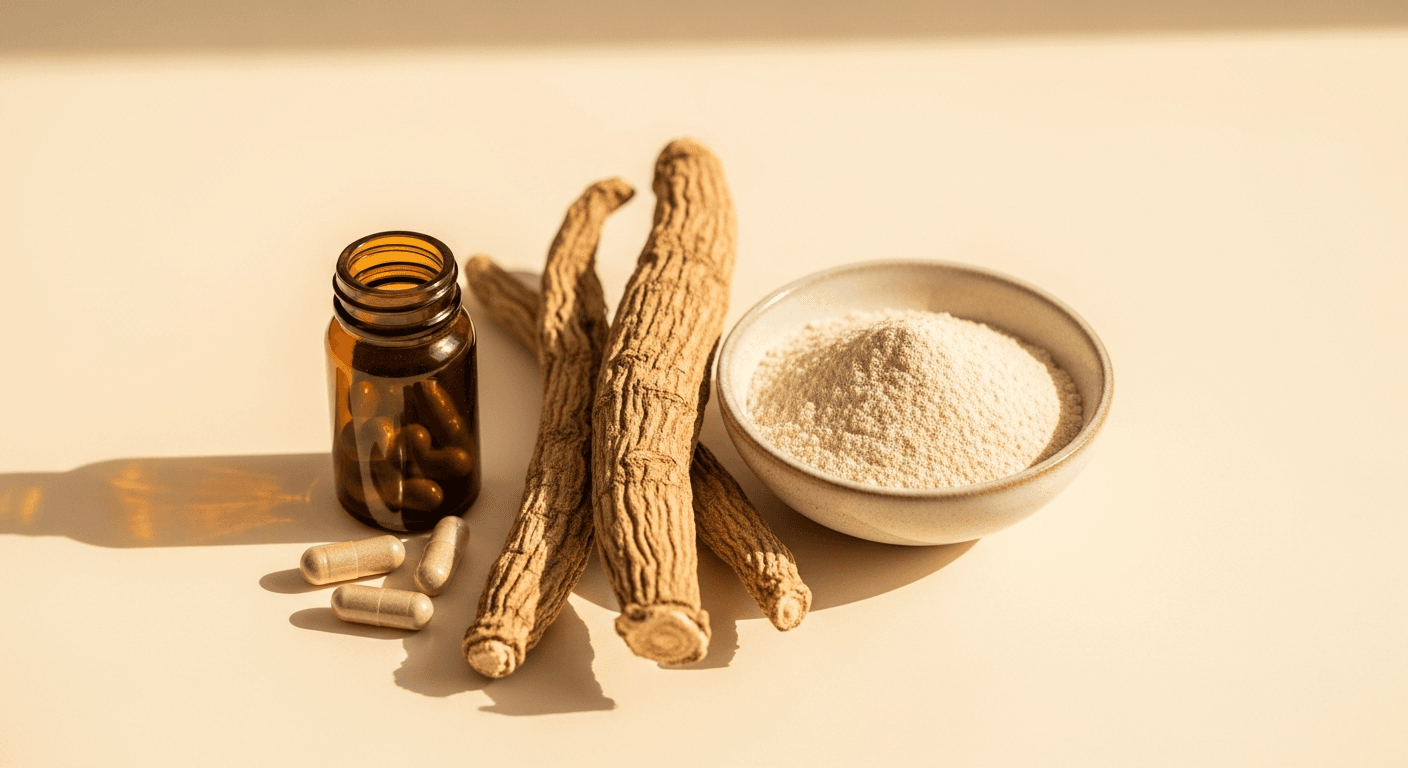
The supplement aisle for menopause and hormonal health has long been a minefield of vague claims, proprietary blends, and products with no regulatory backing. That's starting to change, at least for one specific ingredient. In July 2026, Health Canada issued a Natural Product Number (NPN) to SRI-81 Shatavari, a standardized extract produced by Ixoreal Biomed. It's a meaningful shift in a category where credibility is hard to come by.
For women navigating peri-menopause, the timing matters. Regulatory approval doesn't just protect consumers from misleading labels. It signals that a product has met a defined evidence threshold and that the claims on the packaging are actually authorized. Here's what the approval covers, what it doesn't, and how to use that information when you're shopping for supplements.
What Health Canada's NPN Actually Means
A Natural Product Number is issued by Health Canada after a product demonstrates safety, quality, and efficacy for its stated health claims. It's not a rubber stamp. Getting an NPN requires submitting clinical evidence, manufacturing documentation, and proposed label language for regulatory review. Products without an NPN are not authorized to make health claims in Canada.
SRI-81 Shatavari received authorization for five specific health claims, covering peri-menopause symptom relief and sexual health support. Those claims are meaningful precisely because they're narrow. Regulators don't approve sweeping language about "hormonal balance" or "women's wellness." Approved claims reflect what the submitted evidence actually supports.
This matters for context, too. The US supplement market operates under a very different framework. The FDA does not pre-approve dietary supplements for efficacy. A Health Canada NPN carries a level of pre-market scrutiny that most US supplement labels simply don't reflect. If you want to understand just how wide that gap can be, the breakdown in Can You Actually Trust What's on Your Supplement Label? is worth reading before you buy anything in this category.
The Five Approved Health Claims
Health Canada authorized SRI-81 for a cluster of peri-menopause and sexual health claims. While the precise regulatory wording is technical, the authorized claims broadly cover:
- Relief of peri-menopausal symptoms, including vasomotor symptoms like hot flashes and night sweats
- Support for sexual health in women experiencing peri-menopausal changes, including desire and comfort
- Traditional Ayurvedic use as an adaptogen supporting female reproductive health
- Antioxidant properties linked to the steroidal saponins in Shatavari root
- General female hormonal support during transitional phases of reproductive life
Five approved claims for a single supplement formulation is notable. Most herbal products that reach this stage receive authorization for one or two traditional use claims. The breadth here reflects the depth of evidence Ixoreal submitted, including clinical data specific to the SRI-81 extract, not just general research on Shatavari as a botanical category.
That distinction matters. Health Canada's approval applies to SRI-81 specifically. Not all Shatavari products on the market are equivalent, and other brands cannot legally claim Health Canada authorization for their formulations unless they've gone through the same process.
What Is Shatavari and Why Is It Gaining Traction Now?
Shatavari (Asparagus racemosus) is a climbing plant native to South Asia that has been used in Ayurvedic medicine for thousands of years. Its name translates loosely to "she who has a hundred husbands," reflecting its historic association with female fertility and vitality. The root extract is the most studied form, and its primary active compounds are steroidal saponins called shatavarins.
Shatavari is classified as an adaptogen, meaning it's thought to help the body manage physiological stress rather than acting on a single pathway. Research has examined its phytoestrogenic properties, its potential to moderate cortisol, and its effects on markers of sexual function and vaginal health in peri-menopausal women. The evidence base is still developing, but it has grown considerably in the past decade.
The timing of this approval aligns with a broader shift in how women are approaching peri-menopause. Mainstream conversations about hormonal health, HRT access, and the limitations of conventional care have pushed more women to look at evidence-based alternatives. The problem is that "evidence-based" is a phrase that supplement brands apply loosely. Regulatory authorization cuts through that noise.
Shatavari also fits into a wider conversation about personalized nutrition and using your biology to guide supplementation choices. If you're working with a practitioner and tracking biomarkers, resources like Personalized Nutrition: How to Actually Use Your Blood Work can help you interpret what hormonal changes mean for your supplement strategy.
The Quality Gap in Herbal Supplements
Here's the uncomfortable truth about the herbal supplement market: most products are not standardized, not third-party tested, and not subject to any pre-market review of their efficacy claims. Brands can sell products with Shatavari on the label while using root powder of unknown potency, contaminated supply chains, or concentrations far below what clinical research used.
This isn't speculation. Independent testing labs have repeatedly found that botanical supplements contain less of the active ingredient than labeled, or in some cases, none at all. The problem is consistent enough that it warrants its own scrutiny, which Why Supplement Labels Still Can't Be Trusted in 2026 addresses directly.
When you're buying Shatavari, look for these quality signals:
- Standardized extract percentage. Look for products that specify the percentage of steroidal saponins, the active compound class. A non-standardized "root powder" product is not equivalent to a clinical extract.
- NPN authorization (for Canadian products). If a product is sold in Canada and claims peri-menopause benefits, it should carry a Health Canada NPN. If it doesn't, those claims aren't authorized.
- Third-party testing certification. Look for NSF Certified for Sport, USP Verified, or Informed Sport logos. These indicate independent verification of what's actually in the product.
- Manufacturer transparency. Companies that publish certificates of analysis (COAs) for each batch and disclose their supply chain are operating at a different standard than those that don't.
- Clinical specificity. If a brand cites research, check whether the study used the same extract and dosage as what's in the product. Research on one Shatavari extract doesn't automatically validate a different one.
SRI-81 by Ixoreal Biomed clears several of these bars by default, given the NPN process. That doesn't mean it's the only quality option, but it provides a useful reference point for what legitimate documentation looks like.
How to Integrate This Into Your Wellness Routine
Regulatory approval answers the question of whether a product is legitimate. It doesn't answer whether it's right for you. Peri-menopause presents differently for every woman. Vasomotor symptoms, sleep disruption, mood changes, libido shifts, and metabolic changes can occur in any combination and at varying intensity.
Sleep disruption is one of the most commonly reported peri-menopausal complaints, and it's worth noting that it's also one of the most underdiagnosed. If you're waking frequently, running hot, or experiencing fragmented sleep, a supplement isn't a substitute for ruling out other causes. Managing sleep quality well during hormonal transitions is genuinely complex.
Shatavari is not a replacement for medical care, and it's not a substitute for foundational habits. Diet quality, stress management, sleep hygiene, and movement all remain primary levers for managing hormonal transitions. The Simple Diet Changes That Actually Move the Needle framework applies here as much as anywhere. Supplements work best as additions to a solid base, not as workarounds for its absence.
If you're already taking medications or hormone therapy, speak with a prescriber before adding Shatavari. Phytoestrogenic compounds can interact with hormone-sensitive conditions, and the "natural" label doesn't mean interaction-free.
What This Approval Signals for the Industry
Health Canada's NPN for SRI-81 Shatavari is not just a win for one product. It's a data point in a broader push for regulatory accountability in the women's health supplement space. For years, this category has operated largely on marketing language and consumer trust. That dynamic is slowly shifting as manufacturers with strong evidence bases pursue formal authorization.
For consumers, the practical takeaway is that regulatory benchmarks now exist in this space. You don't have to rely solely on brand claims or influencer recommendations. You can ask whether a product has gone through a recognized approval process, whether its claims are authorized, and whether its extract is standardized and verified.
That's a higher bar than most products in this space can currently meet. But it's a bar that's now been cleared, which means it's a bar you're entitled to expect.
The supplement industry won't clean itself up overnight. But approvals like this one give you a concrete way to filter signal from noise. In a category that has historically offered more promises than proof, that's not a small thing.