
If you're in your late 30s or 40s and training hard, you may have noticed that your body doesn't always respond the way it used to. Sleep feels less restorative. Recovery takes longer. Mood dips arrive without obvious cause. For many active women, these shifts signal the onset of perimenopause, a transition that can last a decade and disrupt nearly every system in the body.
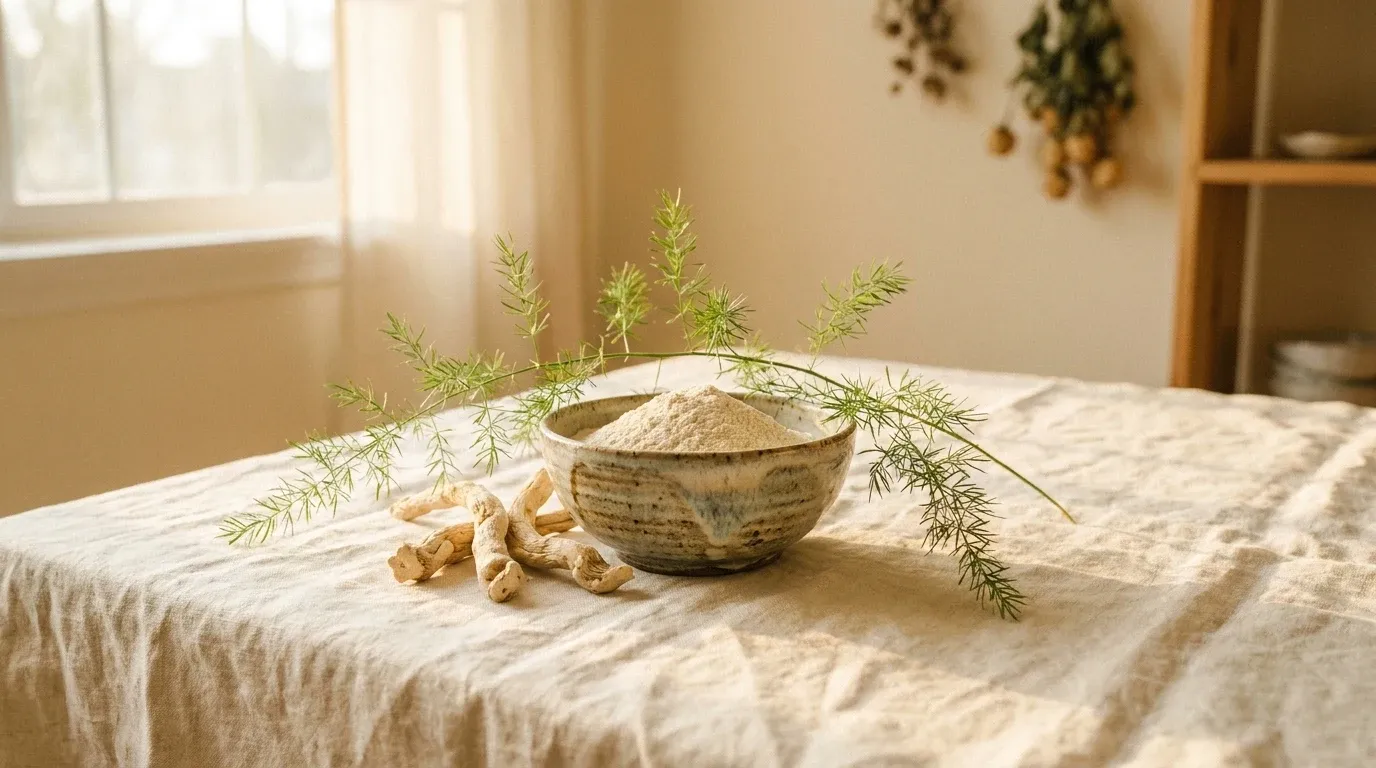
Enter shatavari. Derived from Asparagus racemosus, a climbing plant native to India and the Himalayas, shatavari has been used in Ayurvedic medicine for centuries as a women's tonic. Now, emerging clinical research is putting it under a more rigorous lens, and the early results are drawing serious attention from sports nutritionists, integrative medicine practitioners, and women's health researchers alike.
What Perimenopause Actually Does to an Active Body
Perimenopause isn't a single event. It's a years-long hormonal shift characterized by fluctuating and declining estrogen and progesterone levels. For women who train regularly, this transition layers on top of existing physiological demands in ways that can feel compounding and frustrating.
Common symptoms include vasomotor issues like hot flashes and night sweats, disrupted sleep, increased anxiety, brain fog, joint discomfort, and a measurable decline in muscle recovery capacity. Research consistently shows that poor sleep alone is enough to blunt training adaptations, impair glucose metabolism, and elevate cortisol. When you add hormonal volatility to an already demanding training schedule, the cumulative load becomes significant.
That intersection between perimenopausal symptoms and athletic performance is precisely why evidence-based support options matter. It's also why a supplement that addresses multiple symptoms simultaneously, rather than targeting just one, holds particular appeal. As outlined in Recovery Is Now a Longevity Strategy, Not an Afterthought, the conversation around women's health and physical performance is shifting toward systemic support rather than isolated fixes.
The Active Compounds in Shatavari
Shatavari's primary bioactive constituents are steroidal saponins known as shatavarins, along with isoflavones, polysaccharides, and alkaloids. Of these, the shatavarins are thought to be the most pharmacologically relevant for hormonal applications.
Shatavarins are believed to exert phytoestrogenic activity, meaning they can interact with estrogen receptors in ways that may partially compensate for declining endogenous estrogen. This mechanism is similar in principle to what's observed with other phytoestrogens like those found in soy or red clover, though shatavari's specific receptor binding profile and downstream effects appear to differ meaningfully from those compounds.
Beyond phytoestrogenicity, shatavari also appears to influence the hypothalamic-pituitary-adrenal (HPA) axis, which governs the stress response. This adaptogenic property is increasingly seen as central to its value during perimenopause, when cortisol dysregulation tends to amplify other symptoms. The plant also shows preliminary evidence of antioxidant and immunomodulatory activity, adding further layers to its proposed mechanism of action.
What the Research Currently Shows
The clinical evidence base for shatavari in perimenopausal women is growing, though it remains early-stage. Several small-to-medium randomized controlled trials have examined its effects on vasomotor symptoms, mood, and fatigue, with broadly encouraging results.
One area of consistent interest is hot flash frequency. Some trials using standardized shatavari root extract at doses ranging from 250 mg to 500 mg daily have reported reductions in hot flash frequency and severity over eight to twelve weeks. Effect sizes have been modest to moderate, not dramatically outperforming placebo in every study, but statistically meaningful in several.
Where shatavari differentiates itself from single-target interventions is in the breadth of reported benefits. Across studies, participants have reported improvements not just in vasomotor symptoms but also in sleep quality, anxiety levels, and self-reported energy. This multifaceted profile is clinically significant because most perimenopausal women aren't dealing with one isolated symptom. They're managing a cluster of them simultaneously.
Preclinical data also support its adaptogenic claims. Animal studies have shown shatavari extracts reducing corticosterone levels under stress conditions, which aligns with the HPA-axis modulation hypothesis. While animal data don't translate directly to human outcomes, they provide useful mechanistic scaffolding for the clinical trials underway.
The Honest Caveats
Here's where editorial honesty matters. The shatavari evidence base is genuinely promising, but it's not yet robust enough to make unqualified claims. Most trials have involved relatively small samples, short durations (under 16 weeks), and varying extract preparations, making cross-study comparisons difficult.
Standardization is a particular challenge. Shatavari supplements on the market vary widely in their shatavarin content, extraction methods, and bioavailability. A product labeled "500 mg shatavari extract" tells you very little without knowing the shatavarin concentration and the extraction process used. This is a problem common to the broader botanical supplement category, and it's one you should scrutinize before spending money. The Supplement Trust Gap: How to Know What's Worth Buying offers a practical framework for doing exactly that.
Additionally, most existing trials have been conducted in South Asian populations, and the generalizability of results to Western cohorts hasn't been firmly established. Gut microbiome composition, baseline diet, and genetic variation in phytoestrogen metabolism can all influence how a given individual responds to shatavari. More diverse trial populations are needed.
Safety data, at least for short-term use at studied doses, looks reasonably clean. Reported adverse effects have been mild and infrequent, with gastrointestinal discomfort being the most commonly noted. Women with hormone-sensitive conditions should consult a physician before using any phytoestrogen-containing supplement, including shatavari.
Shatavari and the Stress-Recovery Axis
One of the more compelling aspects of shatavari for active women is its potential role in stress modulation. Perimenopause doesn't happen in isolation. If you're training four or five days a week, managing work stress, and sleeping poorly, your cortisol load is already elevated. Add perimenopausal hormonal volatility and you have conditions that can push recovery capacity to its limit.
Research into stress reduction interventions increasingly shows downstream benefits for cardiovascular health, as explored in Stress Reduction Lowers Blood Pressure: What the New Trial Shows. If shatavari's adaptogenic properties are confirmed in larger trials, its value may extend well beyond symptom management into broader physiological resilience during a high-allostatic-load life phase.
For athletes and active women specifically, this matters because perimenopausal symptoms don't just feel bad. They can objectively impair training. Hot flashes disrupt sleep architecture. Poor sleep blunts protein synthesis and glycogen replenishment. Brain fog reduces training motivation and technical execution. If shatavari can modestly improve even two or three of these interconnected issues, the cumulative effect on training quality could be meaningful.
How Shatavari Fits Into a Broader Support Strategy
Shatavari shouldn't be positioned as a standalone solution. The research doesn't support that framing, and responsible supplementation never works in isolation anyway. Think of it as a potential adjunct within a broader perimenopause management strategy that includes nutrition optimization, strength training, sleep hygiene, and where appropriate, medical consultation about hormone therapy options.
From a nutritional standpoint, shatavari pairs logically with other evidence-supported interventions. Magnesium, for example, has established data for sleep quality and muscle function. Creatine is gaining traction in women's health research, particularly for preserving lean mass during hormonal transitions. If you're looking at the supplement landscape more broadly, 7 Recovery Supplements: Which Ones Actually Work? provides a useful comparative overview of what the evidence actually supports.
Training program design also deserves a rethink during perimenopause. Many active women in this life phase are still running the same programs they used in their early 30s, without adjusting for longer recovery windows, changed hormonal signaling, and altered injury risk. Working with a knowledgeable coach, either in-person or remotely, can help you adapt your approach intelligently rather than grinding through diminishing returns.
Practical Takeaways If You're Considering Shatavari
- Look for standardized extracts. Products that specify shatavarin content (typically 5 to 10 percent) give you a more reliable basis for dosing than raw powder products.
- Expect a trial period. Most studies showing benefit used supplementation periods of eight to twelve weeks. Don't expect results in days.
- Start at lower doses. Clinically studied doses have generally ranged from 250 mg to 500 mg of standardized extract daily. Higher doesn't automatically mean better.
- Track multiple outcomes. Given the multifaceted symptom profile of perimenopause, keep notes on sleep, energy, mood, and vasomotor symptoms separately. This helps you assess whether you're actually responding.
- Talk to your doctor. This is especially important if you have a history of hormone-sensitive conditions, are on any medications, or are already using hormone therapy.
The Bottom Line
Shatavari is one of the more scientifically interesting botanicals to enter the mainstream women's health conversation in recent years. The evidence suggests it may offer real, if modest, benefits across multiple perimenopausal symptoms simultaneously. That breadth of action is what sets it apart from more narrowly targeted supplements.
But "interesting" and "proven" aren't the same thing. Larger, better-designed trials with diverse populations and standardized extract preparations are needed before shatavari can be recommended with the same confidence as well-established interventions. What the current evidence does justify is taking it seriously as a candidate for further research and as a supplement worth discussing with your healthcare provider if you're navigating the perimenopausal transition.
For active women managing the overlap between hormonal change and training demands, that combination of scientific plausibility and a reasonable safety profile makes shatavari worth understanding. The research is moving. Watch this space.