
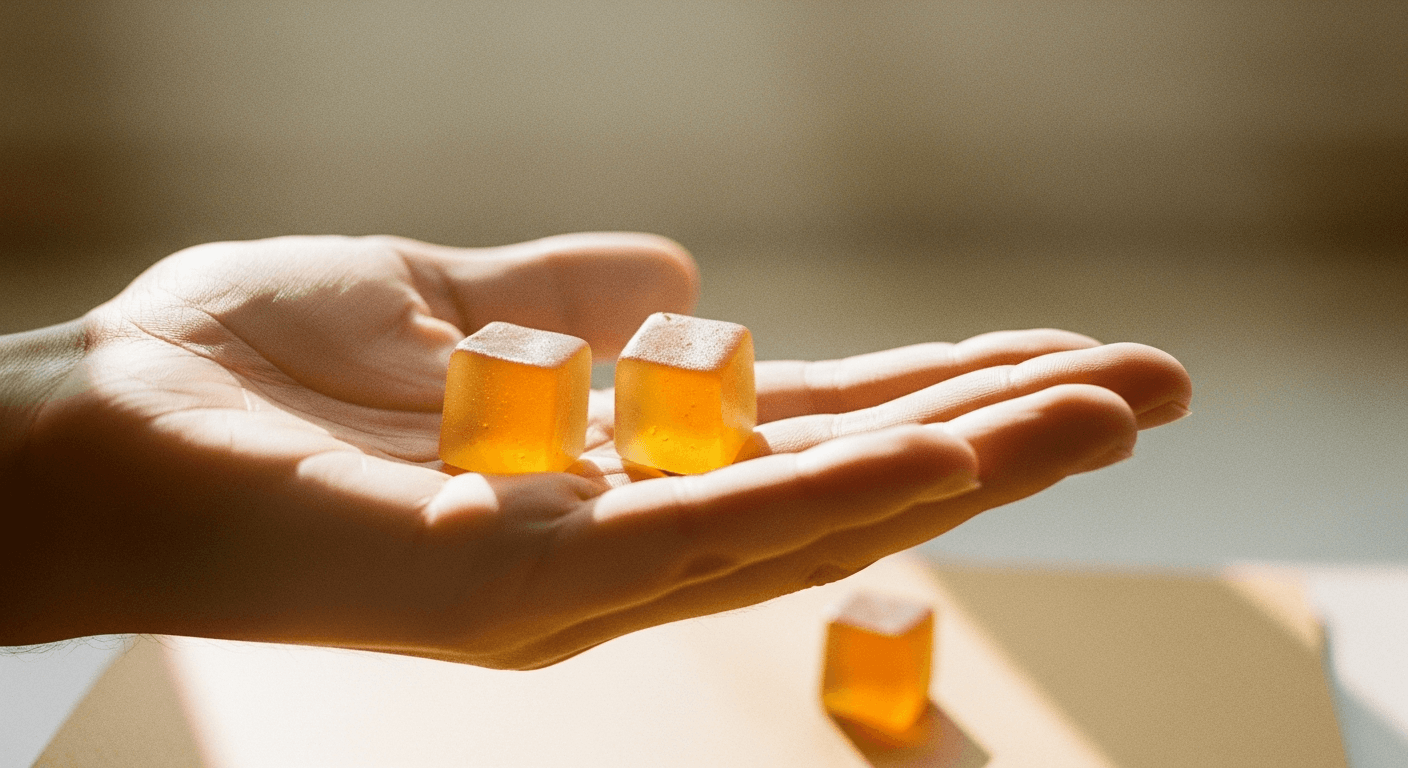
Walk into any supplement retailer or scroll through a fitness influencer's feed and you'll find THC gummies marketed as recovery tools, sleep aids, and stress relievers for active people. The branding is polished, the claims are confident, and the products move fast. But if you're an athlete, a frequent traveler, or simply someone who takes their health seriously, the gap between the marketing and the reality is worth understanding before you open that bag.
The Legal Map Is Not What Brands Suggest
THC, the primary psychoactive compound in cannabis, is federally classified as a Schedule I controlled substance in the United States. That classification hasn't changed, even as individual states have moved aggressively toward legalization. As of 2025, recreational cannabis is legal in 24 states and Washington D.C., but it remains fully illegal in 13 states, with others permitting only medical use under strict conditions.
That patchwork creates real, practical risk. A THC gummy you purchase legally in Colorado does not become legal when you cross into Texas. Transporting cannabis products across state lines, even between two legal states, constitutes a federal offense because you're crossing federal jurisdiction. Airlines operate under federal law regardless of departure and arrival states. If you're stopped at an airport, on a highway, or in a state where cannabis is prohibited, local legality back home offers zero protection.
The gray zone extends further with hemp-derived delta-8 and delta-9 THC products, which have flooded the market under a loophole in the 2018 Farm Bill. These products are sold openly in states where cannabis is otherwise restricted, but their legal status is actively contested, and several states have moved to ban them explicitly. If a label says "hemp-derived" or "legal in all 50 states," treat that claim with significant skepticism.
WADA's Position Has Not Softened
For any athlete subject to anti-doping rules, the legal status in your zip code is essentially irrelevant. The World Anti-Doping Agency prohibits all natural and synthetic cannabinoids in-competition. That includes THC, synthetic THC, and structurally similar compounds. Out-of-competition use is not currently banned, but WADA's threshold for in-competition testing is set at 150 nanograms per milliliter in urine, a level that chronic or heavy users can exceed even if they stopped using days before an event.
The consequences of a positive test are serious. A first violation typically results in a two-year suspension for prohibited substance use, regardless of whether the athlete was aware of the compound's presence or consumed it in a state where it was legally purchased. "I didn't know" and "it's legal where I live" are not defenses recognized under the World Anti-Doping Code.
National governing bodies, collegiate athletic programs under NCAA rules, and professional leagues each maintain their own testing protocols, many of which are stricter than WADA's threshold. If you compete at any level where testing is possible, THC gummies carry meaningful career risk that no amount of wellness marketing acknowledges.
What the Performance Evidence Actually Shows
The claims made for THC gummies in athletic contexts typically center on three areas: muscle recovery, sleep quality, and stress reduction. The evidence base for each is considerably thinner than the marketing implies.
On recovery, the peer-reviewed literature is sparse and largely inconclusive. Some preclinical studies suggest cannabinoids may modulate inflammation pathways, but animal model findings have not translated reliably into human performance outcomes. The handful of human trials that exist tend to be small, methodologically limited, and frequently funded by cannabis industry stakeholders. That's a pattern worth recognizing. As a comparison, the $70B supplement industry is still mostly unregulated, and cannabis products sit in one of its least scrutinized corners.
On sleep, THC does appear to reduce the time it takes to fall asleep in some users, but it also suppresses REM sleep with consistent use, which is precisely the sleep stage most associated with cognitive recovery and memory consolidation. The relationship between cannabis and sleep quality is more complicated than "it helps you sleep." For a fuller picture of evidence-based sleep science, how scientists changed their view of insomnia is worth reading before you reach for a gummy.
On stress, THC produces acute anxiolytic effects at low doses in some users while triggering anxiety and paranoia at higher doses in others. Dose sensitivity is highly individual and not predictable from a label. The stress-relief narrative also ignores that chronic THC use has been associated with increased baseline anxiety in some populations, particularly when use stops.
If you're looking for recovery strategies with stronger evidence behind them, compounds like urolithin A have drawn more rigorous attention. Urolithin A and recovery data from elite athlete studies offers a useful contrast to the anecdote-heavy THC literature. Similarly, stress management strategies grounded in current research outline approaches with considerably stronger trial data.
CBD and THC Are Not the Same Thing
Supplement marketing has done an exceptional job conflating cannabidiol (CBD) and tetrahydrocannabinol (THC) in the minds of consumers. Both come from the cannabis plant, but their pharmacology, legal status, and risk profiles are substantially different.
CBD is non-psychoactive, is not prohibited by WADA out-of-competition, and has a more established, if still developing, clinical evidence base, most notably for certain seizure disorders. It was removed from WADA's prohibited list in 2018. THC remains prohibited in-competition and is psychoactive.
The conflation matters practically because many products marketed as "CBD gummies" or "hemp gummies" contain trace or non-trace amounts of THC. Full-spectrum CBD products, by definition, include all cannabinoids present in the plant, including THC. Broad-spectrum products are processed to remove THC, but third-party verification of that removal is inconsistent. A product labeled CBD can, and frequently does, deliver THC to your system.
This matters especially for athletes who assume that because CBD is permitted, any cannabis-adjacent product is safe from a testing standpoint. That assumption is wrong, and it's one that has ended competitive careers.
Label Claims and Actual Content Diverge Significantly
The absence of meaningful federal oversight over cannabis and hemp-derived supplements creates a direct consumer safety problem: what's on the label frequently doesn't match what's in the product.
Studies analyzing commercially available CBD and THC products have consistently found substantial discrepancies between labeled and actual cannabinoid content. One widely cited analysis found that fewer than one-third of commercially available CBD products were accurately labeled, with some containing significantly more THC than disclosed and others containing far less of the stated active ingredient than claimed.
For athletes, this variability isn't an abstract concern. It means that a product positioned as containing 5mg of THC per gummy might deliver 12mg, or that a product claiming to be THC-free delivers enough to trigger a positive drug test. Because manufacturing standards are not uniformly enforced, batch-to-batch consistency within the same brand is also not guaranteed.
Third-party testing certificates, or Certificates of Analysis (COAs), are the standard recommendation for vetting cannabis products, but COAs are not always current, and some are manipulated or fabricated. Even a legitimate COA reflects testing of a specific batch, not the product currently sitting on a shelf.
The Bigger Picture for Fitness-Focused Consumers
None of this means that cannabinoids will never have a meaningful role in recovery science. Research is active, regulatory frameworks are evolving, and some clinical applications may emerge with stronger evidence in coming years. But "may have future potential" is not the same as "proven recovery tool," and that distinction matters when you're making decisions about your body, your compliance with competition rules, and your legal exposure while traveling.
If you're a competitive athlete, the risk calculus is straightforward. WADA prohibition plus label inaccuracy plus legal variability by jurisdiction equals a combination of risks that no marketing claim about recovery or stress relief justifies taking on.
If you're a recreational athlete or fitness enthusiast without testing obligations, the question becomes whether the evidence for THC gummies is strong enough to justify the legal complexity and product reliability issues. Given the current state of the data, most evidence-based practitioners would argue it isn't, especially when the alternatives, from structured sleep protocols to nutritional strategies grounded in current dietary science like those covered in the 2025 to 2030 dietary guidelines, carry none of the same risk profile.
The fitness industry moves fast, and products that sound compelling often reach consumers long before the science catches up. THC gummies are the current version of that pattern. The brands selling them are not operating in bad faith, necessarily, but they're operating ahead of the evidence and ahead of a legal landscape that hasn't resolved itself. For now, that's your problem to manage, not theirs.