
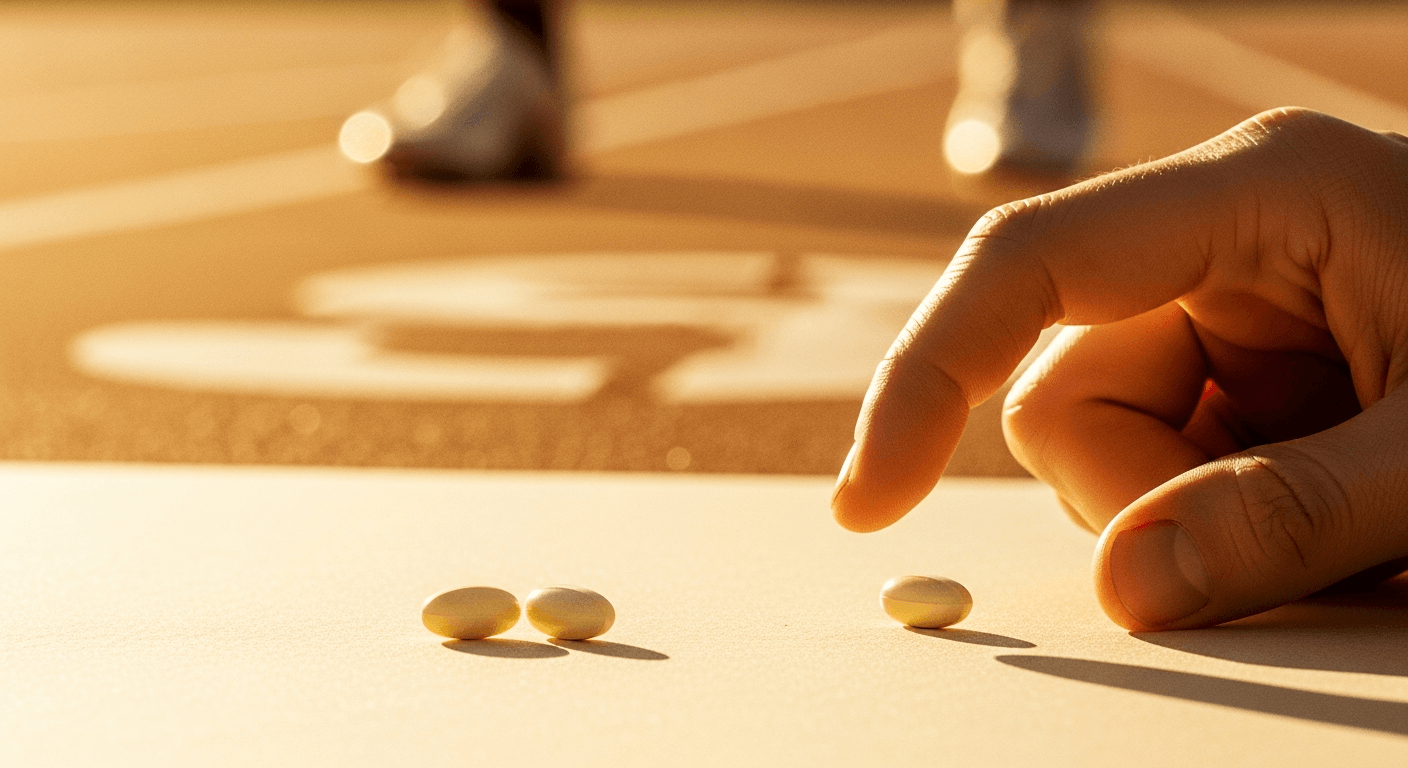
Most recovery supplements make big promises and deliver modest results. Urolithin A is starting to look different. A recent clinical trial published in Sports Medicine found that 1000mg of Urolithin A (delivered as Mitopure, the only clinically studied form) significantly reduced muscle damage markers and lowered perceived exertion in elite endurance athletes. For anyone serious about training performance and longevity, this is one of the more credible supplement findings in recent memory.
What the Study Actually Found
The trial focused on elite endurance athletes undergoing intense training blocks, exactly the population where recovery capacity becomes a genuine competitive variable. Researchers tracked both objective blood markers and subjective performance measures across the supplementation period.
Athletes taking 1000mg of Urolithin A daily showed significantly lower creatine kinase (CK) levels compared to those on placebo. CK is a well-established blood marker of muscle damage. When muscle fibers break down under heavy training load, CK leaks into the bloodstream. Chronically elevated CK is a signal that your body isn't keeping pace with the repair demand being placed on it.
The reduction in CK levels in the Urolithin A group was statistically significant, not just a trend. That matters. Many supplement studies show directional improvements that don't survive statistical scrutiny. This one did.
Participants also reported meaningfully lower rates of perceived exertion (RPE) during training sessions. RPE is a subjective measure, but it's a validated and widely used one in sports science. Lower RPE at the same objective workload suggests that athletes were recovering more completely between sessions, and that the physiological cost of each session felt reduced. For endurance athletes stacking training days, that compound effect adds up.
Why Urolithin A Works Differently From Most Recovery Supplements
Urolithin A isn't a stimulant, an anti-inflammatory compound, or a protein precursor. Its mechanism operates at the cellular level, specifically targeting mitochondrial health through a process called mitophagy.
Mitophagy is the biological process by which cells identify and clear out damaged or dysfunctional mitochondria. Think of it as cellular housekeeping. Over time, and especially under the stress of repeated hard training, mitochondria accumulate damage. Damaged mitochondria are inefficient. They produce less energy per unit of fuel and generate more oxidative stress in the process. If your cells can't clear them out efficiently, energy production degrades and recovery slows.
Urolithin A activates mitophagy pathways, prompting cells to recycle damaged mitochondria and replace them with healthier, more efficient ones. The result is improved cellular energy production over time. This is a fundamentally different mechanism from, say, taking branched-chain amino acids or a magnesium supplement. You're not patching the problem. You're improving the underlying infrastructure.
This also explains why the effects tend to build over weeks rather than showing up acutely after a single dose. Mitophagy is a gradual process. Trials showing real-world benefit, including this one, typically run for several weeks minimum.
How This Connects to Long-Term Athletic Performance
The mitophagy mechanism has implications that extend well beyond short-term recovery. Mitochondrial decline is one of the primary drivers of age-related performance loss and muscle deterioration. If you want to understand why this matters across decades, not just training cycles, Muscle Loss After 40: How to Actually Stop It breaks down the cellular and hormonal factors that erode muscle mass over time and what you can do about them.
The connection between mitochondrial health and healthspan is also worth understanding. Performing well and recovering well in your 40s and 50s isn't just about training smarter. It depends heavily on the efficiency of your cellular machinery. Health Span vs Lifespan: Why Lifters Need to Know the Difference explains why optimizing that machinery matters as much as any programming variable.
For elite athletes, the implications of improved mitochondrial turnover go beyond individual session recovery. Higher-quality mitochondria mean better oxygen utilization, more efficient fat oxidation during long efforts, and a reduced inflammatory burden across a training block. These aren't small margins at the elite level.
Who Is This Most Relevant For?
The study population was elite endurance athletes, which is worth flagging. These are individuals training at volumes and intensities that most recreational athletes don't approach. The degree of benefit seen at that level may not translate identically to someone doing three sessions per week, though the underlying mechanism is universal.
That said, there are specific groups for whom Urolithin A looks particularly relevant based on current evidence:
- High-volume endurance athletes accumulating significant weekly training stress who need to recover between sessions without reducing load
- Masters athletes whose natural mitophagy efficiency has declined with age, making the supplemental activation of the pathway more meaningful
- Hybrid athletes combining heavy lifting with cardio, where the cumulative recovery demand is high. If you're running a structured program like The Minimum Cardio + Lifting Combo That Actually Works, recovery quality directly determines how much work you can absorb
- Anyone managing chronic training fatigue where standard recovery tools like sleep, protein, and deload weeks aren't fully resolving the deficit
What to Know Before You Supplement
Mitopure is the commercially available form of Urolithin A with clinical backing. It's sold in powder and capsule formats, with the 500mg and 1000mg doses being the most studied. Based on current research, the 1000mg dose is the one associated with the performance outcomes described in this trial. Pricing runs approximately $80 to $120 per month depending on the format and subscription tier.
It's also worth noting why Urolithin A can't simply be obtained from food in meaningful amounts. Urolithin A is produced when gut bacteria metabolize ellagitannins, compounds found in pomegranates, walnuts, and some berries. The problem is that only about 30 to 40 percent of the population has the gut microbiome composition to produce Urolithin A efficiently from dietary sources. The rest produce little to none regardless of how many pomegranates they eat. This is one reason a standardized supplement form exists and why the research uses it rather than dietary intervention.
As with any supplement, quality and honesty of claims matter. The supplement industry has a long track record of overstating effects from underpowered studies. How to Spot Fake Supplement Claims in 2026 gives you a practical framework for evaluating any compound before committing money to it, including what to look for in the underlying trial design.
Urolithin A also doesn't operate in isolation. Recovery is a system. Sleep quality, training load management, nutrition timing, and stress levels all interact. If you're neglecting the basics, no single supplement will compensate. For context on how supplementation fits into a broader nutrition strategy, Sports Nutrition Timing: The 2026 Practical Guide covers the evidence on when and what to prioritize around training.
The Bigger Picture
Urolithin A isn't a shortcut. It's a compound that works by improving a fundamental biological process, one that matters both for short-term recovery and long-term athletic capacity. The Sports Medicine trial adds meaningful evidence to what was already a growing body of research, and it does so with a population that actually tests the limits of recovery physiology.
If you're training seriously, managing high workloads, or finding that recovery is becoming the limiting factor rather than fitness itself, this is a compound worth taking seriously. The mechanism is well-understood, the clinical evidence is accumulating, and the safety profile across published trials has been clean.
That's a combination that's harder to find than most supplement marketing would have you believe.