
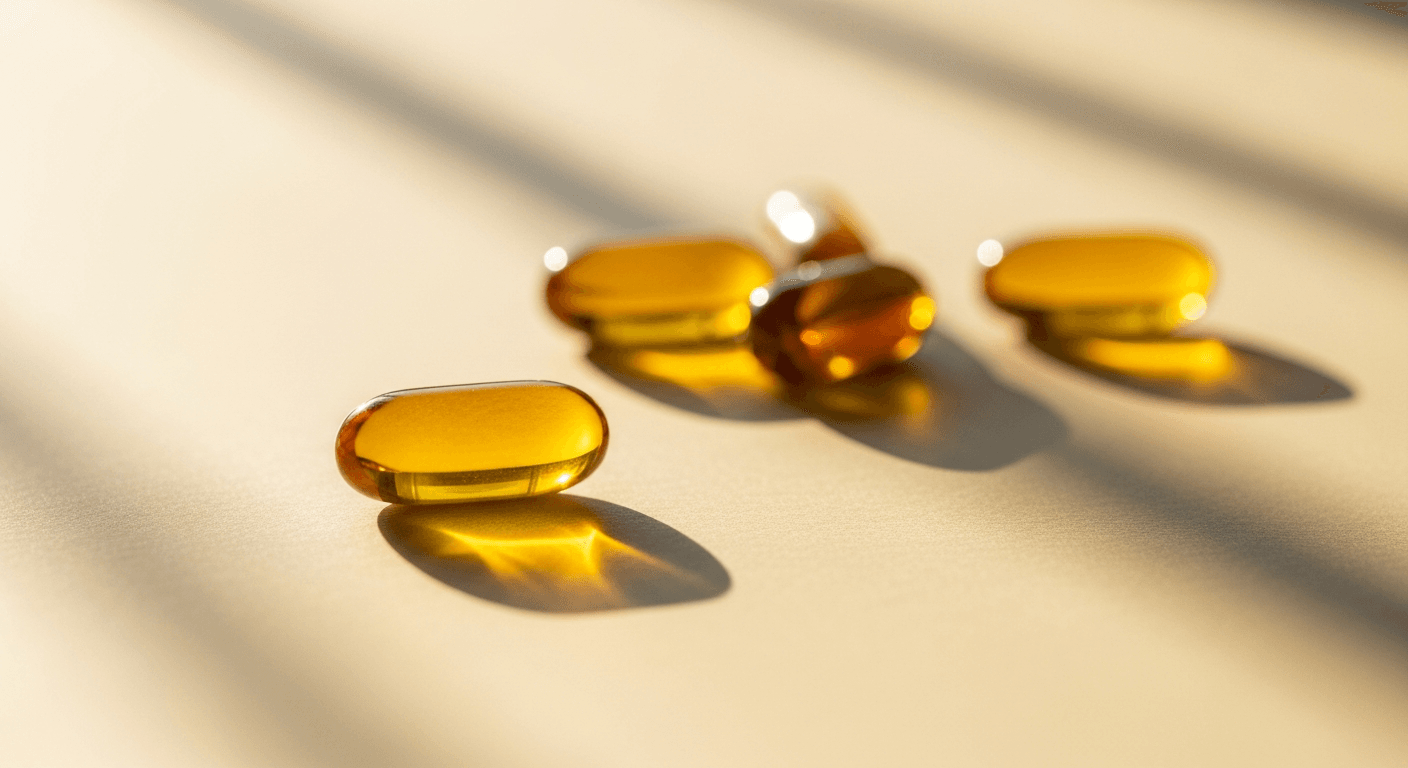
Summer is here, the sun is out, and most people assume their vitamin D levels are fine. They're not. According to the CDC's 2026 Nutrition Report, vitamin D remains one of the most widespread nutrient gaps among American adults — and that gap doesn't close when temperatures rise. Not automatically, anyway.
The reasons are specific, well-documented, and almost entirely avoidable once you understand them. If you train hard, work indoors, or have darker skin, summer sunshine is not the safety net you think it is.
What the CDC's 2026 Data Actually Shows
The CDC's 2026 Nutrition Report flagged vitamin D as a top-tier nutrient concern alongside iron and calcium. What makes the finding notable isn't just the prevalence of deficiency. It's that deficiency rates in summer months track nearly as high as in winter for large segments of the population.
Roughly 35% of U.S. adults are estimated to have insufficient vitamin D levels, defined as serum 25-hydroxyvitamin D below 20 ng/mL. When you expand that threshold to "suboptimal" levels — below 30 ng/mL, which many sports medicine and endocrinology researchers consider the functional minimum for active adults — the number climbs closer to 50%.
This isn't a cold-climate problem. States with high annual sun exposure still show significant rates of insufficiency. The issue isn't the sun. It's whether you're actually using it correctly, and most people aren't.
Sun Exposure: Why Summer Doesn't Automatically Fix It
Vitamin D synthesis requires UVB radiation hitting bare skin. That sounds simple until you factor in everything working against it.
First, timing. UVB rays only penetrate the atmosphere at sufficient intensity when the sun is high enough, generally between 10 a.m. and 3 p.m. in most northern hemisphere locations. If you're commuting, sitting at a desk, or training before sunrise, you're not in that window. You're missing UVB entirely, regardless of how bright and sunny it looks outside.
Second, sunscreen. SPF 15 blocks roughly 93% of UVB rays. SPF 30 blocks around 97%. These are the products dermatologists correctly recommend for skin cancer prevention, and you should absolutely use them when you're spending extended time outdoors. But that means the sun protection advice you're following is also blocking most of your vitamin D synthesis. There's no clean resolution to this tension. You need to acknowledge it exists.
Third, skin tone. Melanin is a natural UV filter. People with darker skin tones require significantly more sun exposure to produce the same amount of vitamin D as lighter-skinned individuals. Estimates vary, but the difference can be anywhere from three to six times longer sun exposure to reach equivalent synthesis. For Black and South Asian adults, vitamin D insufficiency rates are substantially higher across all seasons, including summer.
Glass doesn't help either. UVB rays don't pass through standard window glass, so sitting near a sunny window at work produces zero vitamin D synthesis, whatever it feels like.
Athletes Are Particularly Vulnerable — and Often Surprised
Active adults and competitive athletes often assume their outdoor activity provides adequate sun exposure. For many, it doesn't. The timing and structure of training schedules frequently work against UVB synthesis.
Early morning runners, cyclists, and outdoor athletes training before 9 a.m. are outside the effective UVB window in most locations during most of the year. Evening training has the same problem. Gym-based training, indoor cycling classes, and pool swimming offer zero UV exposure by definition.
This matters for performance. Vitamin D receptors are found in skeletal muscle tissue, and deficiency is associated with reduced muscle strength, slower force production, and impaired neuromuscular function. A 2023 meta-analysis of athletes found that those with insufficient vitamin D levels showed measurably lower performance on strength and power metrics compared to those with adequate levels.
There's also a recovery dimension. Vitamin D plays a role in regulating inflammatory pathways and immune function. Chronic deficiency is linked to increased incidence of upper respiratory infections, slower soft tissue healing, and higher rates of stress fractures — all outcomes that matter directly to anyone training consistently. Recovery science has become one of the most closely tracked areas in sports wellness, and vitamin D is increasingly central to it. Recovery is becoming the biggest wellness trend of 2026, and nutrient optimization is a core part of that conversation.
D3 vs D2: The Debate You Need to Understand
If you've looked at vitamin D supplements recently, you've seen two options: D3 (cholecalciferol) and D2 (ergocalciferol). Most people pick whichever is cheapest or most convenient. That's worth reconsidering.
D3 is the form your skin produces in response to UVB exposure. It's also the form found in fatty fish, egg yolks, and most fortified animal-based products. Research consistently shows D3 raises serum 25-hydroxyvitamin D levels more effectively than D2 and sustains those levels longer. Most clinical guidelines now recommend D3 as the preferred supplemental form.
D2 is derived from plants and fungi, which makes it the default option in vegan supplements. It's not ineffective, but it's less potent at equivalent doses and metabolized differently. If you're supplementing with D2, you may need higher doses to achieve the same serum response.
On dosing: the official recommended dietary allowance sits at 600 IU per day for adults under 70, rising to 800 IU for older adults. Many researchers and clinicians consider these numbers too conservative for active adults or those with existing deficiency. Doses of 1,000 to 2,000 IU daily are commonly used in clinical practice and generally considered safe. Higher doses, above 4,000 IU daily over extended periods, can cause toxicity and should only be used under medical guidance.
The most reliable approach is to test first. A standard 25-hydroxyvitamin D blood test, which typically costs $30 to $60 without insurance, gives you an actual number to work from rather than guessing.
Food Sources: Useful, But Not Sufficient Alone
Dietary vitamin D is worth paying attention to, but it's unlikely to close a significant deficiency on its own. Very few foods contain meaningful amounts naturally.
- Fatty fish (salmon, mackerel, sardines): 300 to 600 IU per serving, among the highest natural sources available
- Canned tuna: around 150 IU per serving, accessible and affordable
- Egg yolks: 40 to 50 IU each, useful as part of a broader diet
- Fortified foods (milk, plant-based milks, some cereals, orange juice): typically 100 to 130 IU per serving
- Beef liver: roughly 50 IU per serving, not commonly consumed in high amounts
- UV-exposed mushrooms: can contain significant D2 if exposed to sunlight during growth, though commercial mushrooms typically have very little
Reaching 1,000 IU through food alone requires deliberate planning and consistent intake of high-fat fish. For most people, food contributes a useful baseline but supplementation fills the gap. This is also why personalized dietary strategies matter. Precision nutrition research is reshaping how we think about individual nutrient needs, and vitamin D is a clear case where population-wide averages mask wide individual variation.
Vitamin D Doesn't Work in Isolation
Supplementing with vitamin D without accounting for co-factors can limit how effectively your body uses it. Magnesium is required to activate vitamin D, and magnesium deficiency is itself common in active adults who sweat heavily. Vitamin K2 helps direct calcium to bones rather than soft tissue, which matters when vitamin D is raising calcium absorption. Zinc also plays a supporting role in the metabolic pathway.
None of this requires a complicated stack. But it does mean that a standalone vitamin D supplement may underperform if the rest of your nutrition is lacking. If you're looking at your overall supplement approach, it's worth considering how different nutrients interact. Omega-3 research offers a useful parallel — another nutrient where the evidence is strong but the practical details of dosing and form are frequently misapplied.
It's also worth noting that vitamin D status can influence sleep quality and immune regulation — two factors central to recovery. Deficiency has been associated with disrupted sleep architecture and elevated inflammatory markers, which compound the performance and health consequences over time.
What to Actually Do This Summer
Here's a practical framework based on what the evidence supports:
- Get tested. A 25-hydroxyvitamin D blood test is the only way to know where you actually stand. Don't assume summer means you're fine.
- Optimize timing if you can. If your schedule allows safe midday sun exposure on bare arms and legs for 10 to 20 minutes without burning, that's worth building in. It won't replace supplementation for many people, but it contributes meaningfully.
- Supplement with D3. If you're vegetarian or vegan, look for D3 sourced from lichen, which is animal-free. Aim for 1,000 to 2,000 IU daily as a baseline, adjusted based on your test results.
- Take it with food. Vitamin D is fat-soluble. Absorption improves significantly when taken alongside a meal containing fat. Nutrient timing matters more than most people realize, and this is a low-effort way to improve results.
- Check your magnesium intake. If you're training hard and sweating regularly, magnesium depletion is likely. Addressing it supports vitamin D activation and reduces the risk of diminishing returns from supplementation.
- Don't skip sunscreen for vitamin D. The skin cancer risk from extended unprotected UV exposure isn't a trade worth making. Supplement instead.
Summer doesn't exempt you from vitamin D concerns. For athletes training early or indoors, people with darker skin tones, anyone working a standard desk job, and most people who use sunscreen consistently, the gap is real and it persists year-round. The fix is straightforward once you stop assuming the season is doing the work for you.