
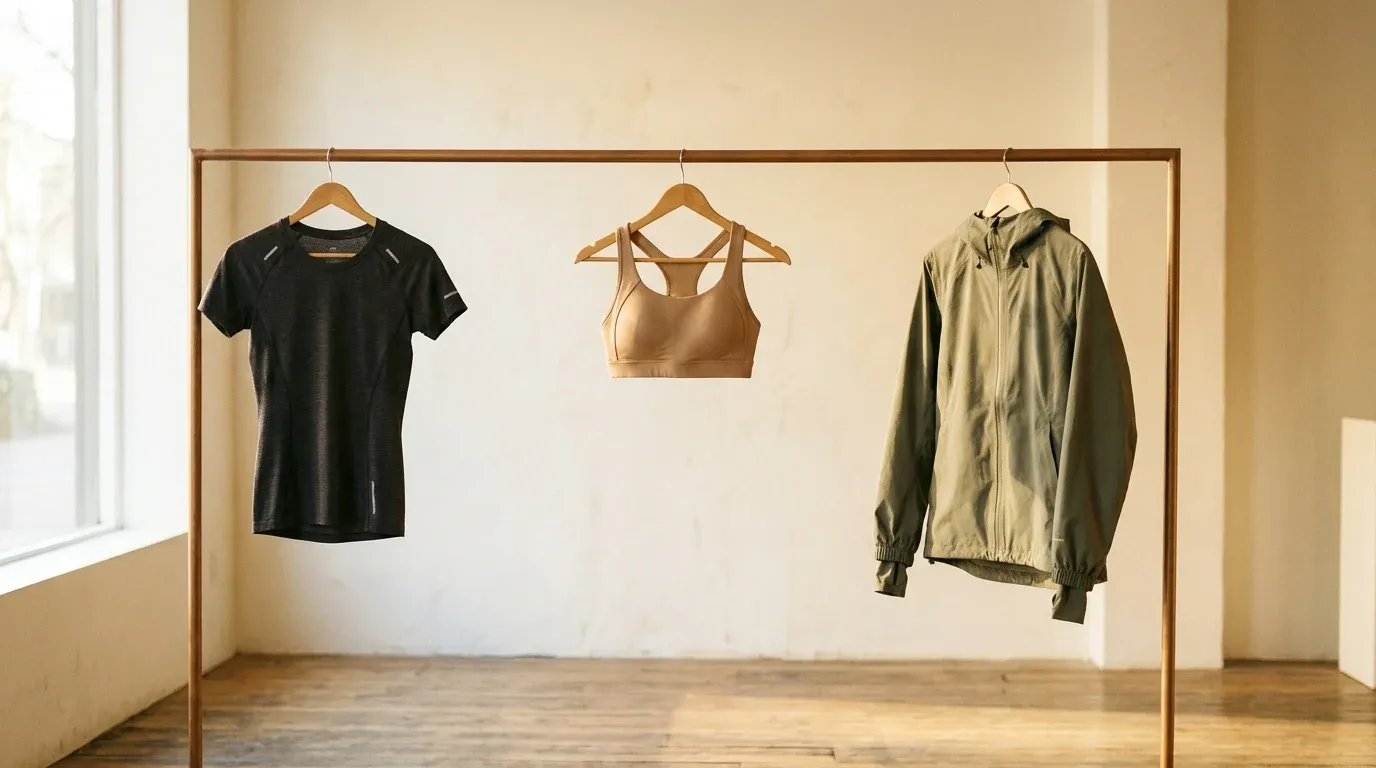
The era of the all-purpose legging is ending. Not because consumers stopped buying activewear, but because they stopped accepting vague positioning as a reason to choose one brand over another. In 2026, the global activewear market is fragmenting into tightly defined use-case categories, and brands that can't name a specific occasion their product serves are watching buyers walk away.
This isn't a soft cultural shift. It's showing up in purchase orders, inventory decisions, and M&A activity. If you operate a brand, manage a retail account, or advise on product strategy, the structural change underway has direct implications for how you build, price, and position collections going forward.
A Market That's Growing, But Not Evenly
The headline numbers look strong. The global activewear market was valued at USD 401.63 billion in 2025 and is projected to reach USD 865.13 billion by 2034, growing at a CAGR of 8.9%, according to a market report published August 18, 2026. That's a near-doubling of market size over nine years, and it signals sustained consumer demand for performance and lifestyle apparel.
But that growth isn't distributing evenly across the category. It's concentrating in specialized subcategories where brands can make explicit, defensible performance claims. Generic athleisure, the broad positioning that powered so many direct-to-consumer launches between 2018 and 2024, is losing ground. Buyers are no longer rewarding versatility as a differentiator. They're rewarding specificity.
The broader sportswear market reinforces this picture. Projected to grow from USD 419.05 billion in 2025 to USD 531.42 billion by 2031, that segment is evolving structurally. Athleisure's role is shifting from a catch-all category to a connector, bridging sport-specific performance products and everyday wear rather than replacing both.
The End of "Wear It Everywhere" Positioning
A report published August 27, 2026 identifies the core mechanism behind the market's fragmentation. Activewear buyers and manufacturers are moving toward use-case-specific products with explicit performance claims, pulling away from the versatile all-day wear positioning that defined the athleisure wave of the previous decade.
That wave made sense in its moment. Between 2018 and 2024, athleisure benefited from remote work adoption, casualization of dress codes, and a general cultural permission to wear performance clothing outside of performance contexts. Brands leaned into it. "From the studio to the street" became the default tagline. Everything claimed to work everywhere.
The problem is that a product positioned everywhere is, effectively, positioned nowhere. When every brand says its tights work for yoga, running, brunch, and travel, none of them give the consumer a clear reason to choose. Specificity, it turns out, is a competitive advantage, not a limitation.
This connects directly to what operators in adjacent fitness verticals are already navigating. As July 2026 gym traffic data shows studios outperforming large-format gyms, the studio environment itself has become a defined use-case context. Consumers going to a boutique cycling class, a strength training box, or a yoga studio are increasingly selecting gear that matches the specific demands of that session, not gear that claims to handle all of them.
Inventory Risk Is Real and It's Arriving Now
For brand operators carrying broad SKU ranges without clear occasion differentiation, the fragmentation isn't just a positioning problem. It's a cash flow problem.
Buyers, both wholesale and direct, are adopting a more specialized and cautious approach to purchasing and stock management. That phrase, drawn from the August 27 report, translates practically: retail partners are placing tighter, more targeted orders. They want products they can shelve with a clear story. "Performance running tights" moves. "Versatile activewear for active lifestyles" does not.
Brands carrying 80-plus SKUs built on the premise that range equals relevance are facing reorder problems. When a product category isn't defined, replenishment decisions are harder to justify. A buyer who can't explain to their floor staff what the product is specifically for isn't going to reorder it after the first sell-through cycle.
The inventory pressure compounds when you account for how active consumers are increasingly segmenting their own wardrobes. Someone who trains five days a week often has distinct gear for lifting, running, recovery, and casual movement. They're not looking for a single product that claims to handle all four. They're looking for four products that each do one thing exceptionally well. That's a different brief entirely.
What Use-Case Fragmentation Looks Like in Practice
The subcategories gaining traction share a common trait: they're built around a specific physiological demand or occasion context. Here's where concentration is occurring:
- High-output training: Products engineered for heat management, compression, and range of motion during strength or HIIT sessions. Claims are backed by fabric technology, not just lifestyle photography.
- Low-impact and recovery: Softer fabrications, broader waistbands, and positioning around post-workout or active recovery movement. Distinct from lounge wear but not claiming performance credentials it can't support.
- Run-specific: Reflectivity, moisture management, and fit architecture designed for repetitive motion. Brands that have stayed focused on running as a use case are seeing consistent demand as recreational running participation grows globally.
- Studio and discipline-specific: Yoga, Pilates, cycling, and martial arts each create distinct fit and function requirements. Products built for the studio floor, rather than broadly claiming studio compatibility, are finding loyal repeat customers.
- Outdoor and trail: Weather resistance, layering capability, and terrain-appropriate construction. The outdoor crossover into fitness apparel has created a genuine subcategory that premium brands are building toward.
For brand operators, this list isn't exhaustive. It's illustrative. The question isn't which subcategory is largest. It's which one you can serve with credibility and specificity.
M&A Is Following the Signal
Capital is reading the same data. The acquisition of Agent84 on August 25, 2026 highlights continued consolidation among direct-to-consumer e-commerce brands in the women's activewear space. Agent84 operated in premium, versatile product positioning, a segment that's facing increasing pressure from more specialized competitors.
Consolidation at this tier typically signals two things: acquirers believe the underlying consumer demand is real but want to rationalize the competitive landscape, and standalone brands without a specific use-case anchor are finding it harder to grow independently. When the market fragments, mid-sized generalists often become acquisition targets rather than organic growth stories.
Women's activewear has been the most active segment for both investment and innovation, which makes the M&A activity there a leading indicator for where the broader market is headed. Watch this space through 2026 and into 2027.
The Strategic Playbook for Brand Operators
If you're running a brand or advising one, the strategic implication is product-line rationalization. Not across-the-board reduction, but deliberate focus. The goal is defining two or three clear use occasions per collection and building your marketing, retail placement, and product development around those specific contexts.
That means resisting the instinct to position every product as versatile. A running tight that also claims to work for yoga and travel is harder to sell to a specialty run retailer than one that's explicitly engineered for road running. The specialty channel wants a specific story. So does the performance-oriented consumer.
It also means aligning your retail relationships with your use-case definitions. A brand with a clear studio-fitness identity belongs in boutique studio retail partnerships and direct-to-consumer channels targeting that audience. Trying to be in every channel simultaneously dilutes the specificity that makes the product credible.
This strategic direction is reinforced by what's happening at the gym operator level. As Gen Z's shift toward gym culture over nightlife creates new community-driven operator strategies, fitness contexts are becoming more identity-specific, not less. The apparel brands that serve those identities clearly will earn placement in those environments. Generic athleisure won't.
For coaches and fitness professionals advising clients on training gear, the fragmentation is actually useful signal. Recommending discipline-specific apparel is easier when brands are building products with explicit use-case claims. The data from group fitness participation and member lifetime value research consistently shows that members who invest in discipline-specific gear demonstrate higher retention rates. That's a behavioral loop worth understanding.
At the brand level, the brands winning in 2026 are those that can answer a simple question without hedging: what specific moment is this product built for? If your answer requires more than one sentence, you may already be carrying more positioning risk than your inventory model can support.
The market is growing. But it's growing for brands with a point of view. Build yours around a use case, not a vibe, and the next product cycle looks considerably cleaner than the last one.