
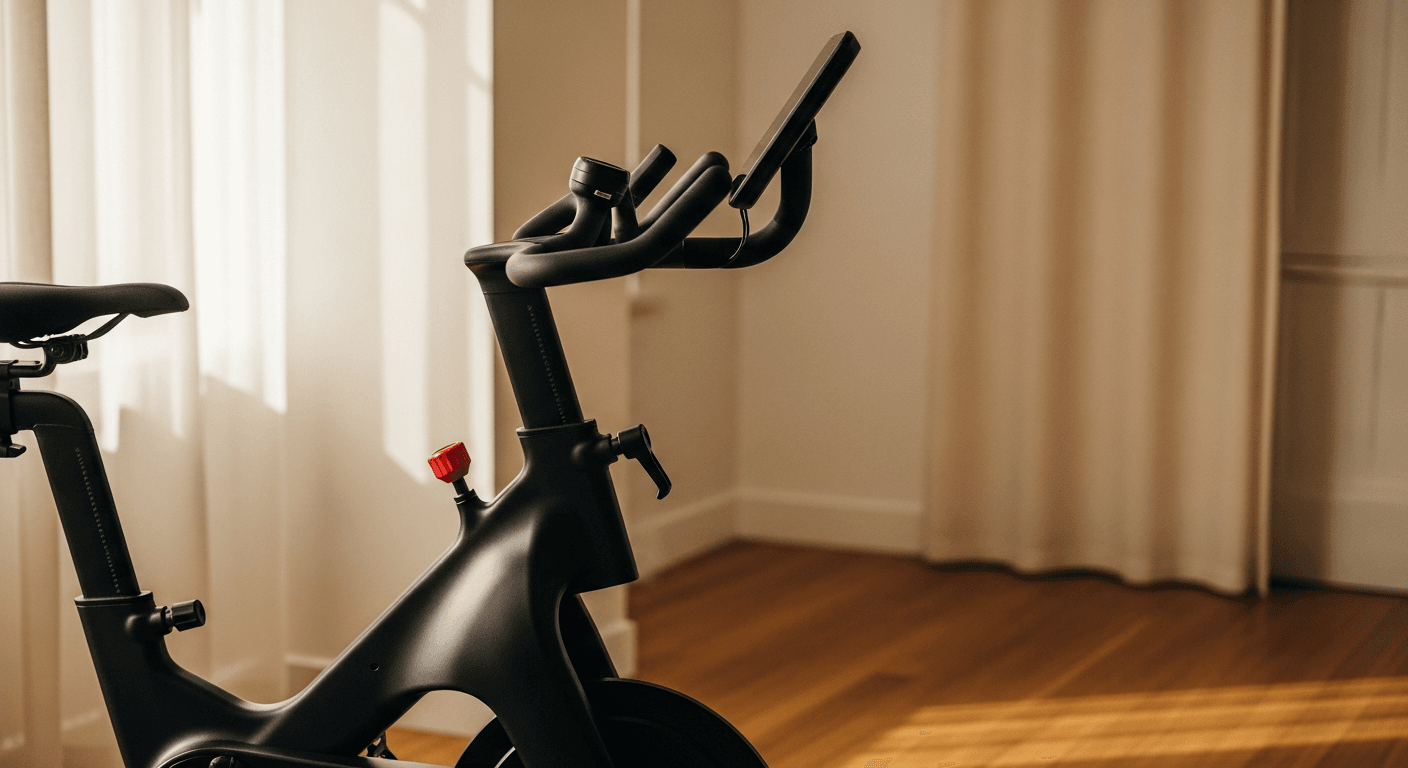
The at-home fitness equipment market is no longer recovering from a pandemic-era correction. It's entering a new structural growth phase, and the conditions driving it are more durable than the lockdown demand spike that inflated the category in 2020 and 2021. Rising urban populations, expanding middle classes across Asia-Pacific, and a sustained consumer focus on health and body composition are combining with a new wave of AI-powered hardware to reshape what equipment brands can actually offer.
If you're building, distributing, or investing in this category, the window to position ahead of consolidation is open now. It won't stay open long.
Market Fundamentals Are Stronger Than the Headlines Suggest
Global at-home fitness equipment revenue is projected to grow at a compound annual rate of roughly 4 to 6 percent through 2030, with several high-margin connected device segments outpacing that baseline significantly. The total addressable market is expected to cross $15 billion in the near term, driven by factors that have little to do with gym closures and everything to do with structural shifts in how people live and spend.
Urban density is one factor. As more consumers live in smaller spaces without easy access to commercial gyms, demand for compact, high-performance home equipment rises. So does willingness to pay for premium products. Disposable income growth in emerging markets, particularly across Asia, is amplifying this dynamic globally. Meanwhile, the post-pandemic normalization of health as a personal priority has proved stickier than most analysts expected. Consumers who built home gym habits between 2020 and 2022 largely kept them.
That baseline demand creates a receptive market. What converts that demand into category growth is product differentiation. And in 2026, differentiation lives almost entirely in software and AI.
AI and Machine Learning Are Now the Primary Product Differentiator
The hardware gap between equipment brands has narrowed considerably. A resistance bike, a treadmill, or a cable machine is largely a commodity at the functional level. What separates a $3,500 connected platform from a $900 alternative is no longer just build quality or brand recognition. It's the intelligence layer on top of the hardware.
AI and machine learning integration now enables at-home equipment to do things that were commercially limited to high-end coaching or physical therapy settings just three years ago. Real-time biomechanical feedback, delivered through computer vision and sensor arrays, can correct form mid-rep. Adaptive programming engines adjust training volume, intensity, and exercise selection based on recovery signals, performance trends, and user-defined goals. Voice-guided coaching has become more contextually accurate. Personalization at this level, at scale, changes the value proposition of owning equipment entirely.
This is also where the hardware-software convergence is most commercially significant. Brands that control both the device and the AI coaching layer own the recurring revenue relationship with the consumer. Brands that only sell hardware are increasingly dependent on third-party platforms or risk becoming white-label suppliers. The distinction will define category winners over the next 24 months.
For context on how platform-plus-product models are attracting capital and consumer attention, the dynamics playing out in fitness software are instructive. Strava's $2.2B valuation and its May 2026 Sequoia round signals that investors are pricing in long-term consumer engagement in digital fitness, not just hardware sales. Equipment brands building proprietary AI layers are chasing the same logic.
Asia-Pacific Is the Fastest-Growing Demand Engine
The regional story in at-home fitness equipment is increasingly an Asia-Pacific story. China, India, and Southeast Asian markets including Indonesia, Vietnam, and the Philippines are all showing accelerating demand for connected fitness products. The drivers are familiar. Rising household incomes, younger urban populations with high digital fluency, and a growing cultural emphasis on fitness and aesthetics are converging to create a market that didn't meaningfully exist at scale five years ago.
China alone represents a significant opportunity. Consumer spending on health and wellness in China has grown substantially year over year, and at-home equipment is a natural beneficiary given apartment-dominated urban living. India's fitness market is at an earlier stage but growing faster on a percentage basis, with a young demographic, smartphone penetration above 80 percent in urban centers, and a fitness influencer economy that drives aspirational product demand.
For Western equipment brands, APAC expansion isn't simply a matter of distribution. It requires localization at the product and content level. AI coaching libraries need to reflect local exercise preferences, language options, and cultural norms around body image and wellness goals. Hardware pricing needs to account for very different purchasing power brackets within the same country. Brands that treat APAC as a single export market will struggle. Those that build regional partnerships with local distribution, content, and customer service infrastructure have a credible path to category leadership.
The parallel here to athleisure's regional expansion is worth studying. The dynamics of how premium fitness brands localize for different consumer cultures, as covered in the $900B athleisure brand strategy playbook, apply directly to connected equipment entering high-growth Asian markets.
Institutional Investors Are Watching the Sector Closely
It's not just product teams and brand strategists paying attention. As of May 2026, institutional investors are actively tracking fitness-adjacent equities including Peloton, Garmin, and Life Time as indicators of where consumer health spending is heading. The thesis is straightforward: as AI-powered fitness products mature and APAC demand scales, companies with connected hardware ecosystems, recurring software revenue, and health data assets become significantly more defensible businesses.
Garmin is particularly relevant here. Its expansion beyond GPS devices into biometric monitoring, recovery tracking, and workout analytics positions it at the intersection of the health data and connected fitness hardware markets. Peloton, despite its post-pandemic correction, retains a large installed base and a brand identity that continues to command premium positioning. Its ability to monetize that base through software and AI coaching improvements will determine its medium-term trajectory.
Life Time's positioning in the premium wellness segment is also drawing attention. Its clinical wellness investments and consumer health infrastructure make it a point of reference for what premium fitness looks like at the platform level. Life Time's Q1 2026 retention results offer operators a benchmark for understanding how premium positioning holds under consumer spending pressure, which has direct implications for at-home premium equipment brands navigating similar dynamics.
The Product-Market Fit Window Is Compressing
Here's the strategic reality for equipment brands in 2026: the opportunity is real, but the window is not indefinitely open. Markets with strong structural growth and clear technology differentiation attract consolidation. The brands that move decisively in the next 18 to 24 months will establish the installed base, data assets, and partnership infrastructure that create durable competitive moats. Those that wait for the market to fully mature will find the category already controlled by a small number of platform players.
The consolidation signals are already visible. Larger consumer electronics companies are moving into connected fitness. Sports and wellness conglomerates are acquiring AI coaching platforms. Distribution partnerships between APAC retailers and Western hardware brands are being structured now. The category is not fragmented for much longer.
For brands operating in adjacent spaces, including personal training and coaching services, the rise of AI-powered at-home equipment creates both competitive pressure and partnership opportunity. Coaches who understand how to position their services alongside connected equipment rather than against it will find stronger client acquisition pathways. The shift is already reshaping how coaching businesses think about differentiation, as explored in the data around what actually works for client acquisition in 2026.
What Brands Should Be Doing Now
The strategic priorities for at-home fitness equipment brands are fairly clear given the market structure above.
- Build or acquire the AI coaching layer. Brands that rely on third-party content or generic programming won't retain users at the rates needed to justify connected hardware margins. Proprietary AI personalization is the retention engine.
- Invest in APAC market entry infrastructure now. That means local content, local language support, local partnership agreements, and pricing architecture suited to market-specific income brackets. Generic distribution won't capture the growth.
- Design for compact urban living. The global consumer profile for at-home fitness is increasingly urban, space-constrained, and time-poor. Products that perform at a high level within limited footprints win across all target markets.
- Position for the data asset. Every connected device that ships is building a behavioral health dataset. Brands that build clean, consented, structured health data assets are building long-term valuation beyond the hardware sale itself.
- Watch the clinical wellness convergence. The integration of fitness equipment with clinical health programs, including weight management protocols, is accelerating. Life Time's GLP-1 and clinical wellness strategy offers a template for how premium fitness brands are extending their value proposition into health outcomes, not just performance metrics.
The at-home fitness equipment market in 2026 is not a rebound story. It's a structural shift driven by technology maturation and demographic demand that didn't exist at this scale before. The brands that understand that distinction and act on it will define the category for the decade ahead.