
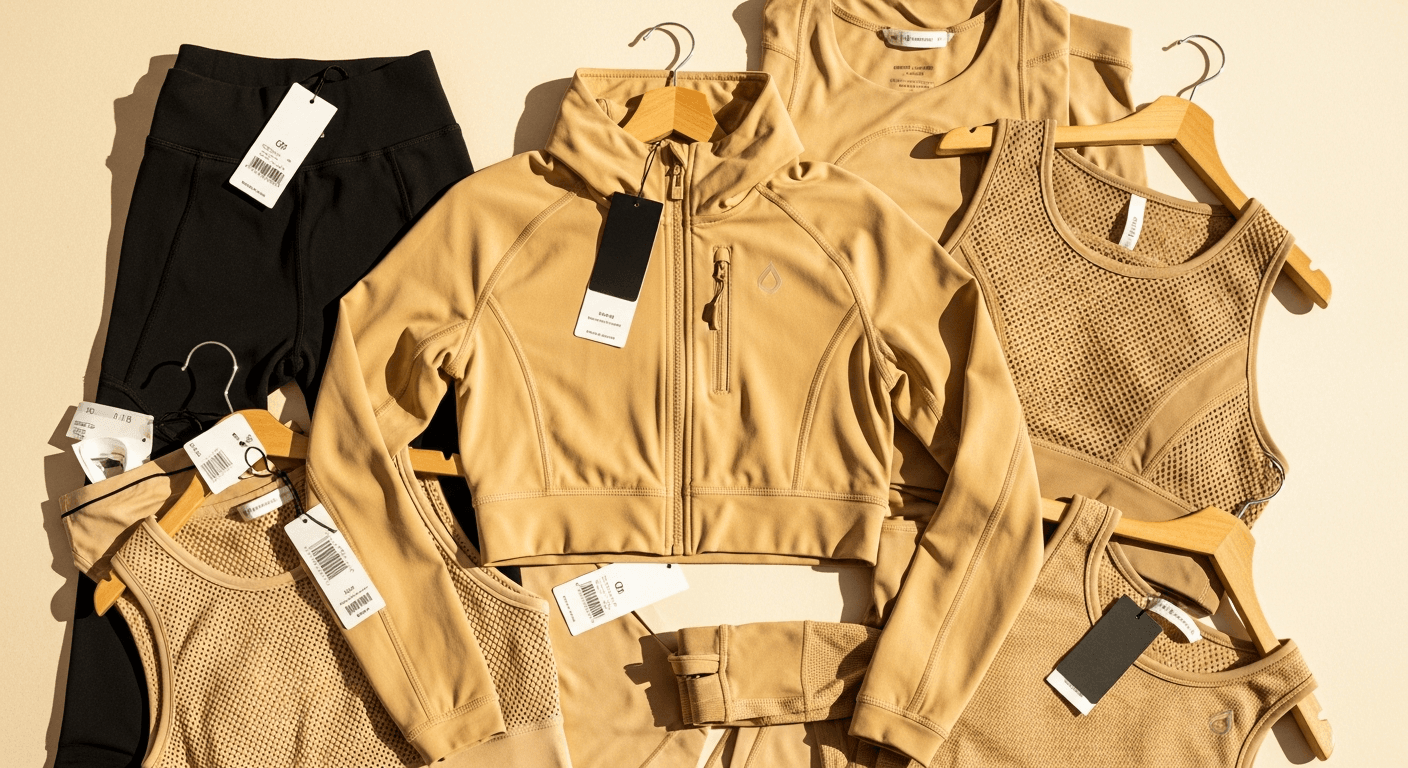
The global athleisure market is valued at $402.74 billion in 2026 and is projected to reach $952.18 billion by 2035, growing at a CAGR of 10.18%. That number places athleisure among the largest addressable markets in consumer health and lifestyle. It also means the competitive window for fitness brands to claim defensible territory is narrowing faster than most leadership teams are moving.
FMCG conglomerates with deep supply chains and fast fashion players with algorithmic production cycles are both accelerating into engineered performance textiles. If you're a fitness brand without a clear positioning strategy in the next 12 to 24 months, you're not watching an opportunity. You're watching a market consolidate without you.
The Geography of Growth Is Shifting Fast
North America currently holds the largest revenue share in the global athleisure market. That's not a surprise. The US has spent the better part of two decades building the cultural infrastructure. Lululemon, Nike's training lines, and the premium boutique fitness boom all contributed to normalizing $120 leggings as a daily wardrobe category.
But the fastest-growing region is Asia-Pacific. And that distinction matters enormously for where you invest next. Brands operating with a North America-first mentality are already facing a compressing window. Regional incumbents in South Korea, China, Japan, and India are building brand equity at scale, often with manufacturing advantages and local cultural fluency that Western brands can't replicate quickly.
This dynamic connects directly to broader capital flows in the fitness sector. GymNation's $100M raise from BlackRock to expand into Asia is a clear signal that institutional money is already pricing in Asia-Pacific as the next major fitness consumption market. Apparel brands that wait for gyms to establish the audience before entering those markets will be paying premium acquisition costs to reach consumers that competitors already own.
If you're currently doing 80% of your revenue in North America, that's not a stable position. It's a position that requires a documented international expansion strategy starting now.
Materials Innovation Is the Only Moat That Holds
Here's where fitness brands have a genuine technical advantage over fast fashion. And it's worth being precise about what that advantage actually is, because it's more specific than most brand teams articulate internally.
The primary differentiator is engineered textile performance. Moisture-wicking fabrics, adaptive thermal regulation, compression technology calibrated to specific movement patterns, and sustainable recycled-material credentials. These are not features that Zara or H&M can reproduce at speed without fundamentally restructuring their production infrastructure. Fast fashion runs on high-volume, low-iteration manufacturing cycles. Performance textile development requires R&D investment, testing protocols, and supply chain relationships that take years to build.
That's your moat. But it only functions as a moat if you invest in it continuously and communicate it with specificity. "High-performance fabric" is not a differentiator. Publishing the exact recycled polyester content, the thermal regulation range tested in controlled environments, and the compression gradient mapped to exercise intensity. That is a differentiator.
Sustainability credentials are becoming table stakes in the premium segment. Brands with verified recycled material percentages and transparent supply chain data are increasingly winning in both direct-to-consumer and wholesale contexts. The brands that built those credentials in 2021 and 2022 are now reaping the distribution benefits. If you haven't started that work, you're already behind the front runners, but you're still ahead of the fast fashion players entering the space.
The Performance vs. Lifestyle Decision You Can't Defer
The casualization of workplace dress codes is collapsing the traditional boundary between performance apparel and everyday wear. This is not a trend that's coming. It's already structurally embedded in how urban professionals dress across major markets. What was gym-specific five years ago is now office-appropriate in a significant percentage of knowledge-economy workplaces.
For fitness brands, this creates a forced strategic decision. You can stay in the performance lane, which means prioritizing technical credibility, sport-specific product development, and distribution through channels where performance claims can be validated. Or you can broaden into lifestyle, which means accepting lower average selling prices in some categories, competing directly with fashion brands on aesthetics, and building a supply chain that can serve both casual and performance retail contexts.
Neither choice is wrong. But they require completely different margin strategies, distribution partnerships, and brand communication frameworks. The brands that are struggling right now are the ones trying to occupy both positions without making the underlying infrastructure investments that each requires.
A useful parallel exists in the supplement sector. Brands navigating the US supplement market's approach to $100 billion face a structurally similar decision: stay specialist and command premium margins, or broaden distribution and accept commoditization pressure. The mechanics differ, but the positioning logic is identical.
Retail Consolidation Is Accelerating the DTC Imperative
The retail landscape for athleisure is consolidating at the shelf level. The merger context between Dick's Sporting Goods and Foot Locker represents a broader pattern: large-format sporting goods retail is concentrating buying power into fewer decision points. For emerging fitness apparel brands, that means fewer opportunities to secure meaningful shelf space in major retail chains, and higher competition for the slots that do exist.
The math is shifting decisively in favor of direct-to-consumer. Not because DTC is inherently superior, but because wholesale shelf access is becoming harder to obtain and harder to make profitable once secured. Slotting fees, markdown exposure, and retailer-controlled promotional calendars all erode the margin that performance apparel brands need to fund continued R&D.
Category-specific boutique retail is emerging as the third path. Specialty run stores, cycling-focused retailers, yoga studio retail sections, and premium fitness-adjacent concept stores all offer shelf access with a pre-qualified customer base and significantly less commoditization pressure than mass sporting goods chains. For brands in the $80 to $180 average unit retail range, boutique wholesale relationships often generate better margin quality than large-format retail even at lower volume.
This shift in retail dynamics also has implications for how fitness operators think about in-venue retail. Evolving member behavior across the fitness floor is creating new touchpoints for apparel brands to integrate directly into training environments, from branded partnerships with boutique studios to co-branded capsule collections sold through gym retail sections.
What a Defensible Position Actually Looks Like
Positioning in a $952 billion market is not about being everywhere. It's about being the only credible option in a specific context for a specific customer. Here's what that looks like in practical terms for fitness brands operating in 2026:
- Technical specificity: Own a performance claim that is verifiable, testable, and category-relevant. Compression for recovery. Thermal regulation for outdoor training. Recycled materials with documented sustainability credentials. One clear claim executed with evidence outperforms five vague performance descriptors.
- Community infrastructure: The brands winning in premium athleisure are not winning on product alone. They're winning because they own the communities that their target customers belong to. That means partnerships with coaches, gym operators, and fitness educators who have existing trust relationships with your ideal customer.
- International sequencing: If you're North America-based, your international expansion sequence matters more than your international expansion timeline. Asia-Pacific entry through wholesale partnerships with established regional fitness retailers is lower-risk than building owned DTC infrastructure in unfamiliar markets.
- DTC margin protection: Build your DTC channel to generate at least 60% of revenue within three years. Wholesale partnerships are useful for brand building and volume, but DTC is where you protect the margin you need to fund material innovation and community programs.
- Data-driven product iteration: The brands with the tightest feedback loops between customer behavior and product development will outpace competitors in a market growing at 10.18% annually. That means investing in customer data infrastructure, not just product development.
The Competitive Clock Is Running
The $952 billion projection is an opportunity. It's also a deadline. Markets growing at this rate attract capital, and capital accelerates competition. The brands that establish technical moats, community ownership, and international positioning in the next 18 to 36 months will be the brands that competitors have to acquire or displace in the decade after that.
The fitness industry's broader capital environment is moving in the same direction. The structural shifts in how private equity is repositioning within the fitness sector signal that sophisticated institutional investors see the same consolidation pressure building. When PE firms start using continuation funds to hold premium fitness assets longer, they're pricing in a market where category leaders command significant valuation premiums over undifferentiated players.
You don't need to be the biggest brand in athleisure. You need to be the brand that a specific, valuable customer segment cannot replace. In a $952 billion market, that's a fully viable business. But it requires making explicit positioning choices now, not after the market has made them for you.