
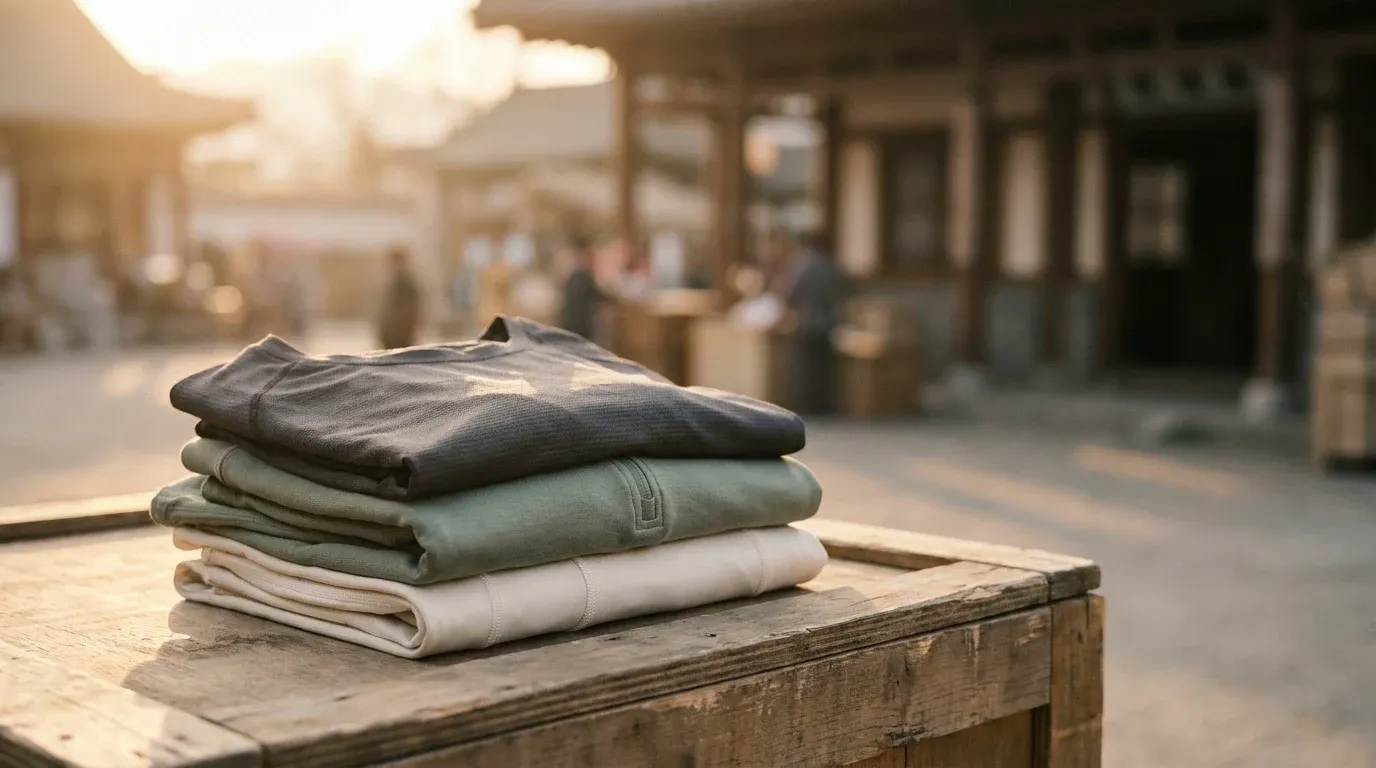
XEXYMIX and Andar aren't waiting for an invitation. In 2026, these Korean activewear brands are executing deliberate international expansion strategies, targeting markets that Nike and lululemon have spent years and billions defending. And they're doing it with a positioning that's landing particularly hard with Gen Z buyers: performance gear that looks as good off the treadmill as on it.
This isn't a soft launch story. It's a structural shift in who gets to compete at the top of the global athleisure market, and it's happening faster than most Western incumbents expected.
From Leggings Brand to Full-Category Challenger
Korean activewear built its early global reputation on women's leggings. The fit was precise, the colorways were sharp, and the price-to-quality ratio was difficult to argue with. But the brands that are now entering international markets aren't showing up with one SKU category and hoping for the best.
XEXYMIX has expanded aggressively into technical running, golf apparel, and menswear. Andar has followed a similar trajectory, broadening its assortment to cover functional categories that carry higher average order values and attract a wider demographic. This category expansion matters strategically: it widens the total addressable market before international entry, so the brands aren't reliant on a single consumer segment to prove viability abroad.
Golf, in particular, represents a smart beachhead. The sport has seen sustained participation growth across North America and the UK, it skews toward higher household incomes, and performance-meets-aesthetic positioning translates naturally to a category where players care deeply about how they look on the course. Korean brands have already demonstrated they can execute this combination domestically. They're now betting it travels.
The Market They're Walking Into
The global athleisure market isn't slowing down. North America leads in market size, driven by its deeply embedded health and fitness culture, strong gym membership rates, and an online retail infrastructure that makes direct-to-consumer entry viable without the overhead of a physical store network. For international brands with strong digital capabilities, the US market is accessible in a way it simply wasn't a decade ago.
This is the channel Korean brands are prioritizing. Direct-to-consumer via e-commerce, amplified by social content and influencer partnerships that already have reach on platforms like Instagram and TikTok. XEXYMIX, in particular, has built a substantial social presence that extends well beyond Korea, giving it a demand signal to follow rather than a market it has to build from scratch.
The broader fitness industry context supports this timing. As brands across the sector watch consumer spending on health and wellness remain resilient, the appetite for premium activewear isn't contracting. You're seeing home fitness equipment projected to hit $23B by 2034, wearables attracting record investment, and gym attendance rebounding strongly in both North America and Europe. Korean activewear is entering a market that's growing, not one it has to revive.
Who's Backing the Push
Korean retailers aren't passive bystanders in this expansion. Several have made strategic investments in the global athleisure opportunity, treating international market entry as a core business priority rather than an opportunistic side project. This backing matters because it provides the capital runway and logistical infrastructure to operate in markets where customer acquisition costs are high and brand awareness has to be built deliberately.
Andar, for example, has positioned itself as a premium accessible brand. Its price points are competitive with the mid-tier of the Western market. That means it's not trying to out-luxury lululemon. It's trying to give consumers who shop lululemon a credible alternative with comparable quality and a fresher aesthetic. That's a narrow target to hit, but it's the right one if you're serious about capturing share rather than just generating press coverage.
The Korean government's sustained investment in cultural exports, from entertainment to beauty to food, has also created a broader receptiveness to Korean brands globally. The K-beauty playbook demonstrated that Korean consumer brands could build genuine loyalty in Western markets, not just curiosity. Korean activewear brands are inheriting some of that credibility, even if they still need to earn it in the fitness category specifically.
The Competitive Landscape Is Getting Crowded From Both Directions
Korean brands aren't the only ones disrupting the established order. At the top of the market, luxury fashion houses are increasingly treating activewear as a growth frontier. Labels are experimenting with natural fibers, elevated silhouettes, and sophisticated design that blurs the boundary between performance gear and fashion. When a consumer can buy a $400 running jacket that looks like it belongs at a gallery opening, it changes what "premium" means in the category.
This is intensifying competitive pressure on the mid-tier incumbents. Brands that have held the $80 to $130 legging price point as a defensible middle ground are finding themselves squeezed: luxury brands pulling aspirational consumers upward, and value-driven challengers like Korean entrants applying pressure from below and the side simultaneously.
For you as a brand operator or investor watching this space, the message is clear. The mid-tier is the most contested zone in activewear right now. Winning there requires either exceptional product, a loyalty ecosystem that creates switching costs, or both. Korean brands appear to be betting on product and aesthetic. The incumbents are betting on community and brand loyalty. The next 24 months will reveal which bet holds.
lululemon Is Paying Attention
On November 9, 2026, lululemon appointed Ben Hallam as its new Chief Brand Officer. The timing is not incidental. lululemon's decision to invest at the brand leadership level at exactly the moment international challengers are entering its core categories signals that the company understands the threat and is responding to it seriously.
lululemon's incumbency advantages are real. It has a loyalty program with tens of millions of members, a physical retail footprint that creates community touchpoints, and brand equity built over more than two decades. Those aren't easy assets to replicate quickly. But the company has also shown vulnerability in its product pipeline and marketing consistency in recent years, and a new Chief Brand Officer is a signal that leadership recognizes it can't coast on legacy positioning.
The pattern here echoes what you saw when Planet Fitness moved into European markets, acquiring Be-Fit for $102M as an entry strategy rather than attempting organic growth from zero. When incumbents make structural brand or expansion moves, it's rarely coincidental. It's reactive. lululemon is responding to pressure it can see clearly, even if the brands applying that pressure aren't yet household names in North America.
What Korean Brands Understand About Gen Z
Gen Z buyers are reshaping what activewear means. They're not separating gym wear from streetwear from travel wear. They want gear that functions across all three contexts without looking like it's trying too hard in any of them. Korean brands, shaped by a domestic market where aesthetic precision is a baseline expectation, are well-calibrated for exactly this demand.
The color stories, the fabric choices, the silhouette proportions. These are areas where Korean design has consistently been ahead of Western mass-market activewear brands. And Gen Z, who grew up consuming Korean entertainment and beauty, doesn't need to be convinced that Korean brands can deliver quality. The category credibility transfer is already happening, even before significant marketing spend.
This connects to broader behavioral trends worth tracking. Research consistently shows that younger consumers are exercising more deliberately, integrating fitness into their identity rather than treating it as a chore. As youth inactivity remains a documented concern, the segment that is active is doing so with intensity and self-expression at the center. That's a consumer who cares deeply about what they wear while they train, and who is not automatically loyal to the brands their parents chose.
The Window Is Open, But Not Indefinitely
Korean activewear brands have a genuine window right now. The global market is growing. The DTC channel is accessible. Gen Z is receptive. And the incumbents are showing enough friction in their brand positioning to create real openings.
But windows close. Nike and lululemon have the resources to respond when a challenger gains measurable traction. Luxury brands will continue pushing into performance. And consumer attention in crowded markets is expensive to earn and easy to lose.
The brands that convert this moment into durable market position will be the ones that build loyalty infrastructure fast. Product alone doesn't hold share. Community, consistency, and a clear reason to return do. The Korean brands entering global markets in 2026 understand design. The question the next few years will answer is whether they also understand retention. The global athleisure market, as record investment in fitness technology signals, is not waiting for anyone to get comfortable.