
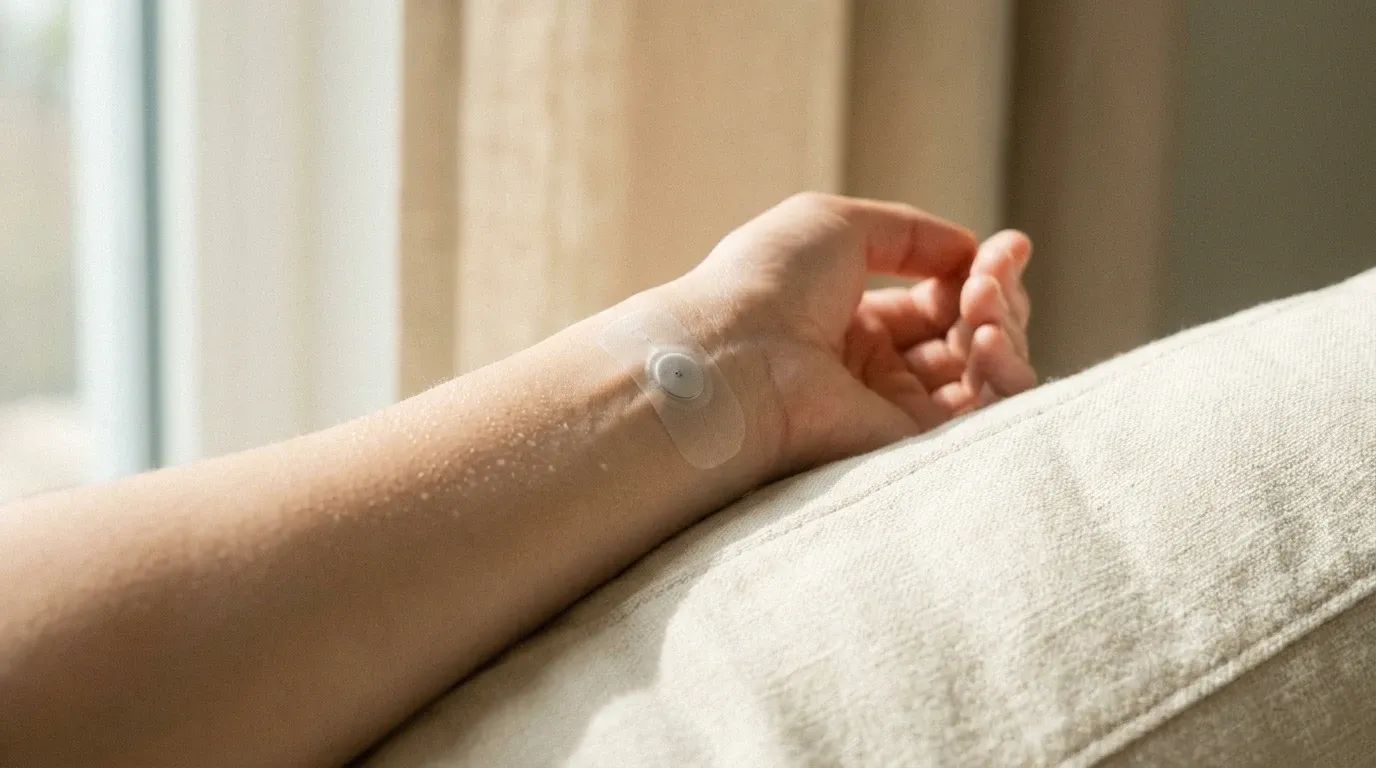
On September 15, 2026, Nix Biosensors announced the close of a $10M Series A round, bringing its total funding to $17M. The capital is earmarked for expanding the Nix Health platform and sharpening its proprietary hydration algorithm. For anyone watching where health tech investment is flowing, this is a signal worth paying attention to.
Hydration has long been treated as a background variable in athletic performance. You drink water, you feel better, you perform. The nuance ends there for most consumers and most brands. What Nix is building changes that equation in a way that matters commercially, not just clinically.
What the Nix Health Platform Actually Does
Nix Biosensors developed a patch-based biosensor that reads sweat composition in real time. The platform translates that data into personalized hydration guidance, factoring in sweat rate, electrolyte loss, and environmental conditions. It's continuous, non-invasive biometric monitoring aimed at athletes and active consumers who want precision over guesswork.
The Series A funding accelerates two things: the platform's B2B integration capabilities and the underlying algorithm's ability to generate actionable insights at scale. The company isn't just building a device. It's building a data infrastructure layer that third-party platforms can plug into.
That distinction matters. The revenue model shifts from hardware margin to data licensing, which is a far more scalable business. For sports nutrition brands, apparel companies, and wearable manufacturers, that licensing relationship is the real story here.
Why This Round Is a B2B Inflection Point
The most commercially significant aspect of this raise isn't the dollar amount. It's what Nix intends to do with it. By embedding its hydration algorithm directly into consumer health platforms, Nix creates a network of real-world biometric data points that brands can use to personalize their product offerings.
Think about what that means for a sports nutrition company. Instead of recommending a post-workout electrolyte product based on general guidelines, that brand could surface recommendations based on a specific user's measured sweat sodium loss during that morning's run. That's not a marketing claim. That's a precision feedback loop that generic apps cannot replicate.
The same logic applies to wearable brands. A smartwatch that integrates Nix hydration data suddenly becomes more than a fitness tracker. It becomes a health platform with proprietary biosensor input, which is a meaningful competitive moat in a crowded category.
This is happening at a moment when biosensor-led platforms are attracting serious investor interest. The AI-powered wellness wearable market grew from $64.35 billion in 2025 to $74.52 billion in 2026, a 15.8% CAGR. Continuous health data is the asset class. Nix is positioning its algorithm as the infrastructure that generates it.
The Market Context That Makes This Bet Make Sense
Hydration personalization doesn't exist in a vacuum. It sits inside a much larger market that's actively looking for differentiation levers. The sports nutrition and weight management industry is projected to reach $93.81 billion in 2026, according to Nutrition Business Journal. That's a crowded, competitive space where most brands are selling functionally similar products through nearly identical channels.
Personalization is the obvious breakout strategy, and data is what makes personalization real rather than performative. Brands that can connect their products to measurable, individual physiological outcomes have a retention and conversion advantage that generic supplement companies simply can't match.
Hydration data is particularly valuable because it's dynamic. Unlike a one-time body composition reading, sweat-derived hydration metrics change with every workout, every environment, every season. That continuous data stream creates ongoing touchpoints between a brand and its customer, which is the infrastructure for long-term retention.
It's worth comparing this development to what's happening in continuous glucose monitoring. CGMs are now available over-the-counter, and the fitness audience is already adapting its training and nutrition protocols around real-time glucose data. Hydration is the next biometric in that progression, and Nix is building the rails for it.
What Supplement and Nutrition Brands Should Be Watching
If you're a product or marketing lead at a sports nutrition brand, the Nix Series A is worth more than a quick scan. Here's what the funding signals for your category specifically.
- Real-world dataset access: Brands that integrate with Nix Health gain access to aggregated, anonymized hydration data from actual users during actual training sessions. That's product development intelligence that no survey or focus group can produce.
- Precision recommendation engines: Electrolyte and hydration products are currently sold on broad consumer segments. Sweat data enables SKU-level recommendations based on individual physiology, which increases purchase relevance and reduces churn.
- Retention loop construction: When a user's hydration data lives inside your app ecosystem, switching costs increase. The integration creates a sticky relationship between the brand and the consumer that's grounded in utility, not loyalty program mechanics.
- Regulatory positioning: Brands that can ground product claims in individual biometric data are better positioned as regulatory scrutiny on supplement marketing intensifies. Data-backed personalization is a defensible claim structure.
The brands that move early on this integration will have a meaningful first-mover advantage in building proprietary datasets. That advantage compounds over time as their recommendation algorithms improve with more user data.
The Wearable Angle: Infrastructure, Not a Feature
For wearable brands, the framing is slightly different but the stakes are equally high. The market is saturating at the hardware level. Differentiation is increasingly happening at the software and data layer, which is exactly where Nix is playing.
A wearable device that integrates real-time sweat analysis gains a biometric input that no accelerometer or optical heart rate sensor can replicate. It's a genuinely novel data type, and novel data is what justifies premium price positioning in a category where consumers are increasingly skeptical of incremental hardware updates.
The broader biosensor trend is worth contextualizing here. Research into recovery and performance supplements is increasingly being validated by continuous biometric monitoring rather than snapshot lab tests. The infrastructure for that kind of validation is exactly what Nix is building. Wearable brands that integrate early are building a pipeline to that validation ecosystem.
This also connects to how consumers are thinking about their health data more holistically. Metrics like hydration don't exist in isolation. They interact with sleep quality, training load, and nutritional intake. A platform that connects hydration data to those adjacent variables becomes genuinely useful rather than just technically impressive. That utility drives the retention numbers that matter to wearable subscription and ecosystem revenue.
The Strategic Implication for Brands Competing in 2026
The Nix Series A is a data infrastructure funding event dressed up as a biosensor story. The device is the delivery mechanism. The algorithm and the licensing model are the actual business.
For brands operating in sports nutrition, recovery, apparel, or wearables, the window to be an early integration partner is open right now. Once Nix's platform reaches critical user mass, the data advantage it offers to integrated partners will be significantly harder to access at favorable terms. Early partnerships get preferential data access, co-development input, and integration architecture that latecomers won't be offered.
It's also worth thinking about what this signals for the broader category of health data. Real-time biometric monitoring is becoming a baseline expectation among high-performance consumers, not a premium novelty. The shift away from static health metrics toward continuous, dynamic data is already visible in how consumers are engaging with body composition and metabolic tracking tools. Hydration is the next layer in that stack.
Brands that treat hydration data as infrastructure rather than a marketing feature are building toward a defensible position. Brands that treat it as a campaign hook are missing the structural shift that's actually happening.
The $10M Nix Series A isn't a bet on sweat patches. It's a bet on personalized health data becoming the primary interface between wellness brands and their customers. The brands paying attention now are the ones that will be defining that interface in two years.
If you're evaluating your brand's product development roadmap or your wearable platform's data strategy, understanding what drives measurable performance outcomes for your users is becoming table stakes. Hydration is one of the clearest physiological levers available, and Nix just secured the funding to make it a commercial-grade data asset.