
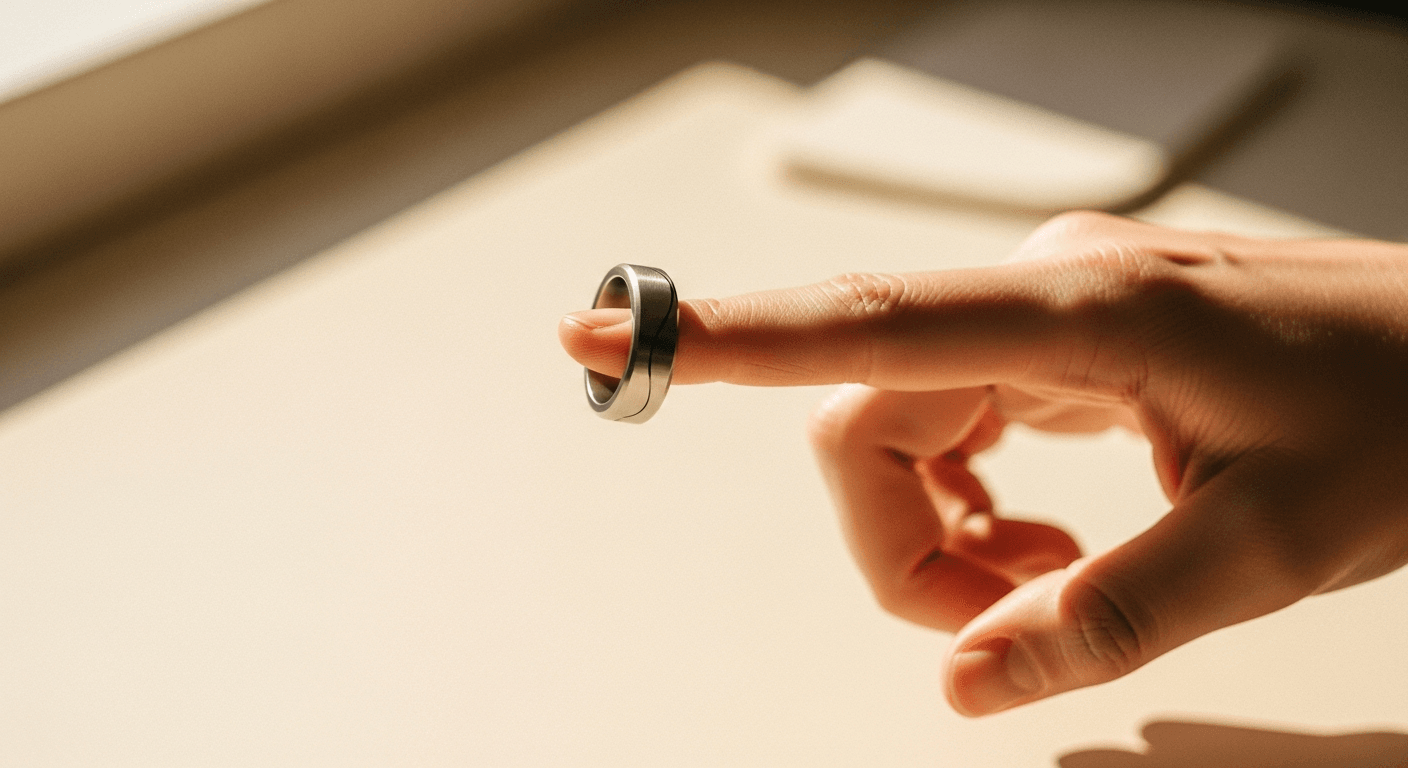
Oura just announced its acquisition of Doublepoint, a Helsinki-based startup specialized in gesture recognition for wearables. Deal terms weren't disclosed. Doublepoint's technology detects small hand movements (pinches, taps, micro-gestures) by analyzing biometric signals captured by wearables, primarily through machine learning models.
At first glance, this looks like a small tuck-in deal. A European startup with a small team, acquired by an established wellness brand. The kind of operation that doesn't naturally attract attention.
The strategic read is more interesting. This acquisition fits into a deeper reorganization of the fitness wearable market, and the signal it sends to the rest of the industry deserves to be taken seriously.
The Bigger Context: The Market Is Polarizing
2025 saw Whoop close a Series G of $575 million at a $10.1 billion valuation. At the same time, fitness venture capital hit its cyclical low, with just over $5 billion invested globally, well below the peak from four years ago.
This dual movement, mega-deals concentrated on category leaders and broad capital tightening for everyone else, reflects the maturation of the category. The fitness wearable market is polarizing between two types of players: platforms that collect, analyze, and activate biometric data coherently, and commodities that essentially measure heart rate and steps for a few dozen dollars.
Oura is positioning itself decisively in the first category. The Doublepoint acquisition is a piece of that strategy.
Why Gesture Control Matters
The standard use of a wearable today is passive: you wear the device, it collects data, you check your score in the morning via a smartphone app. You rarely interact directly with the wearable itself.
Gesture control changes that equation. With Doublepoint's technology integrated, an Oura ring could potentially serve as an interface for active actions: controlling music playback, accepting or declining a call, triggering connected lighting, confirming a workout entry in a coaching app, or simply marking a moment as significant without taking out the phone.
This shift from passive collection to active interaction changes what a wearable is. It's no longer just a sensor. It's a portable computing object, an interface device. And that radically changes Oura's competitive position relative to traditional fitness bands.
Implications for Other Brands
If you operate a brand in the fitness wearable category, Oura's acquisition puts you in front of a clear strategic choice. Either you invest to integrate interaction capabilities (gesture, voice, conversational AI) into your product. Or you accept the slide toward the commodity segment, where competition is on price and margins compress.
Several players have already placed bets in this direction. Apple Watch has integrated simple gesture detection ("double-tap" for interactions). WHOOP has invested heavily in AI to position its scores as a personalized coach. Garmin remains on a more traditional sports-sensor path with a solid Q1 2026 but no equivalent platform repositioning.
For emerging brands, especially in the smart-ring space (Ultrahuman, Circular, RingConn, and others), the entry barrier just rose. Launching a ring that only measures sleep and HRV in 2026, while Oura integrates gesture control, becomes a visibly outdated product.
Integration Timeline and Open Questions
Oura hasn't disclosed a precise timeline for integrating Doublepoint's technology into its commercial products. For existing users, rollout will likely come progressively, starting with software updates for current ring generations and deeper integration in new hardware generations.
Several questions remain open. Gesture accuracy on a ring, compared to a wristband or watch, is technically harder because the available biometric signals are more limited. Additional energy consumption could affect battery life, which is a core selling point for Oura. And interaction latency will need to be low enough to avoid frustrating users.
But the strategic bet is coherent. The fitness wearable market isn't won by adding another sensor anymore. It's won by transforming the object into an interaction platform.
What This Means for Operators and Fitness Brands
For gym operators, equipment brands, and fitness app developers, Oura's evolution accelerates a trend already identified: fitness hyper-personalization isn't running through smartphone apps alone anymore, but through a connected ecosystem where the wearable becomes the primary interface.
A brand developing a personalized training experience now has to think about wearable compatibility beyond data export. How does your product respond when the user confirms a set by pinching their Oura ring? How do you integrate real-time recovery notifications via wrist gestures? These questions weren't on the table two years ago. They become strategic in 2026.
The Doublepoint acquisition is small in size. It's significant in what it signals. The fitness wearable market is entering its platform phase, and brands that don't follow that evolution risk finding themselves, in 24 to 36 months, in a segment where consumer-perceived value erodes quickly.