
The funding picture in fitness has shifted. If you've been watching capital flows across the industry this year, the pattern is hard to ignore: the checks are getting larger, and they're going to a very specific type of company. Not the subscription app. Not the lifestyle apparel brand. The companies attracting serious investment in 2026 are the ones sitting at the intersection of hardware, clinical data, and longevity outcomes.
Two deals that closed around June 2026 illustrate this clearly. OxeFit, a connected strength and performance hardware company, has now raised over $100 million in total funding. Fountain Life, a longevity and preventive health platform, closed an $18 million Series B. Neither company is selling a fitness subscription. Both are building infrastructure for what investors are now calling clinical fitness.
OxeFit and the New Case for Hardware Investment
Hardware has historically been a difficult bet for fitness investors. The margins are compressed, the logistics are complex, and the 2020-2021 Peloton cycle left a lot of capital burned. So when a hardware company raises over $100 million, it's worth examining exactly what that company is doing differently.
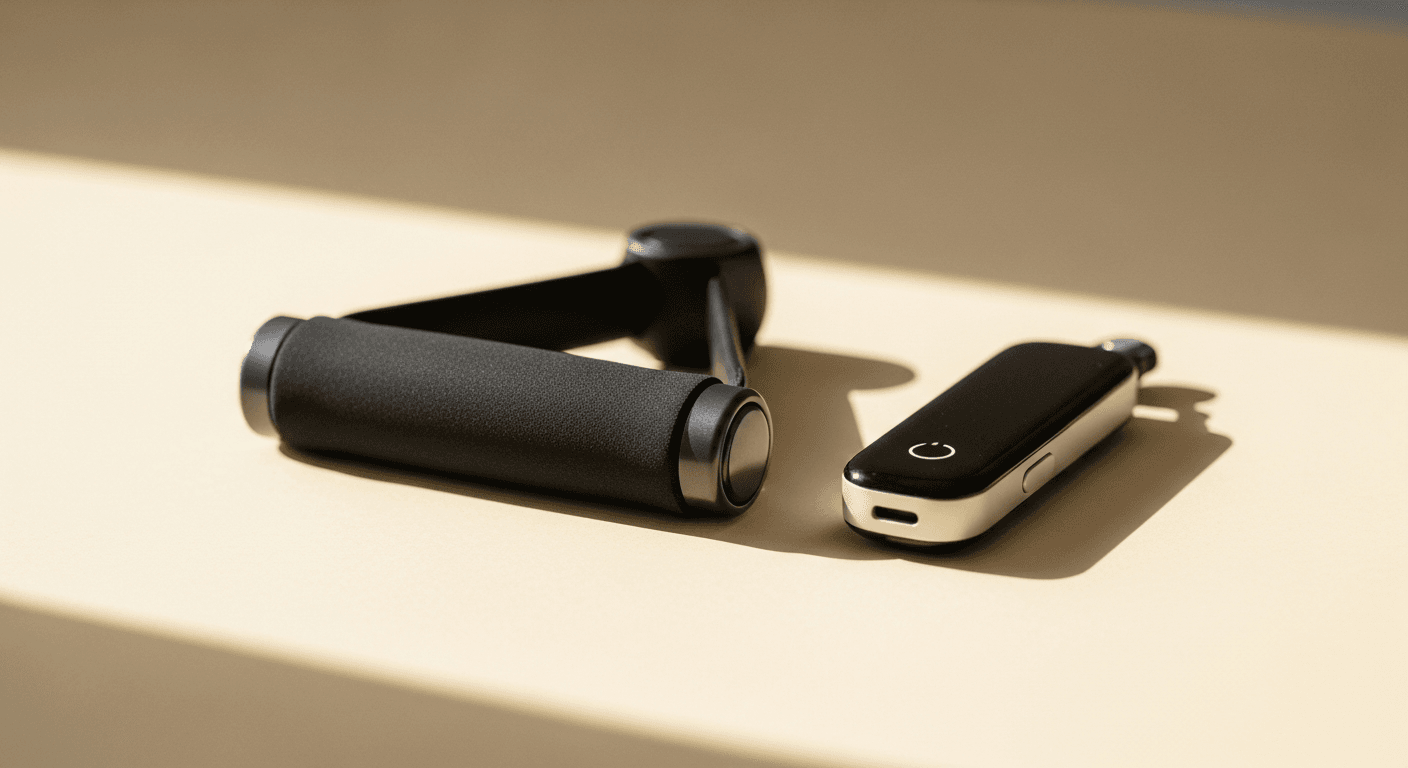
OxeFit builds connected resistance training systems designed around biomechanical data capture. The hardware itself is engineered to track movement mechanics, force output, and performance variables that generic gym equipment simply doesn't measure. That data layer is what separates OxeFit from a premium cable machine. The investment thesis isn't the machine. It's the proprietary dataset the machine generates at scale.
For investors, that distinction matters enormously. A strength training platform that captures clinical-grade biomechanical data across thousands of users can eventually support injury prevention protocols, physical therapy integrations, and longevity tracking in ways that a traditional equipment company never could. The hardware is the data collection vehicle. The data is the asset.
This logic also explains why the largest checks in fitness hardware are now going to companies with embedded software and data layers rather than pure mechanical engineering plays. If you're building or advising a fitness brand that has a hardware component, the question investors are now asking isn't about unit economics on the device. It's about what data the device generates and what clinical or performance outcomes that data can support.
Fountain Life and the Rise of Clinical Fitness as a Fundable Category
Fountain Life operates differently from most wellness brands you'd recognize. It's a preventive health and longevity platform that pairs advanced diagnostics, including full-body MRI scans, comprehensive blood biomarker panels, and AI-driven health analysis, with fitness and lifestyle programming. The $18 million Series B it closed is a relatively modest round by tech standards, but its significance is structural.
It confirms that clinical-grade diagnostics integrated with fitness programming is now a distinct, fundable category. This isn't a wellness app with a meditation feature and a step counter. It's a platform built around the premise that the most valuable fitness intervention is one anchored in actual health data. Members don't just get a workout program. They get a data profile that informs every training and nutrition decision.
The pricing reflects that positioning. Fountain Life's membership model is priced in a range comparable to executive health programs, typically well above $5,000 annually, targeting individuals who view their health as a capital asset rather than a lifestyle purchase. That's a fundamentally different customer and a fundamentally different business model than what most fitness brands are running.
What makes this significant for the broader industry is that Fountain Life isn't an outlier. It's a leading indicator. The clinical-fitness convergence it represents is attracting capital precisely because it solves the retention and outcome problem that has plagued traditional fitness brands for decades. When your platform is tied to measurable health biomarkers, churn looks very different than it does for a $15-per-month app.
The Architectural Pattern Investors Are Funding
Pull back from any individual deal and a consistent architecture emerges across the most well-capitalized fitness companies of 2026. It has three components: wearable or sensor-generated data, AI-driven coaching or analysis, and preventive health or longevity outcomes. Companies that can demonstrate all three are accessing capital on terms that lifestyle-only brands simply can't match right now.
Oura's $575 million raise earlier in 2026 is the clearest proof point at scale. Oura is not a fitness company in the traditional sense. It's a clinical wearable platform that generates sleep, recovery, and cardiovascular data that has been validated in research settings. That validation is what made a $575 million raise possible. The ring is the hardware. The clinical credibility is the valuation driver.
The same logic applies when you look at AI coaching infrastructure. Platforms that are integrating real biometric data into coaching recommendations are building something more defensible than generic programming tools. This is directly relevant to how coaches and fitness brands should be thinking about technology partnerships right now. The AI tools that are actually working for personal trainers in 2026 are the ones connected to real client data, not just content generation or scheduling automation.
The convergence isn't accidental. It reflects a maturing investor thesis that emerged partly from the wreckage of the 2020-2023 funding wave, when capital chased digital fitness subscriptions that couldn't sustain growth post-pandemic. The lesson investors took from that cycle was clear: software-only fitness products without clinical differentiation or hardware data moats are commodities. The products that survived and scaled were the ones with defensible data assets.
What This Means for Brands Outside the Top Funding Tier
Most fitness brands aren't raising $100 million rounds. But the funding patterns at the top of the market set the strategic direction for the entire industry, including the segment you're operating in.
If you're running a coaching business, a boutique studio, or a fitness product brand, the implication is direct. The brands and operators that are building data-driven, outcome-documented services are gaining access to better partnerships, better pricing power, and better acquisition interest than those that aren't. You don't need OxeFit's hardware budget to build a data story. You need a methodology that captures client outcomes in a structured, reportable way.
This connects directly to what's happening in private equity-backed gym consolidation. Operators who can demonstrate measurable member health outcomes, not just retention rates and revenue per visit, are the ones attracting the most favorable rollup terms. The data-led approach to gym retention and engagement isn't just an operational improvement. It's a valuation argument.
The supplement sector is making a parallel shift. When Unilever acquired Grüns for $1.2 billion, the transaction wasn't purely about product revenue. It was about a brand with documented efficacy positioning in a market where clinical credibility is increasingly what drives premium pricing and acquisition multiples. The signals from that deal for the supplement market are consistent with what OxeFit and Fountain Life represent in hardware and longevity: clinical differentiation is the new premium.
For coaches specifically, the shift also reframes how you can justify pricing. The funding signals coming from AI-integrated coaching platforms suggest that coaches who document performance and health outcomes in a structured format are building something closer to what investors recognize as a scalable, data-backed service than a traditional session-based coaching model. That's relevant not just to fundraising but to the premium your clients are willing to pay.
The Capital Thesis in Plain Terms
Here's what the June 2026 funding cohort tells you if you strip it down to its core logic. Investors are no longer betting on fitness engagement as the product. They're betting on fitness as a delivery mechanism for health outcomes that can be clinically documented and eventually reimbursed, integrated into corporate wellness programs, or packaged into longevity memberships at significant price points.
That shift from engagement to outcomes is the most important structural change in fitness investment since the wearable boom of 2014. It's not a trend. It's a reconfiguration of what fitness companies are fundamentally being asked to be.
OxeFit raised over $100 million because its hardware generates a data asset that extends far beyond workout tracking. Fountain Life raised $18 million because its clinical diagnostics platform reframes fitness as preventive medicine. Oura raised $575 million because it built a wearable with research-grade validation that positions it closer to a medical device than a consumer gadget.
If you're building a fitness brand, advising one, or thinking about where to position your service or product roadmap in the next 18 months, that's the pattern you're competing within. The brands that can articulate a clinical or longevity data story alongside performance outcomes are the ones accessing capital, partnerships, and premium pricing. The ones that can't are competing on price in an increasingly crowded market.
The question isn't whether this shift applies to your business. It's how quickly you can build the data infrastructure and outcome documentation that makes your brand relevant to the funding thesis that's now driving the entire industry forward.