
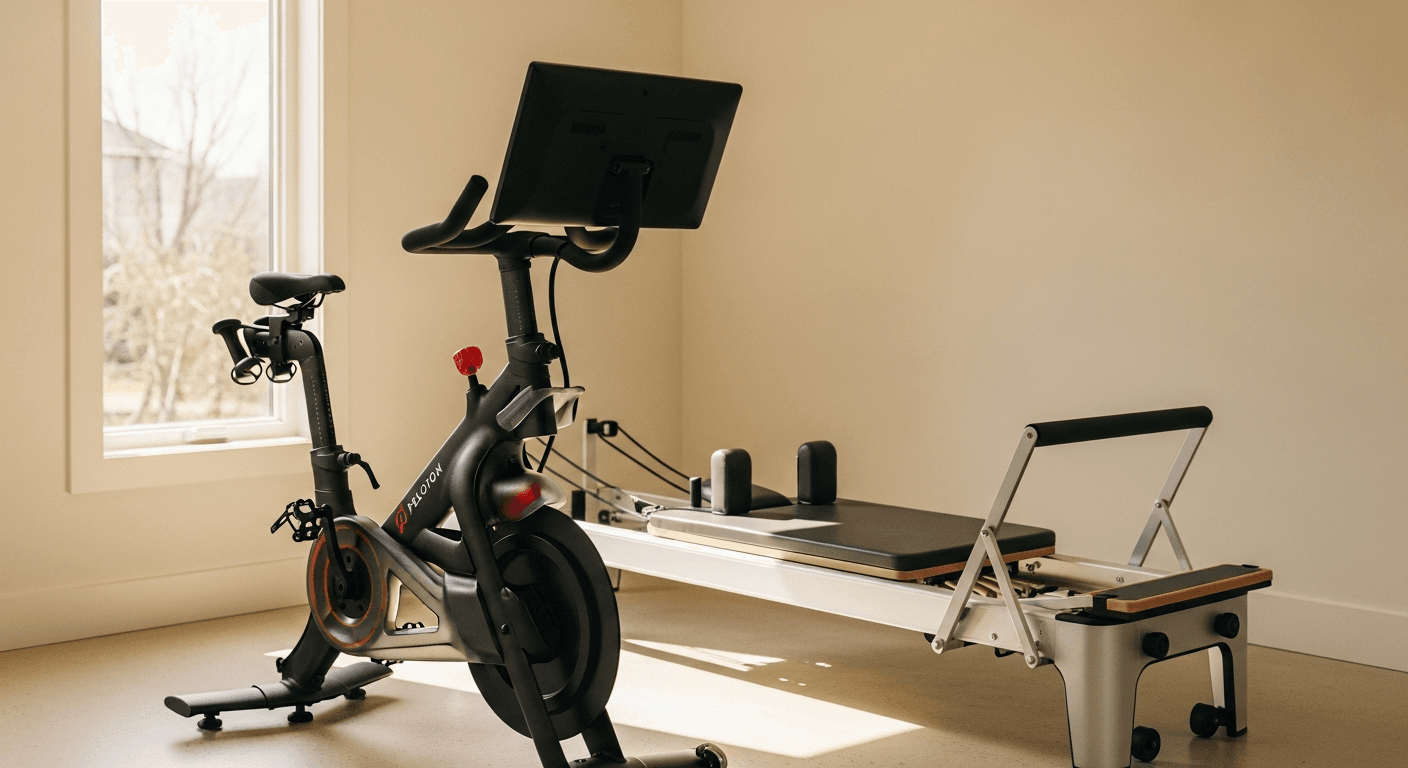
Peloton's Q3 2026 earnings report landed with the kind of mixed signal that analysts have learned to parse carefully. Revenue hit $631 million, beating forecasts. Earnings per share missed. And buried inside the modality data was a number that should be reshaping procurement conversations at every major equipment brand right now: Pilates usage on the Peloton platform grew 48% year-over-year, the single fastest-growing category in the entire ecosystem.
That's not a footnote. That's a signal about where fitness consumers are heading, and Peloton is already building hardware around it.
What $631 Million Actually Tells You
The revenue beat was driven by connected fitness equipment sales across both the Peloton consumer line and the Precor commercial brand. That's the detail that separates this quarter from previous ones. Peloton isn't just recovering on subscription momentum. It's moving hardware volume again, across two distinct market channels simultaneously.
Missing EPS while beating revenue is a structural tell. It means hardware unit economics remain under pressure. Production costs haven't normalized, supply chain friction is still baked into margins, and the company is absorbing those costs to protect market share rather than passing them through entirely to buyers. That's a deliberate strategic choice, and it has implications for every competitor quoting against Peloton and Precor in the same procurement cycles.
This margin compression isn't unique to Peloton. It reflects an industry-wide condition. Supply chain normalization, which many brands expected to complete by mid-2025, has moved more slowly than projected. If you're running procurement or category planning at a competing equipment brand, the assumption that Peloton will be forced to raise prices soon is not a safe one to build strategy around.
The 48% Pilates Signal Is Not About Yoga Pants
The consumer shift toward low-impact modalities has been building for several quarters. What Q3 2026 confirmed is that Pilates has broken away from the pack. A 48% growth rate in a platform with Peloton's subscriber base is not a niche trend. It represents a significant reallocation of workout time, and workout time drives equipment demand.
Here's what that means practically. If your brand's inventory planning is still weighted toward high-intensity cardio equipment and heavy strength platforms, you're building toward where demand was, not where it's going. The consumer profile driving Pilates growth skews toward users who prioritize joint health, recovery, and functional movement, which are categories that align closely with longevity-focused fitness behavior.
Research consistently connects functional strength and mobility work to long-term health outcomes. Tools like grip strength assessments that measure longevity markers are gaining traction precisely because they reflect what this consumer segment values: health performance across decades, not peak output in a single training session.
Equipment brands that can credibly serve this user, with reformer alternatives, resistance-based low-impact machines, or connected platforms that support guided Pilates programming, are positioned for a demand tailwind that's only accelerating. Brands that can't should be treating Q3 2026 as a planning deadline, not a data point to revisit next quarter.
The Fall Hardware Cycle and Why It Changes the B2B Game
Peloton confirmed active R&D on new hardware and features targeting a fall 2026 launch window. This is the company's first significant hardware cycle since it pivoted away from aggressive consumer acquisition spending and repositioned around commercial and enterprise channels. The timing is precise and deliberate.
Fall is when gym operators finalize equipment contracts for the following year. Capital expenditure decisions for facility refreshes and new club builds typically lock in during Q4. Peloton and Precor entering this window with new product is a direct move to be present at those conversations with current-generation hardware rather than aging inventory.
For context on what Peloton's commercial positioning already looks like, Peloton's commercial series and its current 3% market share footprint makes clear how much room the brand has to grow in the B2B segment. That 3% figure isn't a ceiling. With new hardware and an active Precor pipeline, it's a base.
The competitive stakes here are real. Matrix, Life Fitness, and Technogym are all active in the same commercial gym procurement channel. They've held this space with established operator relationships and broad equipment catalogs. Peloton's angle is different: it brings platform integration, member engagement data, and connected content as part of the hardware sale, which is a bundled value proposition that traditional equipment manufacturers are still struggling to match credibly.
Precor's Role in the Commercial Push
Precor, which Peloton acquired and has been methodically rebuilding as its commercial brand, is the operational vehicle for this B2B expansion. Targeting gym operators directly puts Precor in the same RFP cycles as the legacy commercial brands, competing on equipment quality, service infrastructure, and increasingly on data and connectivity features.
The timing matters for gym operators too. With membership retention under sustained pressure across the industry, operators are making equipment decisions with one eye on member experience metrics. Equipment that supports programming variety, tracks engagement, and integrates with digital platforms has a differentiated case to make in procurement conversations. Operators who want to understand how equipment quality connects to the retention problem should be watching how gym retention rates are forcing operators to rethink their onboarding and floor equipment strategy.
Peloton's ability to offer operators a connected ecosystem rather than a catalog of standalone machines is a structural advantage, provided the hardware cycle delivers on the R&D pipeline that was confirmed this quarter. That's the conditional the market is now pricing.
What Competing Brands Must Do Before Fall
If you're a brand competing with Peloton and Precor in either the consumer or commercial segment, Q3 2026 has handed you a specific set of intelligence to act on. Here's where it points:
- Pilates and low-impact inventory: The 48% growth figure is a category signal that will show up in operator RFPs. If your product line doesn't address it, your catalog will have gaps where competitors don't.
- Margin strategy: Peloton is absorbing margin pressure to protect share. If your pricing model depends on Peloton pulling back from competitive pricing, that assumption needs revision.
- Fall timing: New hardware from Peloton arriving in fall 2026 means you need your own Q4 commercial narrative ready now, not in September. Gym operators making late-year decisions will have a current-generation Peloton option on the table.
- Platform value bundling: Standalone equipment is getting harder to justify in commercial bids when a competitor is offering hardware plus content plus engagement analytics as a package. Your brand's answer to that bundled offer needs to be explicit.
The broader context here is that fitness hardware is converging with software, data, and connected experiences in ways that are reshaping how gym operators evaluate vendors. This isn't limited to Peloton. As capital continues to concentrate around wearable AI and connected fitness infrastructure, brands that treat hardware as their only competitive asset are narrowing their own market relevance.
The Structural Margin Story for the Category
Peloton's EPS miss is worth holding separately from the revenue beat because it reflects something real about the equipment manufacturing environment right now. Input costs, logistics, and component sourcing have not returned to pre-disruption baselines. Any brand reporting hardware margins will recognize the pattern: volume is recovering, but profitability per unit is lagging.
This creates a two-tier competitive dynamic. Brands with scale advantages, either through manufacturing volume or vertical integration, can absorb this pressure more sustainably. Smaller or mid-tier brands face a harder version of the same problem. Watching how Peloton manages this squeeze in H2 2026, particularly if fall hardware launch costs hit the income statement in Q4, will give the entire category a live case study in margin recovery strategy.
The athletic and fitness industry has been watching consolidation accelerate across adjacent categories. The same forces driving M&A activity in apparel, as seen with strategic acquisitions reshaping the global athleisure market, are producing similar pressures in equipment: scale matters more than it did three years ago, and brands without it are in structurally weaker positions heading into 2027.
The Read for Q4 and Beyond
Peloton's Q3 2026 report is not a comeback story. It's a strategic repositioning story with hardware at the center of it. The Pilates surge tells you where consumer demand is going. The fall R&D confirmation tells you Peloton intends to meet that demand with new product. The Precor commercial push tells you the company is building a second revenue engine in B2B that didn't meaningfully exist two years ago.
For competing brands, the actionable window is short. Fall 2026 contract cycles will be decided before the end of the year. The brands that enter those conversations with current product, a platform story, and a clear answer on low-impact modality support will be the ones closing deals. The brands that don't will be watching Peloton and Precor expand a market share footprint that gets harder to challenge with each passing contract cycle.
$631 million and a 48% Pilates growth rate is Peloton telling the market exactly what it's doing. The question is whether competing equipment brands are listening carefully enough to respond before fall.