
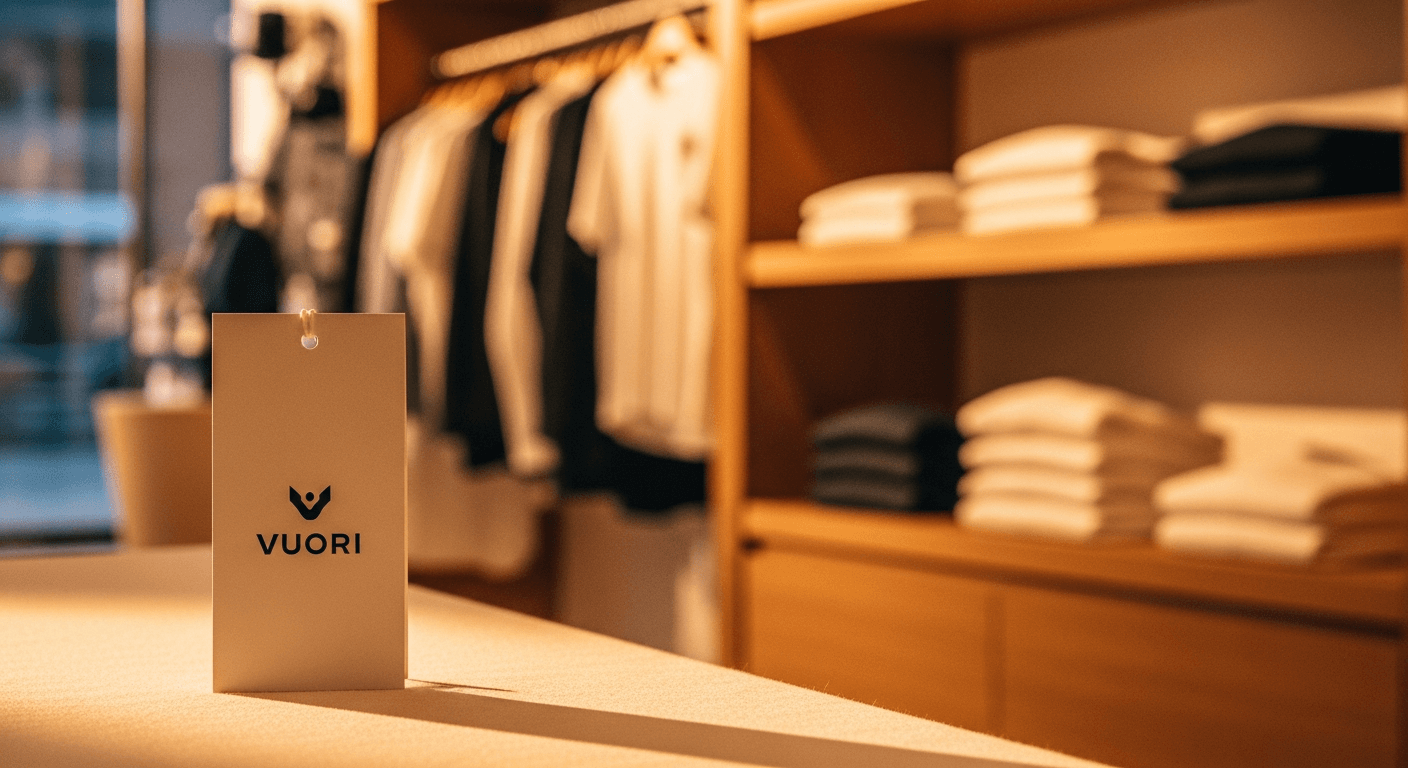
From a California brand to a $5.5 billion valuation
In 2015, Joe Kudla founded Vuori out of San Diego with a simple but precise idea: create fitness clothing that didn't look like fitness clothing. Clean cuts, quality fabrics, neutral colors and silhouettes that moved naturally from yoga studio to coffee shop. No aggressive logos, no gym-floor aesthetic.
Ten years later, General Atlantic and Stripes just led an $825 million round, valuing the company at $5.5 billion — up 37.5% from the $4 billion valuation established when SoftBank invested in 2021.
How did they get there?
The positioning that changed everything
Premium activewear was dominated by two nearly opposite approaches when Vuori emerged. On one side: Nike and Under Armour — technical performance, often aggressive design, competition-focused marketing. On the other: Lululemon — premium lifestyle, primarily female audience, yoga and pilates, high prices.
Vuori identified an underserved segment: the active man and woman aged 30-50 who trains regularly but doesn't want to look like a triathlete in daily life. Someone who goes directly from the gym to a meeting or lunch and wants clothes that work in both contexts.
This positioning isn't original in itself — the 'performance-lifestyle' concept has existed since the 2010s. But Vuori executed it with particularly consistent aesthetics. Every piece from the brand answers the same question: can I wear this at the gym AND outside without looking out of place in either context?
The retail strategy behind the $5.5B valuation
Vuori's valuation isn't based solely on online revenue projections. It's based on an ambitious physical retail strategy. The brand is targeting 100+ stores in 2026 — a target it should hit or exceed according to Retail Dive data.
Simultaneously, Vuori is going international. The brand is now present in 18 countries through wholesale networks and direct openings. The London flagship is open. Asia — particularly China and South Korea, two major markets for premium activewear — is in the sights.
This combination of physical retail plus international expansion is exactly the trajectory Lululemon followed between 2010 and 2020 to build its current position. Vuori is running the same playbook, a decade later but in a larger global market.
The risks investors have to face
A $5.5 billion valuation for a private brand is a significant bet. The risks are real:
First, international execution is a different challenge from domestic execution. What works in the US — the fits, the colors, the lifestyle positioning — doesn't automatically transfer to Europe or Asia, where activewear codes are different. Lululemon took time to understand European markets. Vuori will need to adapt.
Second, competition has intensified in the premium segment. Rhone, Set Active, Outdoor Voices — several challengers have positioned on the same ground as Vuori, with aggressive marketing. And Lululemon, the historical leader, hasn't sat still in the face of the growing menswear segment.
Third, the physical retail model carries risk in an environment where commercial rents remain high and e-commerce captures a growing share of premium activewear purchases.
What this valuation says about the market
The $5.5 billion valuation sends a clear signal to the rest of the industry: the premium activewear market is large enough to support multiple multi-billion-dollar brands. It's not a winner-takes-all market.
The global activewear market is projected at $409 billion in 2026, growing at 6.4% annually. In that context, Vuori isn't stealing share from Lululemon — it's contributing to the expansion of a market that hasn't yet reached maturity. That's a compelling argument for investors like General Atlantic.