
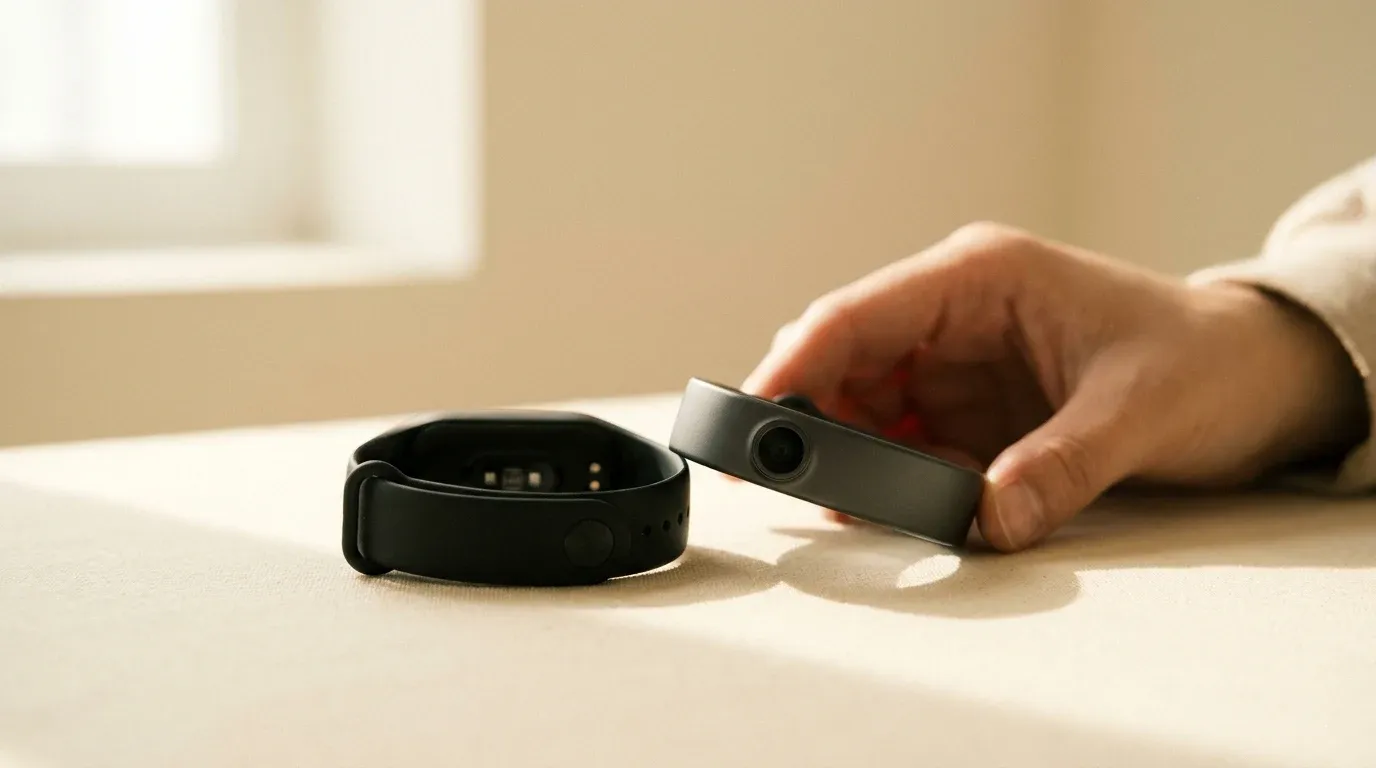
WHOOP's acquisition of Train Fitness is small in dollar terms. In strategic terms, it's one of the most revealing moves in fitness technology this year. The deal adds computer-vision rep-counting to a platform already valued at $10.1 billion, and it signals something the entire fitness industry needs to pay attention to: wearable brands aren't just tracking your recovery anymore. They're coming for the full training loop.
If you're running a gym, selling sports nutrition, or building coaching software, this acquisition reshapes the competitive landscape around you. Here's what's actually happening, and what you should do about it.
What Train Fitness Actually Brings to WHOOP
Train Fitness built its reputation on computer-vision rep-counting, using a phone's camera to detect movement patterns and log strength training sets automatically. It's a deceptively difficult technical problem. Getting a system to reliably distinguish a squat from a deadlift, or a push-up from a dip, across varied body types and camera angles, requires substantial machine learning infrastructure.
Before this deal, WHOOP was essentially blind to what happened inside a strength session. The band could tell you your heart rate climbed and your strain score rose. It couldn't tell you how many reps you completed, at what tempo, or whether your set quality degraded toward the end. That data gap put WHOOP at a meaningful disadvantage against Apple Watch's Workout app and Garmin's strength tracking features, both of which offer at least basic rep detection.
Train Fitness closes that gap. More importantly, it gives WHOOP a proprietary AI layer that neither Apple nor Garmin currently matches in sophistication. That's not a minor upgrade. That's a structural shift in what WHOOP can offer to serious lifters, a demographic it has always courted but never fully served.
The Market Math Behind a $10.1 Billion Valuation
WHOOP's $10.1 billion valuation looks aggressive until you look at where the wearable market is heading. The wearable medical and fitness device market is projected to grow from $67.7 billion in 2026 to $337.3 billion by 2033. IDC forecasts 693.2 million annual device shipments by 2030. That's not a niche category quietly expanding. That's a platform war at consumer scale.
The companies that win platform wars don't win on hardware margins. They win on data depth, ecosystem stickiness, and the number of adjacent services they can anchor to a user's daily life. Apple understood this a decade ago. WHOOP, founded on the insight that recovery data could change how athletes train, is now executing the same playbook: accumulate enough behavioral and biometric data that leaving the platform feels like starting over.
For a deeper look at the broader market dynamics driving this consolidation, the $144B wearable fitness tracker market opportunity puts the scale of what's at stake into context.
Adding rep-counting AI isn't just a feature drop. It's a data acquisition strategy. Every set a WHOOP user logs becomes a training record tied to their sleep data, HRV trends, strain history, and recovery scores. Over time, that creates a longitudinal training profile that no standalone app or competitor can replicate without access to the same user.
What This Means for Gym Operators
If you're operating a gym, WHOOP's expanded data layer is both an opportunity and a threat, and which one it becomes depends almost entirely on how quickly you move.
The opportunity is distribution. WHOOP's member base skews toward high-engagement athletes willing to spend on their training. These are precisely the members who respond to data-informed programming, personalized coaching, and premium add-on services. A gym that builds programming explicitly designed to integrate with WHOOP's metrics, or pursues a formal partnership, gains a credibility signal and a retention lever that generic competitors can't easily replicate.
The threat is invisibility. As WHOOP accumulates more training data, its in-app recommendations will become more specific and more compelling. Users who receive tailored workout suggestions based on their current recovery state, HRV, and historical performance have less reason to rely on a gym's generic class schedule or floor coaching. The gym becomes infrastructure. WHOOP becomes the coach.
Gym retention is already a persistent pressure point. The first 60 days of a member's experience remain the highest-risk window for churn, and gyms that fail to create meaningful personalization in that window lose members to attrition, not competition. A platform like WHOOP, delivering daily personalized feedback, makes the stakes of that onboarding window even higher.
The gyms positioned to benefit are those already thinking about data integration, not as a tech novelty, but as a retention strategy. If your programming can speak the language of strain scores and recovery readiness, you're adding value inside the user's existing ecosystem rather than competing against it.
The Squeeze on Adjacent Brands
The Train Fitness acquisition follows a consolidation pattern that should concern brands in nutrition, recovery, and coaching software. As wearable platforms accumulate richer biometric data, they naturally become the reference point for every adjacent recommendation. What should I eat post-workout? How hard should I train today? Do I need a rest day?
Right now, a sports nutrition brand answers those questions through marketing content, packaging, and retail placement. In a WHOOP-centric training ecosystem, those same questions get answered by an algorithm with access to the user's actual physiological state. The brand that isn't integrated into that ecosystem doesn't just lose a channel. It loses relevance at the moment of decision.
This is where API relationships become strategic assets rather than technical niceties. Brands that move early to build formal integrations with wearable platforms, whether through data sharing, co-branded features, or personalized recommendation engines, secure placement inside the user's decision-making loop. Brands that wait are increasingly dependent on the platform deciding to recommend them. That's a weak position.
The parallel in coaching software is just as sharp. Platforms that can ingest WHOOP data and build programming around it become more valuable to coaches and athletes. Those that operate in isolation become harder to justify as subscription spend. The ecosystem consolidation happening at the hardware level is already rippling into software, and it will reach nutrition and recovery products next.
Competing Platforms Have Less Time Than They Think
Apple, Garmin, Polar, and Samsung are all watching the same market data WHOOP is acting on. The race to own the full training loop, from sleep and recovery through active workout tracking and performance analytics, is accelerating. The window for smaller platforms and adjacent brands to negotiate favorable integration terms narrows every time a major acquisition closes.
What makes WHOOP's move particularly effective is its focus. Where Apple Watch is a general-purpose device that includes fitness features, WHOOP is a fitness-first platform building toward medical-grade biometric depth. That specialization creates a loyal user base with above-average training frequency and data engagement. These are users who care enough about performance to pay for a subscription on top of a hardware purchase, and that willingness to pay makes them attractive to every adjacent brand in the ecosystem.
The strength-training specifically is worth watching. Training modalities that generate detailed performance data are becoming increasingly well-researched and commercially relevant. Evidence continues to build around resistance training's systemic benefits, including findings showing 12 weeks of lifting after 60 improves respiratory muscle strength, a data point that reinforces strength training's appeal across age demographics. WHOOP's ability to track that training precisely positions it to serve aging, health-focused athletes who are becoming one of the fastest-growing fitness consumer segments.
Brands targeting that demographic are already navigating significant market shifts. Franchise models betting on the 60-plus fitness market reflect how seriously the industry is taking older-adult engagement. WHOOP's rep-counting capability, combined with its existing recovery data, creates a compelling proposition for that audience. The platform that can tell a 62-year-old athlete exactly how their strength sessions correlate with sleep quality and HRV recovery has a defensible position in a segment most wearable brands treat as secondary.
The Strategic Moves That Make Sense Right Now
For brands and operators trying to position themselves ahead of the next round of consolidation, a few moves stand out as worth prioritizing.
- Audit your API exposure. If your product or platform generates training, nutrition, or recovery data, understand where that data sits in relation to major wearable ecosystems. Integration isn't optional at scale. It's the difference between being inside the user's loop or outside it.
- Identify your WHOOP user segment. High-frequency, data-engaged athletes are disproportionately valuable customers. Understanding what percentage of your audience fits that profile tells you how urgently you need to act on ecosystem integration.
- Build programming that speaks biometric language. Whether you're a gym, a coaching platform, or a content brand, the products and programs that reference recovery data, strain scores, and HRV trends will feel more relevant to wearable users than generic output-based programming.
- Watch the partnership announcements, not just the acquisitions. WHOOP will formalize relationships with select brands before it builds competing features. Early partnership conversations, even informal ones, position you ahead of the queue.
The Train Fitness acquisition is a small deal that clarifies a large direction. WHOOP is building the infrastructure to be your athlete's primary training intelligence layer. Every brand in the fitness and wellness space needs to decide whether it's going to be part of that layer or compete against it. Waiting to see how the market develops is itself a decision, and increasingly, it's the wrong one.