
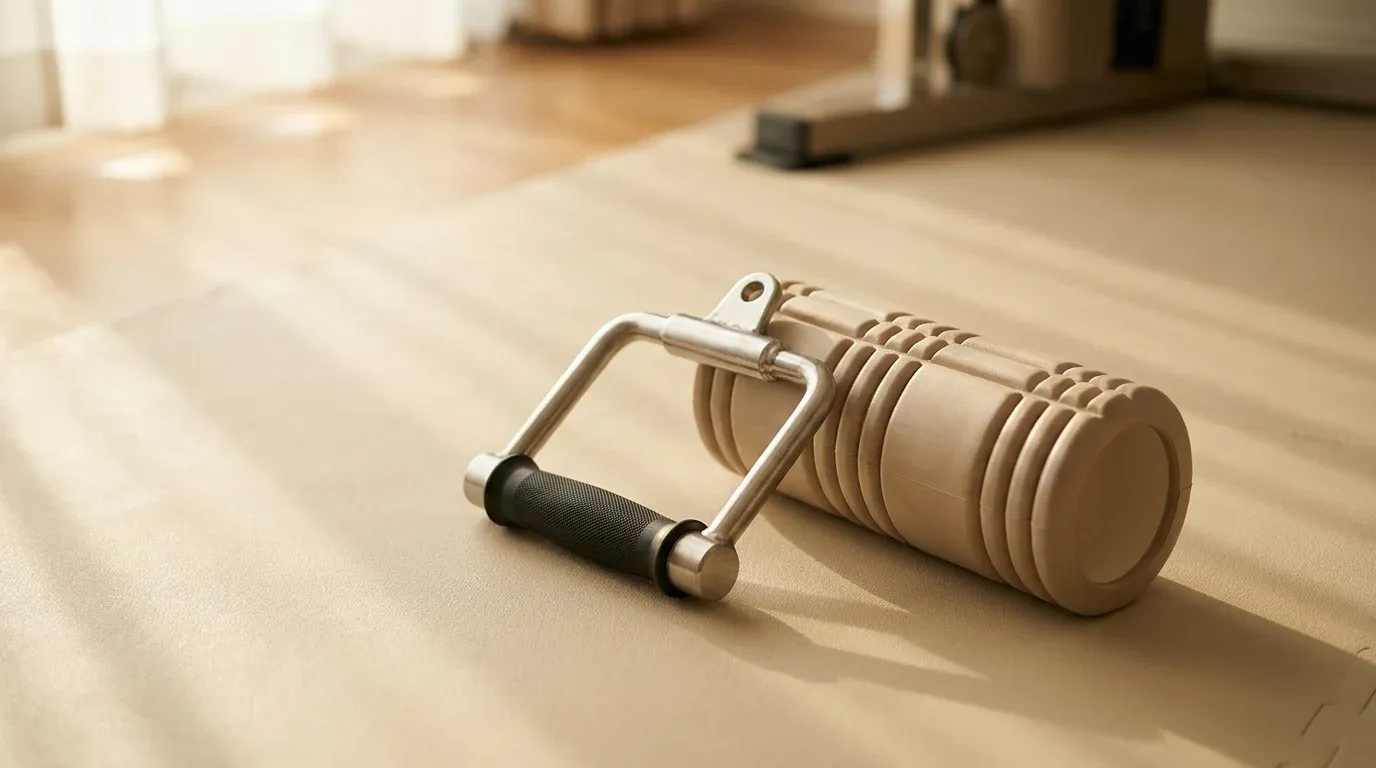
On November 10, 2026, YouFit Gyms closed a $10 million growth equity round led by Skyline Investors, a firm making its first-ever bet on the fitness and wellness sector. The capital is earmarked for renovations across 12 Florida locations, with a clear emphasis on strength training equipment and recovery amenities. It's a tidy headline. It's also a signal of something much larger happening across the high-volume, low-price gym segment.
HVLP operators are no longer just competing on price. They're competing on product. And that changes the math for every operator in the tier.
What Skyline's Bet Actually Means
When a first-time fitness investor writes a $10 million check, it's worth asking why now. Skyline Investors has no prior exposure to gyms, studios, or wellness real estate. That's not a red flag. That's a tell. Outside capital entering a segment typically follows one of two signals: either the category is overheated and speculative, or the fundamentals have shifted enough to make the risk calculus attractive to generalists.
In this case, the evidence points to the latter. HVLP gym membership in the US has recovered past pre-pandemic levels, and the segment has shown consistent monthly dues collection even through inflationary pressure on consumer spending. YouFit, with its Florida-heavy footprint, sits in a high-growth demographic market where migration patterns have added members faster than most markets.
But Skyline isn't just betting on membership volume. The capital allocation. toward strength equipment and recovery zones. tells you exactly what the firm's due diligence found: members are churning not because they can't afford $10 to $25 per month, but because the product no longer matches their expectations.
The Structural Shift in HVLP Expectations
Five years ago, the HVLP value proposition was simple. You got a clean floor, cardio equipment, and a price point that made cancellation feel almost unnecessary. That was enough to drive retention because the alternatives were either boutique studios at $30 to $40 per class or mid-market clubs at $50 to $80 per month that often felt dated anyway.
That gap has compressed significantly. Boutique operators have expanded aggressively, bringing per-visit pricing and app-based drop-in models that make occasional use frictionless. Meanwhile, the mainstream fitness conversation has shifted hard toward strength training, particularly for women. Research connecting resistance training to women's longevity outcomes has moved from academic journals into mainstream media, and it's reshaping what members walk through the door expecting to find.
If your floor plan is still cardio-dominant with a modest free weight section tucked in the corner, you're behind. Not symbolically. Operationally. Members who want barbells, cable machines, and functional racks are leaving for gyms that have them, even if those gyms cost more per month.
YouFit's renovation scope reflects this directly. Strength equipment refreshes are the stated priority, followed by recovery amenities, which typically means infrared sauna access, percussion therapy stations, or cold exposure options. These were mid-market differentiators 24 months ago. They're table stakes conversations now.
Planet Fitness, the Be-Fit Deal, and the Capital Confluence
YouFit's round didn't happen in isolation. It landed days after Planet Fitness announced its $115 million acquisition of Be-Fit, a move that extends the largest HVLP brand's footprint and signals an appetite for growth through acquisition rather than purely organic club opening.
Two major capital events hitting the HVLP segment within the same week is not coincidence. It's confirmation that institutional and strategic money sees this tier as a renovation opportunity, not a mature or declining one. The question isn't whether HVLP is worth investing in. The question is whether upgrading physical infrastructure is the right lever, or whether operators are solving for the wrong problem.
For context on how Planet Fitness is restructuring its own capital strategy around ownership and franchising, its ongoing refranchising program offers a parallel lens on how the segment's largest player is thinking about risk and growth simultaneously.
What's clear is that capital is flowing into HVLP from multiple directions at once. Private equity, strategic acquirers, and now first-time sector entrants like Skyline are all reaching the same conclusion: the low-price gym model needs a hardware upgrade to stay relevant.
The Encroachment Problem from Both Directions
HVLP operators face pressure from two distinct directions, and the YouFit investment is partly a response to both.
From above, premium and mid-market clubs have been investing in service quality and community programming. Brands like Virgin Active are expanding aggressively in key markets. Virgin Active's acquisition of Holmes Place Germany underscores how premium operators are scaling fast and adding locations that pull aspirational members away from price-sensitive tiers. When a mid-market club opens two miles from an HVLP location and charges $20 more per month for a meaningfully better experience, retention risk goes up.
From below, the digital fitness layer continues to offer convenience-first alternatives. App-based workout programs, connected home equipment, and hybrid memberships all compete for the attention of the most price-sensitive HVLP members. These aren't direct substitutes for a physical gym, but they erode the casual or low-frequency member base that HVLP operators depend on for dues volume without proportional facility usage.
The renovation play is an attempt to defend the middle. By upgrading to strength-forward floor plans and adding recovery amenities, YouFit and operators like it are trying to hold members who might otherwise drift upmarket, while maintaining the price point that keeps them competitive against digital alternatives.
The Capex Trap Operators Need to Avoid
Here's where the strategic risk lives. Equipment upgrades are visible. They're photographable, marketable, and easy to announce. They also carry a track record worth examining carefully.
Historically, capital expenditure in gym renovation without corresponding operational change has not moved retention metrics in a durable way. Members notice new equipment for a month. They might return for the first few weeks of a renovation cycle. But if the staff culture, onboarding process, and community programming haven't changed, the upgraded hardware doesn't address the actual reason people cancel.
The operators who have driven real retention improvements have done so by borrowing from service industries rather than from equipment catalogs. The hospitality model for gym operations, which treats every member interaction as a service touchpoint rather than a transaction, has shown more consistent retention outcomes than facility upgrades alone. That's a harder operational lift. It requires hiring differently, training more rigorously, and measuring staff performance on member outcomes rather than just sales conversions.
The lessons from operators who have failed despite strong infrastructure investment are equally instructive. The collapse of Reborne Longevity is a detailed case study in what happens when premium amenities and operational dysfunction coexist. The amenity list was impressive. The retention was not.
YouFit's $10M round is large enough to refresh 12 locations meaningfully. It's not large enough to transform organizational culture. The strategic question for YouFit's leadership, and for every HVLP operator watching this closely, is whether the capex is paired with an operational plan that can actually convert upgraded facilities into improved member lifetime value.
What This Means If You're Operating in the HVLP Tier
If you're running a gym in the $10 to $30 per month range, the YouFit round and the Planet Fitness Be-Fit deal are relevant data points whether you have 1 location or 50. Here's what the pattern suggests:
- Strength equipment is no longer optional differentiation. Members researching gyms are filtering by rack availability, cable machine count, and functional training space. If your floor plan doesn't reflect this, your conversion rate on tours is already suffering.
- Recovery amenities are moving from premium to expected. Sauna access and recovery tools are appearing in mid-tier clubs at increasing frequency. HVLP operators that add even basic recovery infrastructure are pulling ahead of those that don't.
- Capex without culture change won't hold members. New equipment drives short-term traffic. Staff quality and community programming drive 12-month retention. You need both, and the operational side is harder to fund with a single equity round.
- First-time investors entering your segment aren't just noise. Skyline's move suggests that HVLP is now legible to generalist capital. That means more competition for quality locations, renovation talent, and equipment supply over the next 18 to 24 months.
- Differentiation through service is still available. Not every HVLP operator needs to run the upgrade arms race. Operators who build genuine community, invest in coaching quality, and create high-touch onboarding can retain members without matching the capex of better-funded competitors.
The HVLP segment is not in crisis. It's in transition. The operators who treat this moment as a mandate to upgrade infrastructure alone are going to discover that the members they retain with new equipment are the same members who will leave again when the next upgrade cycle happens somewhere else.
The operators who use this capital environment as an opportunity to rebuild both their physical product and their service culture are the ones who will look back on 2026 as the year the segment sorted itself out. YouFit's $10 million is a start. What happens operationally with those 12 Florida clubs over the next 18 months will tell the real story.