
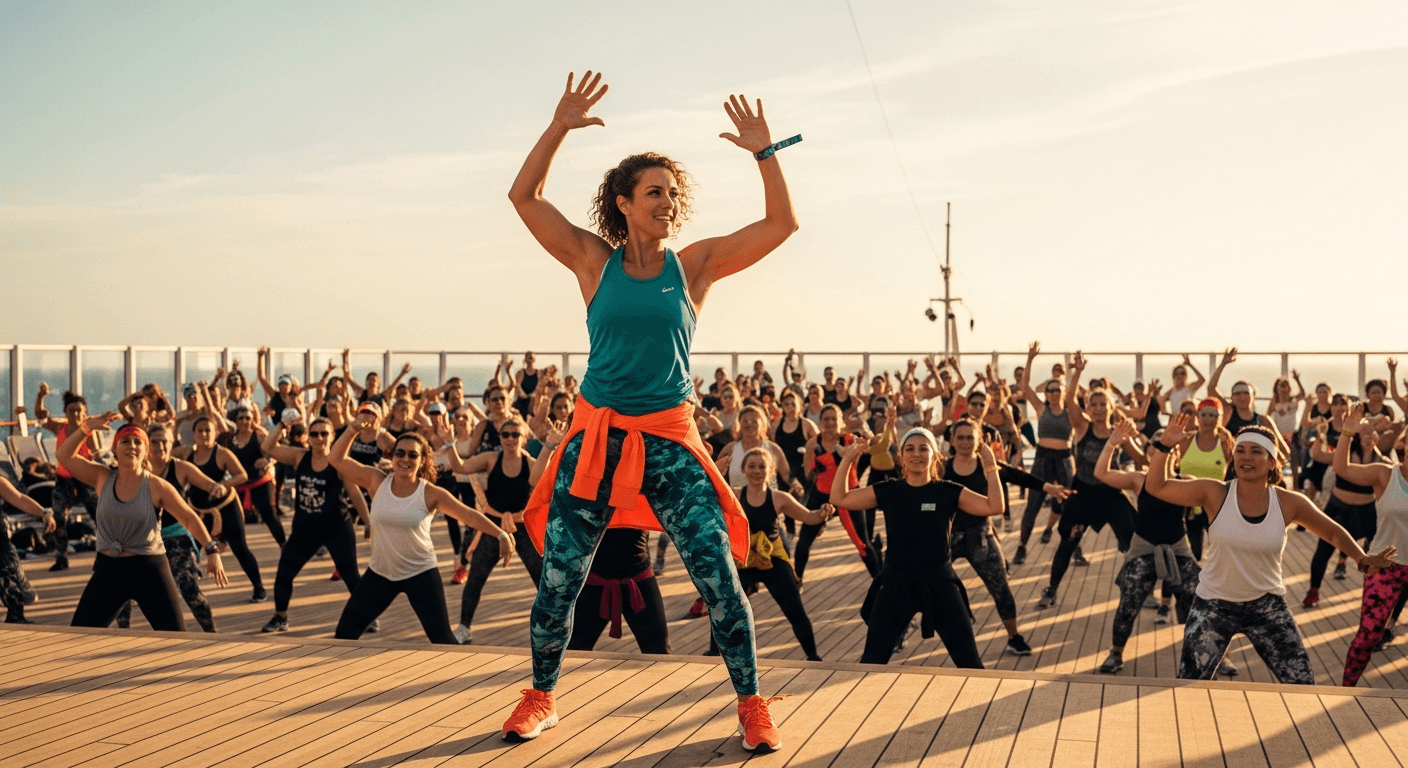
Most fitness brands don't survive a decade. Zumba just turned 25. That gap isn't luck. It's architecture.
Founded in 2001, Zumba has outlasted the spinning boom, the CrossFit surge, the boutique studio explosion, and the pandemic-era pivot to digital. In an industry where trend cycles typically burn out within three to five years, that kind of sustained relevance is a structural outlier. And in 2026, with a Times Square takeover and a sold-out cruise to Mexico anchoring its anniversary campaign, the brand isn't just celebrating. It's demonstrating exactly why it's still standing.
If you operate a gym, coach clients, or build fitness products, this is the case study you should be studying right now.
Why 25 Years Is an Anomaly, Not an Achievement
The global fitness industry is not short on innovation. With over 81 million gym members in the US alone as of early 2026, and the athleisure market tracking toward $1.15 trillion globally, there's no shortage of capital, talent, or consumer appetite chasing fitness concepts.
The problem is retention. Not member retention. Brand retention.
Most fitness brands are built around a methodology, a format, or a piece of equipment. When the methodology stops feeling new, or a superior format emerges, the original brand loses its gravitational pull. It doesn't die overnight. It fades. Participation erodes. Instructor enthusiasm drops. The media cycle moves on.
Zumba avoided that trajectory not by constantly reinventing its product, but by making the product almost secondary to the identity it offered. That's a distinction most fitness businesses never fully internalize.
Joy as Positioning: The Strategic Edge Most Brands Ignore
From its earliest days, Zumba made a deliberate choice to position around joy and community rather than performance outcomes. No calorie-burn promises. No body transformation guarantees. No before-and-after imagery as the primary hook.
That choice looked unconventional against a fitness industry that has historically sold results, metrics, and optimization. But in 2026, that same results-obsessed narrative is facing measurable consumer fatigue. Audiences are increasingly skeptical of performance-first messaging, particularly younger demographics who've grown up watching wellness culture create anxiety as often as it reduces it.
Zumba's positioning now reads as prescient. When your brand promise is that the workout feels like a party, you're not competing with the next high-intensity format. You're offering something the next high-intensity format categorically cannot offer. That's not a niche. That's a defensible category.
For coaches and operators watching this space, the lesson is transferable. The $31B personalization market increasingly rewards emotional resonance over functional differentiation. Clients don't stay because your program is technically superior. They stay because of how your brand makes them feel about themselves.
The Instructor Network as a Decentralized Distribution Machine
Zumba's most underestimated structural advantage is its instructor network. The brand has trained and certified instructors in over 200 countries. That figure is not just impressive. It's the entire distribution model.
Each certified instructor is, in effect, a franchisee who bears their own operational costs, acquires their own students, and markets the Zumba brand in their own community. Zumba gets reach, brand impressions, and revenue through licensing and certification fees. The instructor gets a curriculum, a brand identity, and access to a global community. Both parties win. And Zumba scales without the capital burden of owning the physical infrastructure.
This is a structure that digital-native fitness brands have repeatedly tried and failed to replicate. App-based platforms can aggregate users, but they struggle to build the kind of local, trust-based communities that an embedded instructor creates in a neighborhood gym or community center. The human layer is not a cost. It's the moat.
The parallel for independent coaches is worth noting. Your local presence, your specific client relationships, and your community embeddedness are exactly the assets that no platform can commoditize. That's the argument laid out in detail when you look at how specialist coaches are widening the revenue gap in 2026. The coaches winning aren't the ones with the broadest reach. They're the ones with the deepest community roots.
The 2026 Anniversary Activation: What Zumba Got Right
The Times Square takeover and the sold-out Mexico cruise weren't simply marketing events. They were a masterclass in what brand milestones should do: generate earned media, reactivate lapsed participants, and reinforce community identity for those who never left.
Consider the cruise. A sold-out voyage populated by Zumba instructors and enthusiasts isn't just a trip. It's a three-to-seven-day immersive brand experience where participants reinforce their identity as part of the community. The brand's values. the social bonds, the sense of belonging. are amplified in a context no Instagram campaign can approximate. People return home and tell stories. Those stories drive organic recruitment.
The Times Square activation serves a different function. It's a legitimacy signal. Occupying one of the most visible advertising environments in the world on a 25th anniversary says something about permanence and scale that a press release cannot. It reaches both the existing community and a broader public audience who may not have engaged with Zumba in years.
Together, these activations demonstrate a principle that operators and brands at any scale can apply. Meaningful milestones are not moments to reflect internally. They're opportunities to stage public proof of your staying power. The brands that treat anniversaries as a reason to go quiet miss one of the highest-leverage earned media windows in their calendar.
Community Identity as a Retention Mechanism
There's a useful contrast to draw between Zumba's retention model and the one most gyms rely on.
The conventional gym retention strategy is friction-based. Contracts, cancellation fees, and automatic billing make leaving inconvenient. Members stay because leaving requires effort, not because staying delivers meaning. That model produces revenue numbers that look stable until they don't. When a better offer appears or life circumstances change, the friction disappears and so do the members.
Zumba's retention mechanism is identity-based. When you've been attending the same Wednesday morning class for three years, you're not just exercising. You're part of a social ritual. Your instructor knows your name. Your classmates notice when you're absent. Leaving doesn't just mean finding a new workout. It means leaving a community. That's a fundamentally different barrier to exit.
This is the retention model that scales most durably in a mature market. As the US fitness market reaches structural maturity, the operators and brands that build identity-level loyalty will outlast those that compete on price, equipment, or access alone.
What This Means for Fitness Brands and Operators Today
The Zumba model contains several directly actionable frameworks for any fitness business looking to build past the five-year trend window.
- Anchor your positioning to an emotion, not a method. Methods age. Joy, belonging, confidence, and community don't. If your brand promise can be made obsolete by the next format innovation, it's not differentiated enough.
- Invest in human infrastructure as distribution. Certified instructors, trained coaches, and local community champions are not overhead. They're a network effect that compounds over time and that no app-based competitor can easily replicate.
- Treat your milestones as public brand assets. Your third anniversary, your 500th client, your first expansion location. these are not internal celebrations. They're opportunities for earned media and community reactivation if you design activations with that intent.
- Design for lapsed re-entry. Every brand has a dormant audience. Former members, past clients, people who engaged briefly and drifted. Anniversary events and experiential activations create socially acceptable entry points for lapsed participants to return without the friction of making a cold start decision.
The fitness industry's consolidation wave. visible in major acquisitions and platform mergers across 2025 and 2026. is making brand differentiation more critical, not less. When you look at how capital is flowing and how operators are repositioning, the brands with genuine community equity are commanding better valuations and better retention curves.
For coaches, the principle translates directly to pricing power. Clients who identify with your brand, your community, and your philosophy don't reprice you the way they reprice a commodity service. That relationship between community identity and sustainable pricing is exactly what shapes how to reprice coaching services in a competitive wellness market.
The Real Lesson Is Structural, Not Inspirational
It would be easy to read Zumba's 25-year run as an inspiring story. It's better read as a blueprint.
The brand's longevity isn't explained by charismatic founders or lucky timing. It's explained by a set of structural decisions made early and maintained consistently. Position around identity, not outcomes. Scale through people, not just capital. Make the experience meaningful enough that leaving requires a real decision.
Those decisions compound. After 25 years, Zumba doesn't need to fight for relevance. It has a global instructor army, a loyal participant base across age groups and geographies, and enough brand equity to fill a cruise ship and shut down Times Square for an afternoon.
That's not a milestone. That's the return on 25 years of strategic discipline. And it's the model every fitness brand building for longevity should be studying right now.