
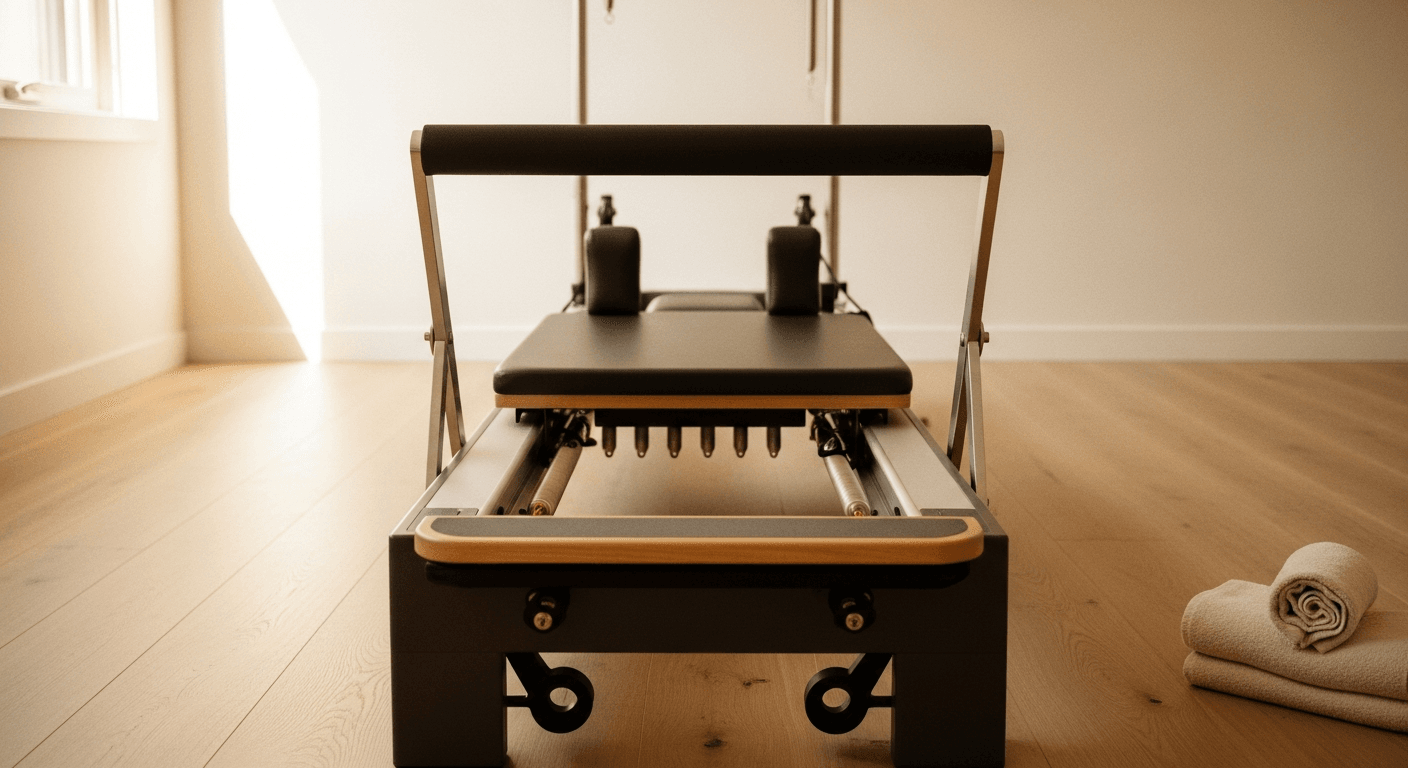
On May 29, 2026, PersonalHour announced its second growth funding round in under twelve months. The stated goals: expand AI-powered Pilates technology, scale home fitness infrastructure, and deepen digital wellness experiences. Two fundraising rounds in a year signals something more significant than a startup finding its footing. It signals that venture capital has made a directional bet on AI coaching platforms as a long-term category winner.
If you're working as a coach today, that bet is worth understanding clearly. Not because it threatens everything you do, but because it changes the market you're operating in and the questions your clients are already asking.
What PersonalHour Is Actually Building
PersonalHour isn't just selling Pilates content. The company is assembling what it calls a connected wellness ecosystem: technology, education, AI coaching, and accessible home Pilates bundled into a single subscription product. That architecture is deliberate. It's designed to compress the traditional coach-client relationship into something a platform can deliver at scale.
The model works by integrating hardware, movement data, and AI-generated feedback into a closed loop. A user does a session, the system analyzes movement patterns, adjusts programming, and delivers the next session. No scheduling friction. No session fees. No personality conflict. From a product design standpoint, it removes every practical barrier that keeps people from starting or staying consistent.
That's the pitch to investors, and it's a compelling one. It's also a direct structural challenge to what coaches sell, at least on the surface.
For a deeper look at PersonalHour's first funding round and what it revealed about the platform's ambitions, see PersonalHour Raises Growth Funding: AI Moves Into Coaching.
The Market Numbers Behind the Investment Logic
The coaching platform market is projected to reach $4.2 billion in 2026, growing at an 11.2% compound annual growth rate. That growth rate is fast enough to attract serious capital but also fast enough to sustain multiple players. PersonalHour is competing in a market that isn't zero-sum yet.
Investors are drawn to the unit economics. A platform that delivers coaching through software scales without adding headcount. Each new subscriber costs almost nothing at the margin once the AI infrastructure is built. Compare that to a human coach, who has a hard ceiling on client capacity and a floor on the time required per client. The math favors platforms at volume.
What the math doesn't capture is what clients actually value when they pay for coaching. A 2026 platform usage analysis found that one-on-one coaching formats still account for 48% of platform usage share, even on platforms that offer cheaper automated alternatives. Clients are choosing the human option at nearly equal rates, often at a significant price premium.
That's not a nostalgia gap. That's a value signal.
Where AI Coaching Has a Real Advantage
It would be a mistake to dismiss what AI coaching platforms do well. They have genuine structural advantages that coaches should acknowledge, not argue against.
- Price accessibility. A subscription-based AI coaching platform typically runs $20 to $60 per month. That opens fitness to people who would never pay $150 to $300 per session for a human coach. These are not your clients. They were never your clients.
- 24/7 availability. AI platforms don't have scheduling windows. A client who needs to train at 5:30 AM or 11:00 PM doesn't have to negotiate availability. For consistency-driven users, this matters.
- Data aggregation. Platforms that integrate wearable data can surface patterns across weeks and months that no individual coach tracks manually with the same precision. Volume, recovery trends, and adherence metrics are genuinely useful inputs.
- Zero friction onboarding. No intake call, no waiting for a spot. Someone decides to start and they start. That removes a meaningful dropout point in the early stages of behavior change.
These advantages are real. They serve a specific type of user: self-directed, budget-conscious, low-complexity needs. The strategic error coaches make is assuming that user is their lost client. In most cases, they weren't going to hire a coach anyway.
What Algorithms Cannot Replace
The 48% usage share for one-on-one formats exists for a reason. There's a category of coaching value that current AI systems cannot reliably deliver, and that's where your positioning needs to live.
Real-time biomechanical assessment. An AI system can analyze movement through a camera, but it's working from angles, landmarks, and pattern matching. A trained coach sees compensation patterns, asymmetries, and subtle load distribution errors that aren't visible in the data the camera captures. In Pilates specifically, the difference between a client performing an exercise correctly and performing it in a way that builds a chronic injury can be invisible to a computer vision model and obvious to a qualified eye.
Emotional coaching and motivation management. Clients don't always train because they're optimized. They train through grief, stress, injury fear, self-doubt, and life disruption. An AI system can detect that a client's session frequency has dropped. It cannot sit with a client who just lost a parent and know whether to push or pull back. That calibration is not a data problem. It's a human one.
There's relevant context here from behavioral research: stress and emotional state directly affect both performance and recovery. A coach who can read that in a client and adjust accordingly is delivering something a feedback algorithm can't access. For more on how stress physiology affects recovery decisions, see Your Brain Needs a Full Hour to Recover From Stress.
Adaptive programming beyond data inputs. AI platforms build programs from the data they collect. But clients bring context that doesn't enter the system: a family situation, an upcoming trip, a fear of a specific movement, a history with a previous coach. Programming that accounts for real-world life requires conversation, not computation. A coach who asks the right questions and adjusts accordingly is building programs that fit a life, not a dataset.
Your Positioning Decision in a Two-Tier Market
The market is splitting into two tiers. Tier one is high-volume, low-price, AI-mediated fitness. Tier two is premium, relationship-driven, human-coached wellness. PersonalHour is building hard into tier one. That's fine. Your job is to be unambiguously in tier two and to communicate why that distinction matters.
This is not about arguing that AI is bad or that platforms are overrated. It's about articulating clearly what you deliver that platforms don't. That requires language, not just capability. If you can't explain in two sentences what a client gets from you that they can't get from a $40 monthly subscription, you have a communication problem, not a competition problem.
If you're working through how to build and defend that positioning in the current market, Mid-Ticket Coaching: How to Defend Your Prices in 2026 walks through the specific framing that holds up when clients compare you to cheaper alternatives.
The strongest positioning statements tend to anchor on outcomes that require relationship over time: injury prevention with complex history, performance goals tied to specific events, clients returning from illness or surgery, or populations that need behavioral change alongside physical change. These are not use cases that a connected home Pilates platform is designed for.
Platform Selection Still Matters for Coaches
One practical implication of the AI platform expansion is that coaches now have more tools available to them as well. The same infrastructure that PersonalHour is building into a consumer product can be used by coaches to deliver better services to their own clients: session tracking, movement logging, programming tools, and client communication systems.
The platforms built for coaches are different from consumer fitness apps, and choosing the right one affects how efficiently you can manage client load, retain clients, and grow revenue. If you haven't reviewed your platform stack recently, How to Choose Your Online Coaching Platform in 2026 covers the current landscape and the criteria worth prioritizing.
Using AI-native tools inside your own practice also strengthens your positioning. It signals that you understand the technology and have chosen the human element deliberately, not by default. That's a different conversation than a coach who simply ignores the shift.
The Broader Health Context Working in Your Favor
There's a macro tailwind worth noting. Strength training has emerged as the leading health priority in 2026 clinical and public health guidance, with evidence linking consistent resistance training to longevity outcomes across age groups. For more on where that evidence stands, see The Training Signal: Strength Is 2026's Top Health Priority.
As health awareness increases, so does demand for coaching that goes beyond content delivery. Clients who understand what they're trying to accomplish physiologically are more likely to seek out expertise, not less. The more informed your client base becomes, the more they'll recognize what an algorithm can't give them.
PersonalHour raising again is not a threat to dissolve. It's a market signal worth reading clearly. Venture capital is betting on AI fitness at scale. That doesn't mean human coaching loses. It means the market is getting larger and more segmented, and you need to know exactly which segment you're serving and why you're the right choice for it.
That clarity is your competitive advantage. Build it deliberately.