
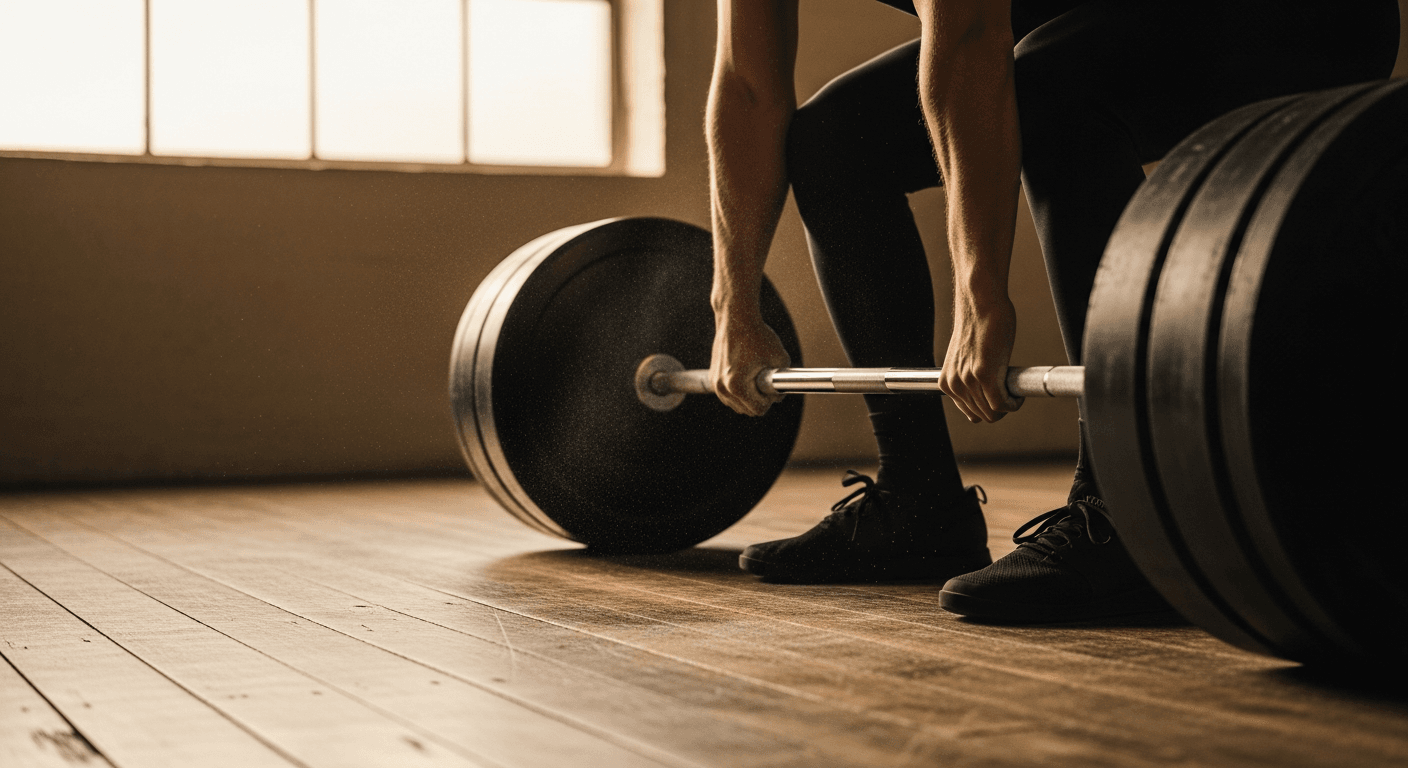
Strength training has replaced weight loss as America's #1 fitness goal in 2026. It's not a niche trend anymore — it's a structural shift backed by the sector's largest data sets.
Every Monday, The Training Signal gives you the numbers, studies, and signals that matter for structuring your training week.
This week's key takeaways
- 82% of Americans plan to prioritize overall wellbeing in 2026, up 7% from 2025 (Life Time Wellness Survey)
- ACSM puts wearable tech, fitness for older adults, and strength training at the top of 2026's trends
- Without resistance training, adults lose 3-5% of muscle mass per decade starting in their 30s
- The US Bureau of Labor Statistics projects 12% job growth in fitness instruction 2024-2034 — 4x the national average
Why strength is the new public health goal
For decades, "getting fit" meant losing weight and logging cardio miles. In 2026, that frame has shifted. According to the Life Time Wellness Survey 2026, 82% of respondents plan to focus more on their overall health — a 7-point jump in one year.
The goal people are declaring has changed. Not "I want to lose 10 pounds." But "I want to be strong, mobile, and independent at 60, 70, 80." Strength training is the primary vehicle for that longevity ambition.
The science backs it up. Muscle mass is one of the strongest predictors of longevity and quality of life. Without consistent resistance work, adults lose 3-5% of muscle mass per decade from their 30s onward — with direct consequences on mobility, metabolism, and bone density.
ACSM's top 5 fitness trends for 2026
The American College of Sports Medicine releases its annual global fitness trend rankings. For 2026, the top five are:
- Wearable technology: smartwatches, tracking rings, continuous glucose monitors — movement is now a permanent data stream
- Fitness programs for older adults: the global population is aging, the market is following
- Exercise for weight management: driven by the GLP-1 medication wave, demand for muscle-preserving coaching is surging
- Mobile fitness apps: digital training is mainstream, even for gym regulars
- Balance, mobility, and core strength: movement fundamentals are gaining mainstream legitimacy
This week's signal: build your program around strength
What the data says this week is simple: if you don't have progressive resistance in your program, you're missing the fundamentals.
The minimum structure experts recommend for maintaining and building muscle mass:
- Frequency: 2-4 strength sessions per week, each muscle group trained at least twice
- Volume: 10-20 sets per muscle group per week, with progressive overload
- Intensity: RPE 6-8 for most sets (you could still do 2-4 more reps)
- Recovery: 48-72 hours between sessions for the same muscle group
You don't need a complex program. You need a consistent one.
What this means for your week
If you're already running a structured strength program, you're ahead of 80% of people. Keep going.
If you're training mostly cardio or without structure, now's the time to add 2 strength sessions to your week. Not to "lose weight" — to build the physical foundation that keeps you active, independent, and healthy in 10, 20, 30 years.
The Training Signal is back every Monday with the week's key data. Next week: training for the 40+ athlete.