

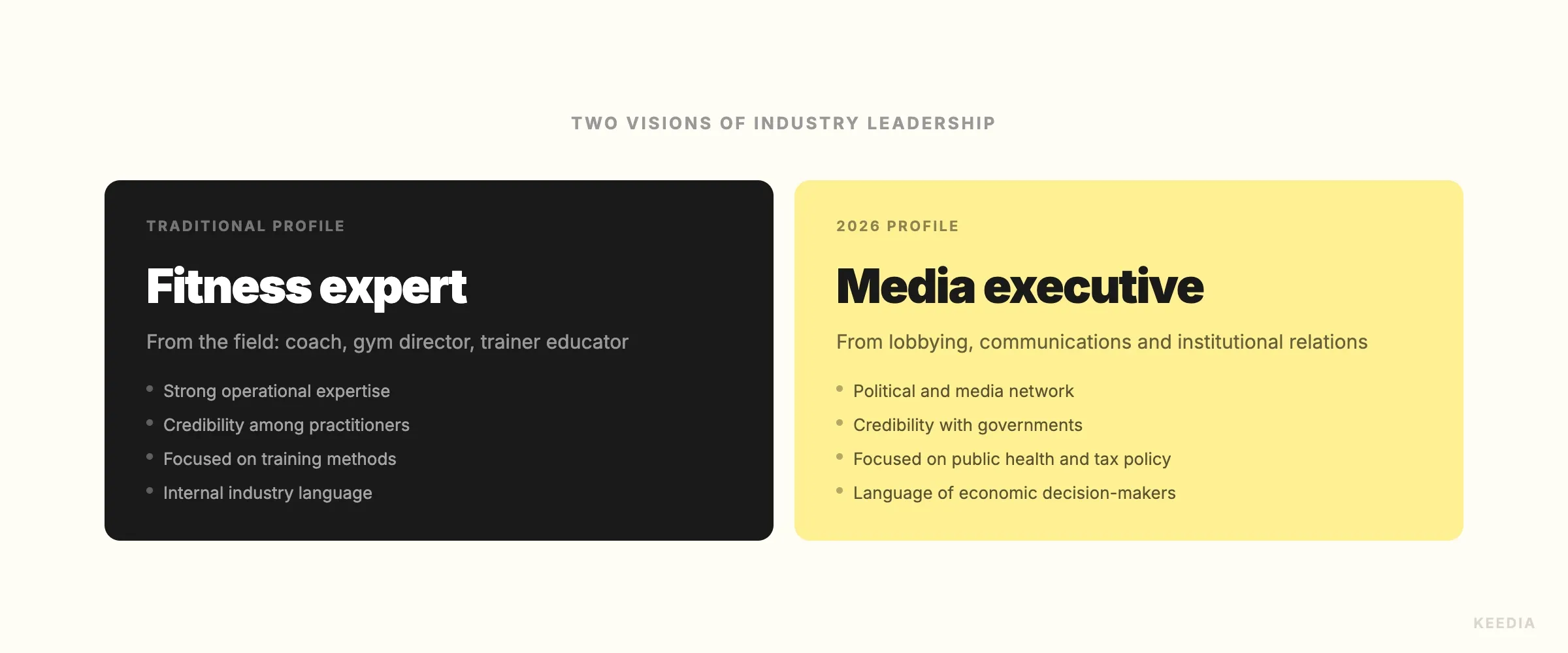
In April 2026, UK Active appointed Cameron Saunders as its new CEO. Saunders has spent more than two decades in media: he was Managing Director of 20th Century Fox UK, and has held senior roles at Sky, Paramount, and Channel 4. He has no background in fitness, exercise science, or gym operations.
That's not an oversight. It's a deliberate signal about where the fitness industry thinks its biggest problems actually live.
What UK Active Actually Does
UK Active is the UK's leading fitness and physical activity trade body. It represents more than 4,000 gyms, leisure centers, and fitness organizations across the country. Its job isn't to publish training protocols or certify coaches. Its job is to make the case, in rooms where policy gets made, that physical activity deserves serious investment as a public health tool.
That means lobbying on gym VAT policy. It means pushing for NHS referral programs that send patients to fitness facilities rather than waiting lists. It means arguing for sustained public investment in community leisure infrastructure. Every one of those outcomes directly affects whether fitness businesses stay viable and whether coaches have clients to train.
If you're a personal trainer trying to understand why your industry looks the way it does, UK Active's lobbying work is part of the answer. The State of Personal Training in 2026: Numbers, Trends and What's Changing for Coaches covers the structural forces shaping coach employment and income right now. Trade body advocacy sits near the top of that list.
Why a Media Executive Makes Sense Here
Saunders' own framing of the role is worth paying attention to. He's stated publicly: "Physical activity is one of the most powerful and most underinvested tools we have for improving national health, productivity and wellbeing."
That sentence isn't targeted at coaches or gym owners. It's targeted at Treasury ministers, NHS commissioners, and employer HR departments. It's the language of public health economics, not exercise science. And communicating that message effectively, to those specific audiences, is a media and advocacy problem, not a fitness knowledge problem.
This is exactly why the hire makes sense. The challenge UK Active faces isn't that policymakers lack access to data about physical activity's health benefits. The research on that is overwhelming and well-established. The challenge is that physical activity consistently loses the political and budgetary argument to pharmaceutical interventions, acute care spending, and other health priorities with louder advocates and better-funded lobbying operations.
That's a communication problem. It requires someone who knows how to build narratives that land with skeptical audiences, manage media relationships, and compete for attention in a crowded public policy environment. A former Fox MD who has spent careers getting content in front of audiences and negotiating at institutional level is, arguably, better equipped for that than a fitness industry veteran would be.
This Pattern Is Common in More Mature Industries
The film, music, and publishing industries figured this out a long time ago. Trade bodies like the MPAA (Motion Picture Association of America) or the BPI (British Phonographic Industry) have consistently recruited from media, legal, and government backgrounds rather than from within the creative industries themselves. The logic is consistent: when your growth phase shifts from product innovation to political and reputational protection, you need different leadership skills.
The fitness industry appointing a media executive to run its primary trade body suggests it's reaching that same maturity point. The product, meaning well-designed training, effective coaching, and accessible facilities, is no longer the main bottleneck. The bottleneck is perception, policy, and funding.
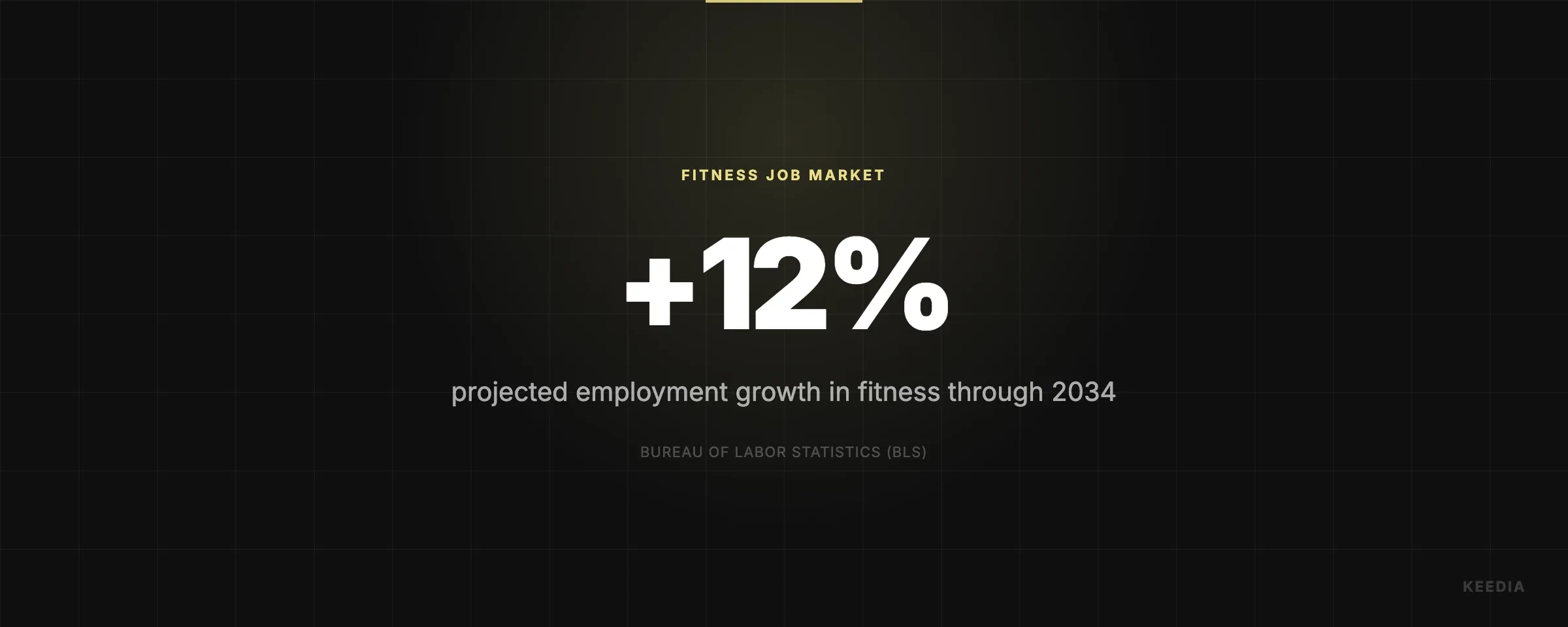
That's actually a reasonably healthy sign for the sector's long-term trajectory. It means the industry is starting to compete seriously for the institutional recognition it's never fully received. For context, the US Bureau of Labor Statistics projects 12% employment growth for fitness trainers through 2034, one of the stronger growth projections in the health and wellness sector. The UK market reflects similar structural tailwinds. But structural growth doesn't automatically translate into policy support or public funding. Someone has to make that case, credibly, at a government level.
What This Means for Coaches and Gym Operators
If you run a gym or work as an independent coach, UK Active's lobbying outcomes are not abstract. They shape the environment you operate in more directly than most industry news ever will.
Gym VAT policy in the UK is one of the clearest examples. UK gyms currently pay 20% VAT, while many comparable European facilities operate under reduced-rate regimes tied to their health classification. UK Active has pushed consistently for reform. Whether that argument gains traction depends heavily on how effectively the trade body makes the public health case to the Treasury. A CEO with media and communications expertise is arguably better positioned to advance that argument than one with operational fitness experience.
NHS exercise referral schemes are another direct line between UK Active's advocacy and individual coaches' livelihoods. When those schemes are funded and expanded, they create referral pipelines into gyms and private coaching practices. When they're cut, that pipeline closes. The fight to keep them funded is a political fight, and political fights are won with narrative and relationships as much as with data.
For coaches building sustainable practices, the macro environment matters more than it might seem. Client retention at 90 days: what triggers churn explores the individual-level factors that determine whether clients stay, but the broader picture of whether clients have access to subsidized gym memberships or employer wellness programs also shapes your pipeline significantly.
The Underinvestment Argument Is Getting Harder to Ignore
Saunders' framing of physical activity as "underinvested" reflects a growing body of health economics research. Preventive interventions, including structured exercise programs, consistently show strong returns in terms of reduced healthcare utilization and improved workforce productivity. The numbers are not subtle.
The problem has never been the evidence. It's been the advocacy infrastructure. Pharmaceutical lobbying in the UK and US is sophisticated, well-resourced, and decades ahead of where physical activity advocacy currently sits. Getting exercise and structured fitness on the same policy priority level as medication requires a different caliber of political communication than the industry has historically been able to deploy.
That's the gap Saunders has been hired to close. Whether he succeeds will depend partly on his ability to build coalitions across the NHS, employer organizations, and government departments. It'll also depend on whether the wider fitness industry, including gym operators, coaches, and equipment providers, gets behind the advocacy effort rather than treating UK Active as a back-office trade function.
For coaches who are developing their professional positioning, understanding these dynamics is increasingly relevant. The AI tools for coaches: what's actually worth using in 2026 piece covers tools that help with the operational side of building a practice. But the policy environment those practices operate in is shaped by exactly the kind of institutional advocacy work UK Active is designed to do.
The Bigger Picture for the Fitness Profession
Here's the practical takeaway. The fitness industry is at an inflection point where its legitimacy as a public health intervention is up for grabs. The science supporting the role of physical activity in managing chronic disease, improving mental health outcomes, and reducing healthcare costs is strong and increasingly well-documented. What's been missing is a compelling institutional voice that can translate that science into policy outcomes.
UK Active hiring a media executive as CEO is a bet that the industry has found the right profile for that voice. It's also a bet that the next decade of fitness industry growth will be shaped less by what happens in training studios and more by what happens in government offices and NHS boardrooms.
If you want to understand where the professional training landscape is headed, it's worth watching whether that bet pays off. Coaching as a profession doesn't exist in isolation from the institutional infrastructure that determines how the public values, accesses, and pays for fitness services. When UK Active wins a policy argument, it creates tangible conditions that benefit working coaches. When it loses, you feel it too, often without knowing exactly why.
That's why a media executive running a fitness trade body in 2026 isn't a curiosity. It's a strategic response to where the real leverage points for industry growth actually are. And it's a sign that the people running the sector are starting to think in those terms.