
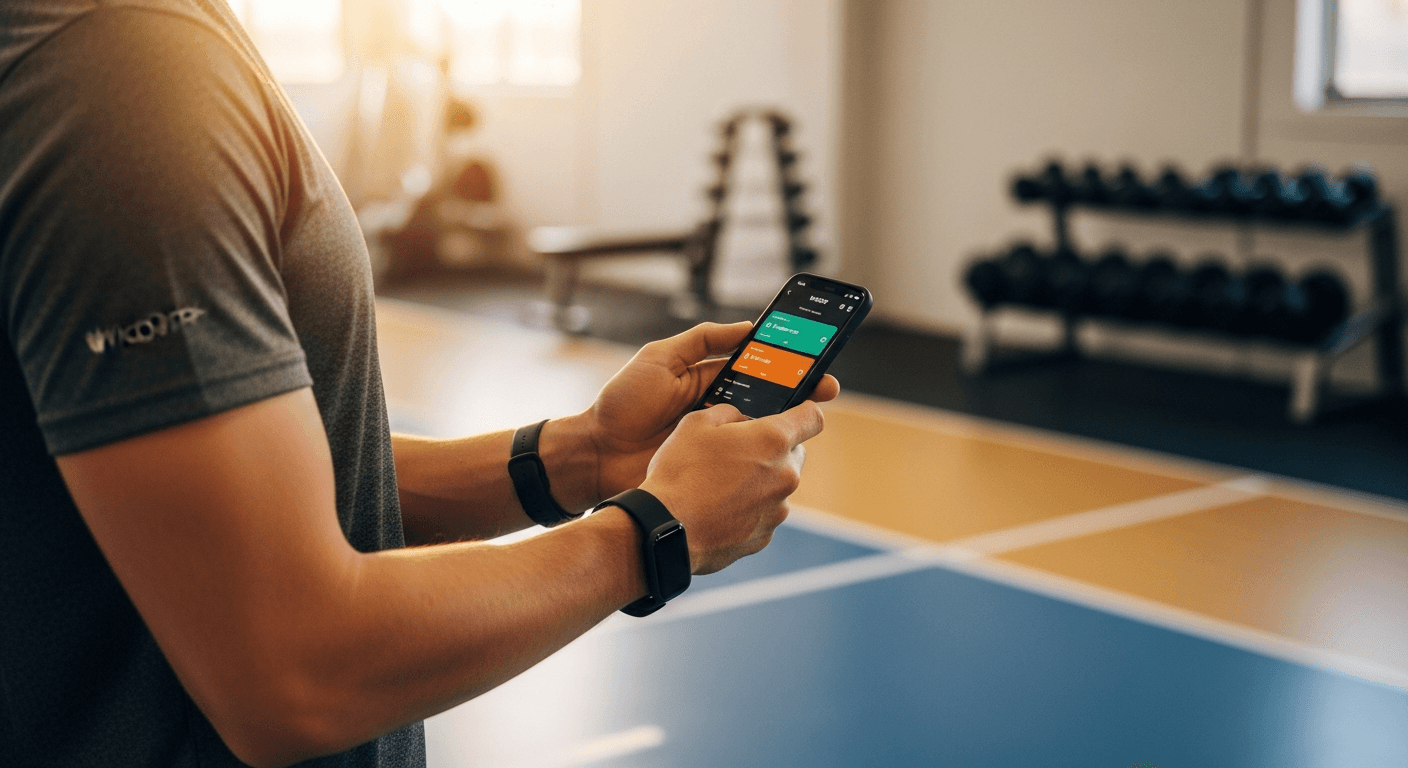
On April 30, 2026, WHOOP closed a $575 million Series G funding round, pushing its valuation above $10 billion. The round attracted heavyweight athlete-investors including LeBron James, Cristiano Ronaldo, Rory McIlroy, and Virgil van Dijk. That list isn't just good PR. It signals that wearable technology has crossed from performance niche into mainstream cultural status, and the implications for working coaches are significant and immediate.
If you're coaching premium clients and you're not yet fluent in WHOOP data, you're already behind. The question isn't whether to engage with this ecosystem. It's how fast you can build a service model around it.
Why This Raise Changes the Competitive Landscape for Coaches
WHOOP has earmarked the $575 million for technology advancement and global expansion, with a potential IPO on the horizon. That means the platform's data capabilities will deepen, its user base will grow rapidly across the US, UK, Canada, and Australia, and the clients sitting in your pipeline are going to show up wearing one.
Consumer adoption of WHOOP has already accelerated beyond early-adopter fitness enthusiasts. It's now standard equipment for serious recreational athletes, weekend warriors investing in longevity, and executives who track their biometrics as closely as their quarterly numbers. The IPO hype cycle will push that adoption further still.
For coaches, that's both an opportunity and a threat. The opportunity: clients who wear WHOOP are already invested in data-driven performance. They want accountability and interpretation. The threat: if you can't provide that, a tech-first competitor will.
This isn't hypothetical. As the coaching software market approaches $13 billion by 2035, platforms are being built specifically to automate the kind of insight-to-programming translation that used to require a skilled coach. Your competitive edge is your ability to contextualize data in ways algorithms can't. But only if you're actually working with that data.
What WHOOP Data Actually Gives You to Work With
WHOOP tracks three primary metrics that are directly actionable inside a coaching context: Strain, Recovery, and Sleep Performance. Each one maps cleanly onto programming decisions you're already making, or should be.
Strain measures cardiovascular load on a scale of 0 to 21, aggregated across the full day, not just a single workout. That means a client who commutes on a bike, runs after work, and then plays recreational tennis has a real-time picture of accumulated physiological stress that no training log captures accurately.
Recovery score draws on heart rate variability, resting heart rate, sleep performance, and respiratory rate to generate a daily readiness percentage. A client at 35% recovery is not the same athlete as a client at 82% recovery, and their programming should not be identical.
Sleep Performance quantifies how much sleep a client got relative to their individual need, not against an arbitrary eight-hour standard. This connects directly to adaptation. Research consistently links sleep quality and consistency to training response, injury risk, and even cognitive performance under load. There's solid evidence that sleep consistency, not just duration, is the overlooked lever for recovery and performance.
When you can see these three data streams in real time, you're not guessing about a client's readiness. You're making informed adjustments. That's a fundamentally different coaching product than what most generalist trainers are delivering.
How to Build a WHOOP-Integrated Service Tier
The coaches who will benefit most from WHOOP's growth are those who formalize their integration now, before the IPO hype drives consumer demand to a point where every competitor is scrambling to do the same thing.
Here's how to structure it practically:
- Require WHOOP as part of your premium tier intake. Frame it as a prerequisite for data-informed coaching, not an optional add-on. Clients who commit to wearing the device are signaling their seriousness. That self-selection improves your outcomes and your retention rates.
- Build a weekly review protocol around recovery trends. Rather than reacting to a single day's score, look at rolling seven-day HRV trend lines. A client whose HRV has been declining for five consecutive days despite adequate sleep is showing early signs of accumulated stress or overreaching, and you can adjust load before breakdown occurs.
- Connect Strain targets to programming blocks explicitly. If you're running a four-week intensification block, give clients a Strain range to hit on hard days and a ceiling to respect on recovery days. This transforms WHOOP from a passive tracking device into an active coaching tool.
- Use Sleep Performance data to address recovery conversations. Many clients underestimate how much their lifestyle habits outside training affect their results. When you can show someone that their sleep performance has averaged 68% over three weeks and correlate that to their stalled progress, it's a coaching conversation grounded in their own biology, not your opinion.
On pricing: coaches who integrate objective data into their programming have a defensible basis for charging significantly more. In the US market, premium hybrid coaching packages that include weekly data reviews, personalized programming adjustments, and accountability check-ins regularly command $400 to $800 per month at the high end. That's a meaningful premium over standard remote coaching rates of $150 to $250 per month, and it's justified when the deliverable isn't just a program but an ongoing, adaptive service tied to measurable outcomes.
Research on coaching credentials and specialization supports this direction. Coaches who build demonstrable expertise in a specific methodology or tool consistently command higher rates and retain clients longer, a dynamic explored in depth when looking at why certified trainers earn a statistically significant earnings premium.
The Clients Who Need This Most
Not every client is a candidate for WHOOP-integrated coaching, and you don't need to retrofit your entire business. But there are specific client profiles where this approach delivers outsized value and outsized willingness to pay.
High-performing professionals who already track their health obsessively are the clearest fit. These clients have often read the research on HRV, they understand the concept of recovery debt, and they're frustrated that their coaching experience doesn't connect to the data they're already generating. You closing that gap is immediately valuable to them.
Endurance athletes preparing for goal events are another natural audience. Training load management and periodization are inherently data-dependent disciplines, and WHOOP's strain and recovery metrics align precisely with the decisions you're making during a build phase. Given that cardiovascular fitness built during high-training-volume periods has documented long-term health consequences, helping clients train smarter rather than just harder is a genuine service, not a sales pitch.
Longevity-focused clients in their 40s and 50s are increasingly sophisticated consumers. They want optimization, not just weight loss or muscle gain. They're tracking sleep, stress, and inflammation markers, and they want a coach who can synthesize that picture into practical programming. This population is growing fast, and it's underserved by coaches who are still operating on a sets-and-reps-only framework.
The Urgency Is Real
WHOOP's $10 billion valuation isn't the ceiling. It's the floor for what's coming. The Series G raise is explicitly oriented toward deeper technology and wider market penetration before an IPO. That sequence historically produces a rapid acceleration in consumer adoption as media coverage, ambassador visibility, and retail distribution expand simultaneously.
Coaches who build WHOOP fluency now will have a genuine head start when the platform's user base doubles or triples. Coaches who wait until the IPO to pay attention will be playing catch-up in a market that's already moved on.
The broader health coaching market is expected to add $10 billion in value by 2030, a trend that reflects growing consumer demand for personalized, accountable, and measurable wellness support. As outlined in keedia's analysis of the strategic implications of health coaching's market expansion, the coaches who capture that growth are those who specialize early and build infrastructure before the demand fully arrives.
Wearable-native coaching is that infrastructure. WHOOP's $575 million raise just made the timeline shorter. You don't have the luxury of gradual adoption anymore. Build the tier, set the protocols, and start having the data conversation with your best clients today. The window to differentiate on this is still open. It won't stay open indefinitely.