
Every year, the American College of Sports Medicine's Worldwide Survey on Fitness Trends gives gym operators a roadmap. Most read it as a curiosity. The operators who act on it tend to outperform the ones who don't. The 2026 edition is worth reading carefully, because the top five tell a coherent story about where member expectations are heading and, by extension, where your capital and staff training budget should go.
Wearable Technology at Number One: What Members Are Now Expecting From You
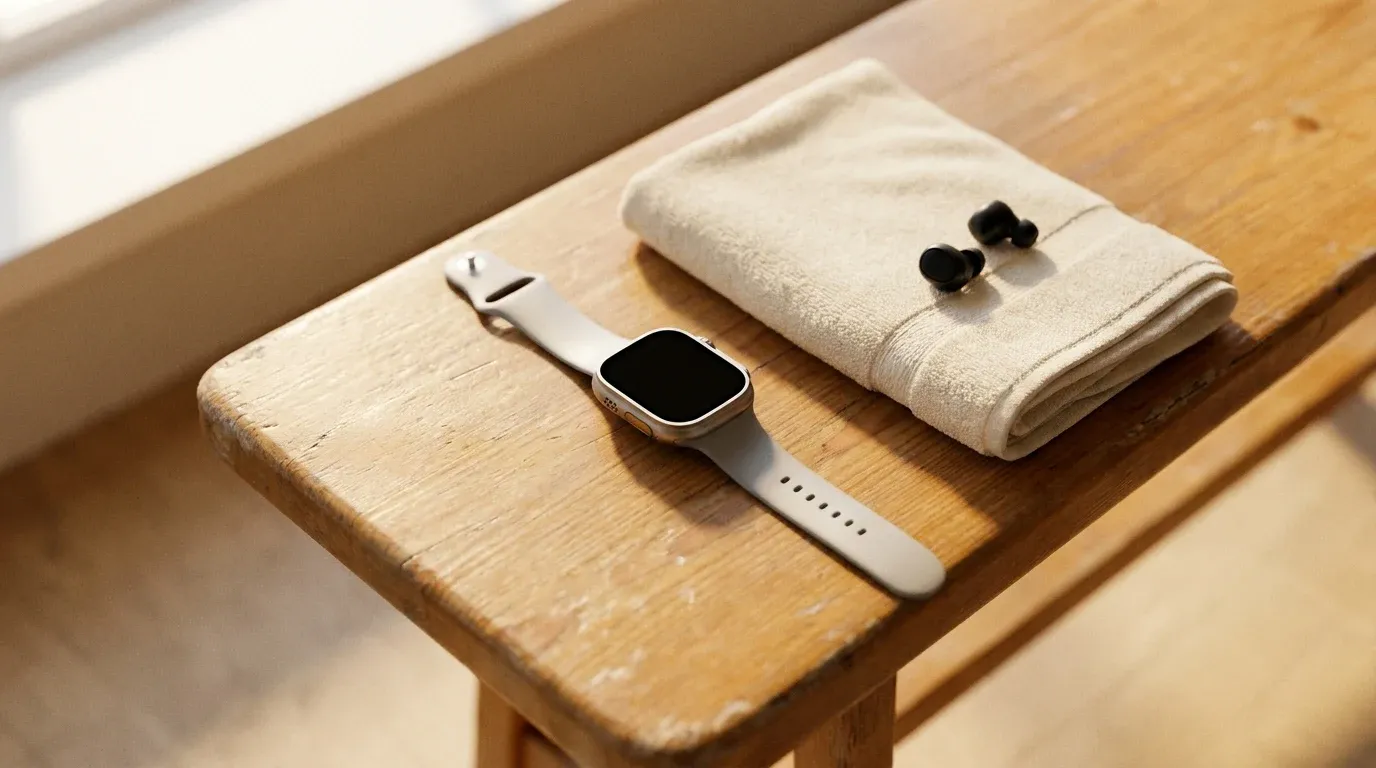
Wearable technology reclaims the top spot in the 2026 ACSM rankings after a multi-year absence from first place. That's not a gadget trend. It's a signal that a large and growing share of your membership already walks through the door carrying resting heart rate data, sleep scores, recovery readiness metrics, and training load history from the past seven days.
The implication for operators is direct: members who arrive with that level of data are increasingly frustrated by facilities that can't engage with it. They're not looking for a gym that ignores their Apple Watch or WHOOP band. They're looking for coaches who know how to interpret that data, programming that adapts to it, and equipment that connects to it. That's a staff competency problem before it's a technology infrastructure problem.
Velocity-based training wearables are part of this shift. The growing mainstream adoption of devices that track bar speed and output in real time reflects the same underlying demand: members want their training to be informed by objective data, not just perceived exertion. For a detailed look at where VBT wearables are heading, Velocity AI's recent $1.95M raise signals how quickly this segment is moving.
The practical operator response isn't necessarily to buy a proprietary platform. It's to train your coaches to have intelligent conversations about member-generated data, and to audit which of your equipment partners offer open API integrations with the dominant consumer wearable ecosystems.
Fitness Programs for Older Adults at Number Two: The Revenue Case Is Stronger Than You Think
The 55-plus demographic is the fastest-growing gym membership segment across most developed markets, and it's also one of the least served by conventional big-box gym design. Ranking this category second in the 2026 ACSM survey reflects both the demographic reality and the fact that operators who have built structured programming for older adults are reporting measurably different revenue profiles.
The economics are worth spelling out. Older adults tend to have more schedule flexibility, higher disposable income, and stronger intrinsic motivation related to health outcomes rather than aesthetics. That combination makes them disproportionately likely to convert from group fitness into small-group personal training formats that carry price points of $50 to $120 per session in most US markets. They also tend to retain longer, with churn rates that frequently run below the facility average.
The programming itself matters more than the marketing. Generic "senior fitness" classes that amount to chair yoga and light resistance work are not what this demographic is demanding. The research on high-intensity interval training for older adults is increasingly clear: HIIT after 65 preserves muscle mass where moderate exercise fails, and members in this cohort who are introduced to appropriately scaled intensity programming tend to respond strongly to it.
Your staff readiness is the gating factor. Coaches working with older adults need competency in managing common comorbidities, orthopedic considerations, and medication interactions that affect exercise response. That's not optional. It's the difference between a program that generates referrals and one that generates liability.
Balance and Core Training at Number Five: The Clinical Pipeline Opportunity
Balance and functional core strength entering the top five is the trend most operators are undervaluing. On the surface, it looks like a programming footnote. Structurally, it represents an emerging revenue channel that most gym business models haven't yet accounted for.
Physicians are increasingly directing post-rehabilitation and falls-prevention patients toward fitness facilities rather than extended physical therapy. The clinical rationale is sound: supervised exercise in a gym environment is more sustainable, more scalable, and significantly less expensive than ongoing PT visits. For facilities, the inbound referral pipeline from orthopedic practices, geriatric physicians, and primary care networks is real and growing.
Capturing that pipeline requires three things. First, you need programming that is structured enough to give referring physicians confidence. Second, you need coaches with credentials that satisfy clinical partners, ideally including corrective exercise or medical fitness certifications. Third, you need documentation systems that allow you to report outcomes back to the referral source, which is what sustains the relationship over time.
Balance and core programming also intersects naturally with the management of chronic conditions that are increasingly prevalent in your membership base. Isometric training protocols, for example, have a growing body of evidence behind them: research shows that isometric exercises like wall squats can meaningfully reduce blood pressure, which is relevant both for older adult programming and for employer wellness partnerships targeting hypertension management.
Operators who build this infrastructure also create a defensible referral moat. A competitor can replicate your equipment. It's significantly harder to replicate a trusted relationship with a local orthopedic practice that has been routing patients to your facility for two years.
What the ACSM Recommends Operators Actually Do
The 2026 ACSM report doesn't just describe trends. It makes a set of recommendations directed at facility operators, and they're specific enough to drive planning decisions. The report calls out investment in coach quality, versatile programming spaces, and updated equipment as the three primary action areas.
Coach quality is the most urgent. The trends at the top of the rankings, wearable technology integration, older adult programming, and clinical balance and core work, are all coach-dependent in ways that equipment purchases can't substitute for. A facility with average equipment and excellent coaches will outperform the inverse in every member retention metric. The 2026 HFA benchmarking data confirms that staff quality consistently ranks as the primary retention driver across facility types.
Versatile spaces is a planning concept that challenges the traditional big-box layout. If you're allocating 60 percent of your floor to cardio equipment rows and fixed-resistance machine circuits, you're designing for a member profile that is becoming less representative of where growth is concentrated. Functional training zones, semi-private training areas, and multipurpose spaces that can accommodate small-group programming for older adults during off-peak hours are where the allocation case is strongest.
Equipment capex should follow the programming strategy, not precede it. The common mistake is purchasing equipment in anticipation of a trend before the coaching capacity to deliver programming around that equipment exists. The result is expensive hardware that becomes a visual prop rather than a training tool. Build the coach competency first. The equipment investment will then have a defined utilization model behind it.
The Differentiation Imperative for Operators
The ACSM trends don't exist in isolation from broader market dynamics. The fitness industry is simultaneously posting record membership numbers and elevated closure rates, a paradox that reflects how polarized performance has become between differentiated operators and undifferentiated ones. The franchise paradox, record memberships alongside rising closures, is the clearest evidence that generic positioning is no longer viable.
Members who are tracking their training with wearables, who are specifically seeking older adult programming, or who have been referred by a physician for falls prevention work are not price-shopping on membership tiers. They're selecting facilities based on perceived competency and outcome alignment. That's a fundamentally different buying decision than the one that dominated the industry a decade ago.
The operators who will gain share from these trends are the ones who stop trying to be everything to every demographic and start building recognizable expertise in the areas the ACSM data is highlighting. That means making visible coaching credentials, communicating programming specificity in your marketing, and designing your facility experience to signal that you understand how modern members train and what they expect from a facility partner.
The 2026 ACSM rankings are, at their core, a demand-side document. They reflect what members are already prioritizing. The only question is whether your facility is positioned to meet that demand or whether you're leaving that revenue to a competitor who read the same report and acted on it first.