
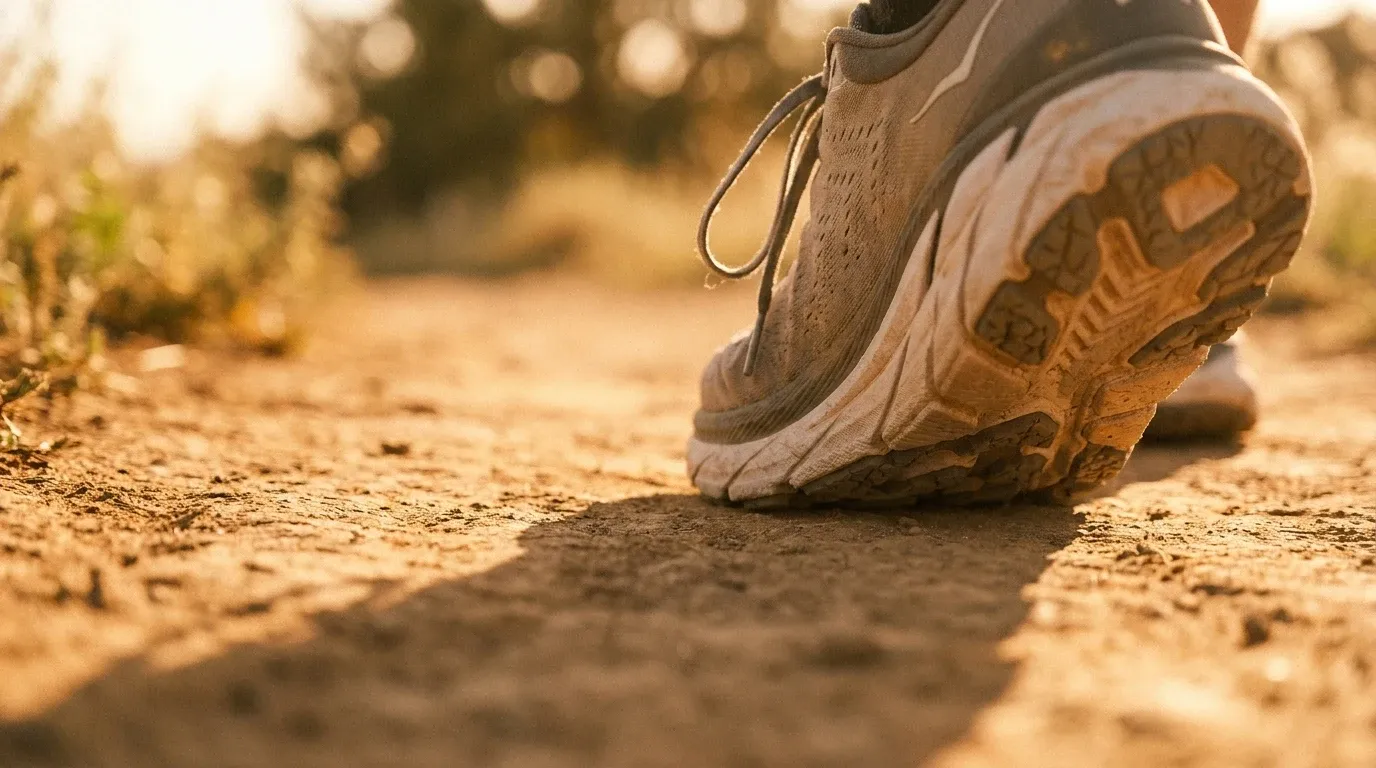
The cushion arms race that reshaped road running over the past five years has officially arrived on dirt. ASICS just released the Trabuco MAX 6, and it's the brand's most aggressive attempt yet to bring max-stack comfort to technical terrain. If you've been eyeing the Hoka Speedgoat 6 or the Salomon Genesis and wondering when ASICS would answer, here's your answer.
The Trabuco MAX 6 isn't a minor update. It's a structural rethink of what a long-distance trail shoe can be, combining a dual-foam midsole, a redesigned outsole, and a new upper fit. Here's what actually changed, and whether it matters for your next 50K or longer effort.
A Dual-Layer Foam System Built for the Long Haul
The defining feature of the Trabuco MAX 6 is its midsole construction. ASICS stacked two distinct foam compounds: FF LUXE PLUS on the top layer and FF BLAST MAX on the bottom. These aren't just two slabs of the same material. They serve different mechanical purposes.
FF LUXE PLUS is ASICS's softest, most compliant foam. It sits closest to your foot and handles the initial impact, absorbing ground forces before they travel up your leg. FF BLAST MAX, by contrast, is the brand's most resilient foam compound, the same material that powers the road-focused Nimbus line. It sits beneath, providing the energy return and structural stability you need when FF LUXE PLUS compresses fully under heavy loads or steep descents.
The practical result is a shoe that feels noticeably softer than any previous Trabuco model at the moment of footstrike, without turning into dead foam at mile 25. ASICS hasn't published exact stack height figures at the time of writing, but early reports from testers suggest it's competitive with the Hoka Speedgoat 6's 37mm heel stack. That puts it firmly in the max-cushion tier for trail footwear.
This dual-layer approach is now common on premium road shoes, but it's genuinely rare on trail models. The construction challenge is weight. Adding foam typically adds grams, and trail shoes already carry heavier outsoles than their road equivalents. ASICS addressed this directly in the redesign.
Outsole Grip and Weight: Both Addressed at Once
Trail shoes live and die by their outsoles. You can have the softest midsole ever made, and it won't matter if you're sliding sideways on wet root sections. ASICS redesigned the Trabuco MAX 6's outsole alongside the midsole rather than treating it as an afterthought.
The new outsole uses a revised lug pattern with deeper directional lugs in the forefoot and heel zones. ASICS focused specifically on mixed terrain performance: packed dirt, loose gravel, and wet trail surfaces where the previous Trabuco MAX struggled to bite consistently. The rubber compound itself has been updated for better cold-weather flexibility, which matters if you're running in the Pacific Northwest, the Scottish Highlands, or anywhere that sees early morning frost well into spring.
Weight reduction came through two routes. First, ASICS trimmed excess rubber from the outsole in low-contact zones without compromising lug coverage where it counts. Second, the FF BLAST MAX foam in the midsole is lighter per unit volume than the previous PureGEL compound it replaced in this model line. ASICS hasn't released an official weight figure yet, but the brand has indicated the Trabuco MAX 6 is lighter than its predecessor despite carrying more total stack.
That's a meaningful engineering achievement. In the max-cushion trail category, the weight penalty is one of the main reasons competitive runners hesitate. If ASICS has genuinely trimmed grams while adding stack, that's a real differentiator against the Hoka Speedgoat 6, which runs around 10.6 oz (300g) in a men's US 9.
Fit Updates: A Wider Platform, Refined Heel
ASICS also adjusted the upper geometry on the Trabuco MAX 6. The forefoot is slightly wider than the MAX 5, accommodating natural foot splay on longer efforts when feet tend to swell. If you've ever finished a trail ultra with black toenails in an otherwise well-fitted shoe, you know exactly why this matters.
The heel collar has been restructured with more internal padding and a revised last shape that holds the heel more securely during technical descents. One of the persistent criticisms of max-stack trail shoes is that the high midsole creates instability, particularly when your heel shifts laterally mid-stride on uneven ground. The new collar design directly targets that issue.
The tongue construction is gusseted to prevent debris entry, a feature that's become standard in this segment but is worth confirming is present given how frustrating mid-run stone removal can be on long outings.
Who This Shoe Is Actually Built For
The Trabuco MAX 6 is not a racing shoe. ASICS positions it squarely for long-distance trail runners prioritizing comfort and joint protection over propulsive efficiency. If you're chasing a podium at a competitive 50-miler, you're probably still reaching for a more aggressive, lower-stack option. But that's a small slice of the trail running market.
The much larger audience for a shoe like this is the runner doing their first 50K, the ultramarathoner whose knees have accumulated years of hard mileage, or anyone running 20-plus miles on trail and arriving at the finish still able to walk normally the next morning. That's the person ASICS is talking to with this release.
It's worth noting how much the sport has evolved financially and competitively at the same time. Prize money is turning ultra-running pro, and that's pulling athlete expectations upward across the board. But for every elite chasing a paycheck, there are thousands of recreational runners who just want to cover long distances with less suffering. Max-cushion trail shoes exist for that second group.
The growth of longer-distance trail events globally reinforces the market opportunity here. From domestic ultras to destination races, more runners are attempting longer efforts than ever before, and foot fatigue is consistently cited as a primary limiting factor in first-time ultra finishers.
How It Stacks Up Against Hoka and Salomon
The max-cushion trail market has two dominant names right now: Hoka and Salomon. The Hoka Speedgoat 6 retails around $160 and remains the benchmark for plush trail comfort with legitimate grip. The Salomon Genesis, which came out of the brand's max-stack push, retails around $180 and runs stiffer than the Speedgoat but offers excellent stability on technical ground.
The Trabuco MAX 6 is expected to retail around $180, putting it at the premium end of the category. At that price point, ASICS needs the dual-foam execution to genuinely outperform single-compound alternatives in long-run comfort. Early wear-test reports suggest it does, particularly on efforts longer than three hours where foam fatigue becomes a real factor in single-compound midsoles.
The outsole, if it delivers on ASICS's grip claims, could be the actual differentiator. The Speedgoat 6's Vibram Megagrip outsole is considered best-in-class by many trail runners. For ASICS to close that gap with a proprietary rubber compound is ambitious. Full independent testing on wet technical terrain will be the real verdict.
Nutrition and Recovery: Don't Let the Shoe Do All the Work
A max-cushion shoe reduces impact stress. It doesn't eliminate it. If you're training for a 50K or longer and you're stacking back-to-back long runs, what you eat around those sessions matters as much as your footwear. Ultra-processed foods are quietly wrecking your recovery, and that effect compounds over multi-week training blocks in ways most runners underestimate.
The same applies to protein timing. Covering 25 to 30 miles on trail generates significant muscle breakdown. Getting enough protein in the right distribution across the day is what determines whether you adapt or just accumulate fatigue. Protein distribution is a mistake that holds back a surprising number of endurance athletes, not just strength-focused ones.
Your shoe choice is one input. Recovery nutrition is another. Both matter for anyone training seriously at longer distances.
Availability and What to Expect
The ASICS Trabuco MAX 6 is available now through ASICS's website and major run specialty retailers in the US, UK, Canada, and Australia. The expected retail price is $180. Both men's and women's specific lasts are offered, with the women's version carrying a slightly adjusted midsole geometry per ASICS's standard gender-specific construction approach.
If you're considering this shoe for a specific race, it's worth getting it on your feet eight to ten weeks out from the event. Max-stack trail shoes have a longer break-in curve than lighter options, and the dual-foam system will feel different across the first few long runs as the layers settle into your gait pattern.
The trail cushion race is real, it's accelerating, and ASICS is now squarely in it. Whether the Trabuco MAX 6 earns its place at the top of that category will come down to how the dual-foam system holds up over 500-plus miles of actual trail use. That answer takes months. But the engineering intent here is clear, and for long-distance trail runners who've been waiting for ASICS to take max cushion seriously, this is the shoe they've been waiting for.