
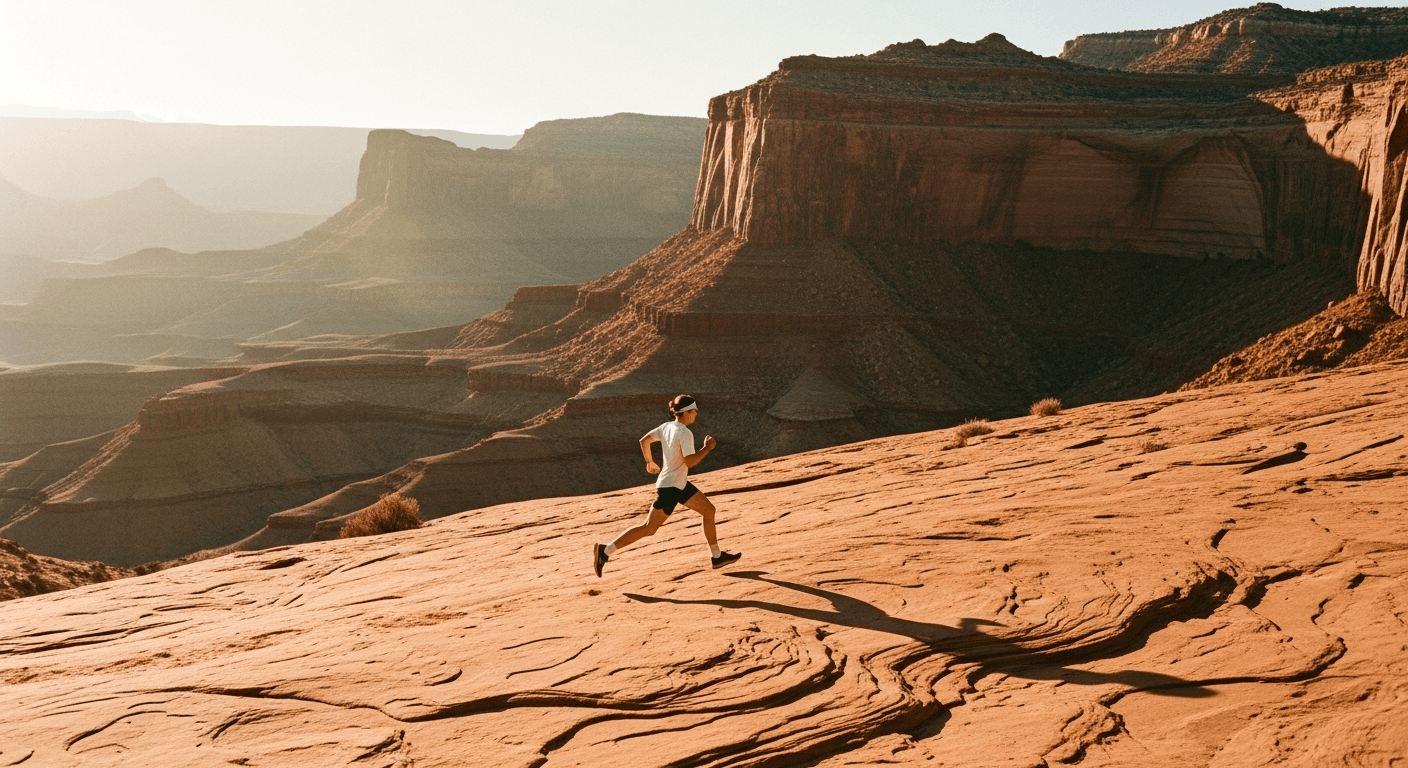
Most runners treat national parks as scenic detours. That's a mistake. With summer 2026 in full swing, the U.S. national park system is quietly home to some of the most technically demanding, visually stunning, and logistically varied trail running terrain on the planet. Desert slickrock in Utah, volcanic ridgelines in Oregon, granite singletrack in California. It's all here, and most of it is underused.
This guide covers the top destinations, what makes each one worth your training shoes, and the practical information you need before you show up. Because showing up unprepared to a national park trail in July is a fast track to a bad day.
Why National Parks Beat Most Trail Race Courses
Trail running inside a national park is a fundamentally different experience from a race environment. There are no aid stations, no crowds thinning out the field, and no guaranteed cell service. What you get instead is uninterrupted terrain, genuine elevation change, and routes that reward both speed and patience.
The variety is genuinely hard to match. You can run technical sandstone in Zion, high-altitude tundra in Rocky Mountain, or coastal bluffs in Olympic. Each environment demands a different physical output, which makes national parks ideal for runners who want to build across multiple fitness dimensions rather than just log miles. Research consistently links varied aerobic training with stronger cardiovascular outcomes. If you want the science behind optimal training volume and heart health, The Exact Fitness Dose That Protects Your Heart, Per New Research breaks down what current evidence actually says.
Top Parks for Trail Running in Summer 2026
Zion National Park, Utah
Zion is probably the most iconic trail running destination in the Southwest. The West Rim Trail offers a 14-mile point-to-point route that takes you from the canyon floor up to sweeping plateau views. It's runnable but not easy. Expect sustained climbs, exposed sections, and significant heat by mid-morning in July.
The Angels Landing route is popular but misunderstood as a running destination. It's short, heavily trafficked, and requires a permit system that now operates via lottery. If you're serious about running distance here, the Wildcat Canyon loop is a better choice. It's quieter, longer at around 13 miles, and far more runnable throughout.
Water sources on most Zion trails dry up significantly by late June. Carry more than you think you need. Start before 6 a.m. when temperatures are manageable, and be off exposed terrain by noon. For anyone dialing in heat-specific preparation before a trip like this, Running in the Heat: Science-Backed Training Strategies covers the physiological adjustments your body needs to make and how to accelerate them.
Rocky Mountain National Park, Colorado
Rocky Mountain sits at an entirely different end of the spectrum. Most trailheads start above 9,000 feet, and several popular routes push past 12,000. The Flattop Mountain Trail is a 4.4-mile out-and-back that tops out near 12,300 feet, making it both accessible and genuinely demanding for runners arriving from lower elevations.
The Lumpy Ridge loop is a local favorite for trail runners. At roughly 10 miles with moderate technicality, it offers excellent rock exposure without requiring the alpine acclimatization that higher routes demand. It's also one of the best options for an early morning start before the afternoon thunderstorms that roll through almost daily in summer.
Bear Lake Road corridor requires a timed-entry permit from late May through mid-October. Book these early. The permit system has become more strict each year, and showing up without one means you're running from overflow parking several miles away, which changes your route planning entirely.
Olympic National Park, Washington
Olympic is underrated as a running destination, mostly because it doesn't have the visual shorthand of Zion or the altitude drama of Colorado. What it has is extraordinary ecological variety. Within a single park you can run dense temperate rainforest, subalpine meadows, and rugged Pacific coastline. Almost no other park offers that range.
The Hoh River Trail runs 17.4 miles one way to the base of Mount Olympus. Most trail runners treat it as a point-to-point, setting up a car shuttle at the Hoh Rain Forest Visitor Center. The terrain is relatively forgiving with gradual elevation gain through the first half, making it accessible even for runners newer to trail environments.
Hurricane Ridge offers a different experience entirely. The ridgeline trails sit above 5,000 feet with open alpine views and, in early summer, significant snowpack that can persist into July. Check current conditions before planning any route above the ridge.
Grand Teton National Park, Wyoming
Grand Teton rewards runners willing to put in route-planning time. The Cascade Canyon Trail is perhaps the most scenic valley run in North America. It's about 9 miles round trip with a moderate grade and consistent exposure to the Teton Range. Wildlife encounters are common, particularly moose in the willows near the canyon floor.
For runners interested in longer formats, the Teton Crest Trail covers roughly 40 miles across the full range and can be staged as a multi-day running adventure. Several backcountry campsites require advance permits, but the payoff is access to terrain most visitors never reach. If you're exploring the broader summer trail race calendar as a complement to independent park running, the Ultramarathons to Watch in June 2026: Summer Race Roundup covers organized events worth tracking.
Mount Rainier National Park, Washington
The Wonderland Trail circumnavigates Mount Rainier over approximately 93 miles with around 22,000 feet of total elevation gain. It's the most ambitious loop option in the national park system for runners and is increasingly popular as a supported or unsupported fastpacking project.
Even if you're not running the full loop, the individual segments are excellent standalone workouts. The Skyline Trail near Paradise is 5.5 miles with 1,700 feet of gain and sweeping glacier views. Early season running here often means patches of snow. Traction devices are worth packing through late June.
Permits, Timing, and Practical Planning
The single biggest mistake runners make with national parks is treating permit systems as optional. High-traffic parks now operate layered entry controls. Zion, Rocky Mountain, Acadia, and Yosemite all have some form of timed-entry or corridor permit. Fees vary but most day-use permits run between $2 and $10 per vehicle or person. Annual passes like the America the Beautiful pass ($80) cover entry fees at all federal lands, which pays off quickly if you're visiting multiple parks.
Wildlife awareness is non-negotiable. Bears are active throughout summer in Teton, Rainier, and Olympic. Carry bear spray and know how to use it. Mountain lions are present in Zion and other Southwest parks. Running alone in low-light hours increases encounter risk. These aren't hypothetical concerns. Ranger stations log incidents regularly, and early-season animal behavior after winter is particularly unpredictable.
General hiking apps and popular navigation platforms are often behind on trail conditions during peak summer. Washouts, reroutes, and temporary closures happen faster than those databases update. The most reliable source is always the specific park's ranger station, reachable by phone or in person. Trail running forums and regional running communities on platforms like Strava or Facebook groups tied to specific parks often surface real-time conditions within hours of a change.
How to Structure Your Training Around a Park Trip
If you're building a trip around trail running rather than treating it as incidental activity, treat the park runs as your key sessions for that training block. Most national park routes involve significantly more vertical than flat road runners are conditioned to handle, so integrating hill work in the six to eight weeks before your trip matters more than raw mileage.
Altitude adaptation for Colorado and Wyoming parks deserves specific attention. If you're flying in from sea level, your aerobic capacity will be noticeably reduced for the first 24 to 48 hours. Plan your hardest efforts for day two or three at minimum. This isn't weakness. It's biology.
Recovery nutrition after high-effort trail days differs from road running, particularly in terms of protein demand and electrolyte replacement. If you're refining your nutritional approach around endurance work, The Nutrition Lab: Protein and Fiber — 2026's Dominant Nutrition Duo covers what current evidence says about fueling high-output training.
The Gear You Actually Need
National park trail running doesn't require an overhaul of your kit, but a few specific items matter more than they do on road or groomed trails.
- Trail shoes with adequate grip: Smooth road trainers are a liability on wet rock or loose scree. Look for lugged outsoles with at least 4mm depth.
- Hydration vest or pack: For anything over 10 miles or in desert environments, a vest with at least 1.5 liters of capacity is essential. Water sources can't be trusted in summer.
- Navigation: Download offline maps before you enter low-service zones. Apps like Gaia GPS or Caltopo allow full offline functionality.
- Emergency layer: Alpine conditions change fast. A packable wind shell adds almost no weight and matters if a storm moves in above treeline.
- Bear spray: Required in many backcountry zones and strongly recommended everywhere else in bear country. It takes seconds to learn to use and can be rented at most park gateway towns for around $10 to $15 per day.
The Bottom Line
National parks don't advertise themselves as trail running destinations, and most running media treats them as background scenery for race-adjacent content. That gap is your advantage. The trails are there, the terrain is world-class, and with the right preparation, a summer week in a U.S. national park can redefine what you think running is capable of being.
Do the permit research. Start early. Respect the heat and the altitude. And talk to a ranger before you run anything technical. The trail running community has a good phrase for this kind of preparation. They call it earning your miles. Out here, that's not just a figure of speech.