
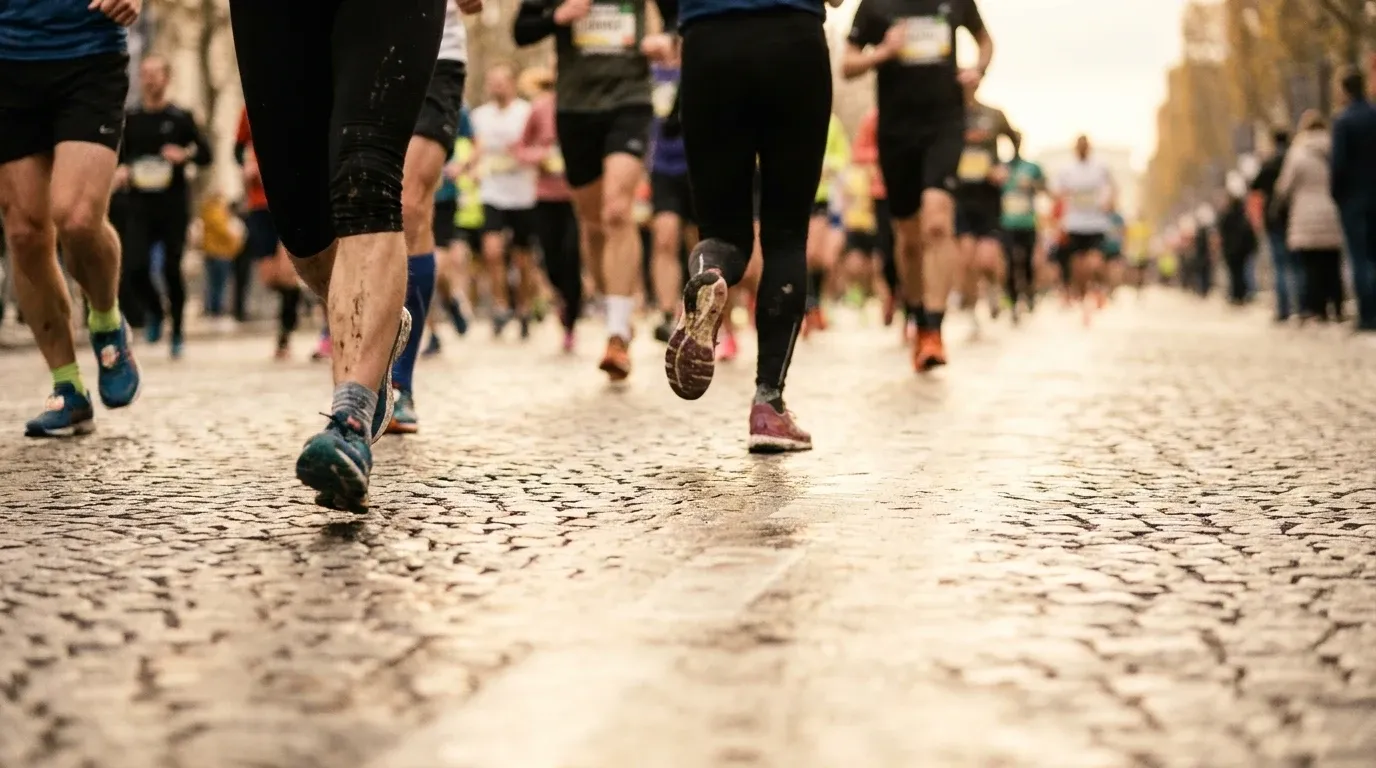
On Sunday, November 8, 2026, the streets of Bordeaux will fill with 34,000 runners from dozens of countries, making this edition of the Bordeaux Marathon one of the largest mass-participation road races in Europe this year. The numbers alone are striking. But the story behind them says something bigger about where running culture is heading globally.
If you've been tracking the sport's growth, this event fits a pattern that's been building steadily since 2022. Post-pandemic, runners didn't just come back. They came back in greater numbers, with more ambition, and with a clear appetite for destination races that offer more than a finish line.
A Race Built for the Bucket List
The Bordeaux Marathon course is not a standard city loop. It winds through the Médoc wine region, one of the most celebrated wine-producing landscapes in the world and a UNESCO World Heritage Site since 2023 as part of the broader "Climats de Bourgogne" and French vineyard cultural heritage designations. Running 42.2 kilometers past grand châteaux, vine-covered hillsides, and centuries-old stone estates gives this race an atmosphere that most urban marathons simply can't replicate.
That setting is a deliberate draw. Race organizers have leaned into the destination race model aggressively, packaging the event with wine tastings, local gastronomy, and regional tourism programming. For international runners flying in from the US, UK, Canada, or Australia, this is the kind of experience that justifies the trip. You're not just running a marathon. You're spending a weekend in one of France's most iconic regions.
Entry fees for the 2026 edition are priced around $110 to $140 USD depending on registration timing, well within the range of comparable European majors. That accessibility, combined with the prestige of the setting, has made the Bordeaux Marathon a consistent sell-out in recent years.
Mass Participation Running Is Surging Across Europe
The 34,000 expected finishers in Bordeaux aren't an anomaly. They reflect a continent-wide shift in how people are engaging with road racing. Major events across France, Germany, Spain, and the Netherlands have all reported record or near-record participation numbers in the 2025 and 2026 seasons.
This mirrors what's happening on the global stage. 61,146 finishers rewrote NYC Marathon history earlier this fall, confirming that mass-participation road racing isn't just recovering from the pandemic disruption. It's exceeding every benchmark that existed before it. The demand for entry spots in major races continues to outpace supply by a significant margin.
Industry data supports the picture. Running shoe and gear sales have reflected the sport's expansion, with brands across the market reporting strong growth. Brooks Running's 12% growth in 2026 is one of the clearest market signals that running participation is structurally higher than it was five years ago, not just experiencing a temporary bump.
The Bordeaux Marathon fits squarely into this larger moment. With 34,000 registered runners, it sits comfortably among Europe's top-tier events by field size, comparable to major city marathons in Berlin, Amsterdam, and Barcelona. For a race held in a city of around 260,000 people, that's a remarkable organizational achievement and a significant economic event for the region.
Who's Running Bordeaux in 2026
The field is genuinely international. Roughly 30% of registered participants are coming from outside France, with strong representation from the UK, Belgium, the Netherlands, and Germany. North American and Australian runners make up a smaller but notable share, drawn specifically by the destination race appeal.
The course attracts a wide range of ability levels. The race features a generous cutoff time of six hours and thirty minutes, which is longer than many major marathons offer, making it accessible to first-timers and recreational runners who want the experience without the pressure of a strict time gate. That inclusivity is intentional. It's part of what's driven the event's growth over the past decade.
Elite competition runs alongside the mass-participation field. Race organizers have confirmed invited elite athletes from East Africa and Europe, with prize money on the table for the top finishers. But if you're honest about what draws most of the 34,000 to Bordeaux, it's the course, the culture, and the chance to run through somewhere genuinely beautiful.
Preparing for a Destination Marathon
If you're running Bordeaux this weekend or planning a destination race in the near future, the logistical and nutritional considerations are worth taking seriously. Travel days compress your recovery window in both directions. Flying in days before a race adds stress, disrupts sleep, and often leads to poor food choices that your training schedule wouldn't normally tolerate.
Nutrition in the final 48 hours before a marathon matters more than most recreational runners acknowledge. Restaurant meals in unfamiliar cities can be harder to control for carbohydrate loading than eating at home. Post-race recovery nutrition is equally easy to neglect when you're celebrating in a wine region. Understanding how to turn soup into a real recovery meal is surprisingly useful here. A warm bowl of something mineral-rich and protein-adequate in the hours after crossing the finish line does more for your legs than a glass of Pauillac, however deserving you might feel.
Winter marathon training also brings its own nutritional demands that runners often underestimate. If you're already building toward a spring 2027 race, the base training period starting now is a good time to review your fueling approach. Adjusting your nutrition for winter base training can meaningfully affect how you absorb training load and recover between sessions.
The Safety Picture at Large Races
With fields of 34,000 runners, safety logistics become complex. Any large marathon carries medical risk, and the cardiovascular demands of 42.2 kilometers are real regardless of your fitness level. The statistical risk of a serious cardiac event at a mass-participation marathon is low but not zero, and understanding the actual numbers matters.
Beyond cardiac risk, muscle damage events are worth knowing about before you line up. Rhabdomyolysis, a condition where muscle tissue breaks down and releases proteins into the bloodstream, can occur after extreme exertion and is more common than many runners realize. Symptoms include dark urine, severe muscle weakness, and unusual swelling. If you're running Bordeaux or any marathon this season, knowing what to watch for in the hours and days after the race is part of responsible race preparation.
Race medical teams at Bordeaux are well-resourced. The event has a long track record of safe operations, with medical stations positioned throughout the course and advanced care available at the finish. That infrastructure is one of the less-discussed reasons that large, well-organized events are often safer per participant than smaller, underfunded ones.
What Bordeaux Signals for European Running Culture
France has historically been less associated with mass-participation road racing than Germany or the UK. That's changing. The country has seen a consistent increase in race registrations across all distances over the past four years, driven by younger urban runners, a growing trail running community, and a cultural shift toward outdoor endurance sports as part of mainstream wellness identity.
The Bordeaux Marathon is at the leading edge of that shift. It combines the logistical scale of a major event with a course experience that simply doesn't exist in most global cities. Wine country. Châteaux. Autumn light on the Gironde estuary. It's a compelling proposition, and 34,000 people saying yes to it this Sunday is the clearest evidence that destination racing isn't a niche phenomenon. It's one of the defining formats of the sport's current era.
If you're not running Bordeaux in 2026, registration for 2027 will likely open in the first quarter of next year. Based on current growth trajectories, spots will go fast. The race's international profile continues to rise, and the combination of competitive pricing, an extraordinary setting, and a genuinely well-run event means demand is only pointing one direction.
For now, 34,000 runners are about to spend a Sunday morning doing something most people only think about. That's the story. And it's a good one.