
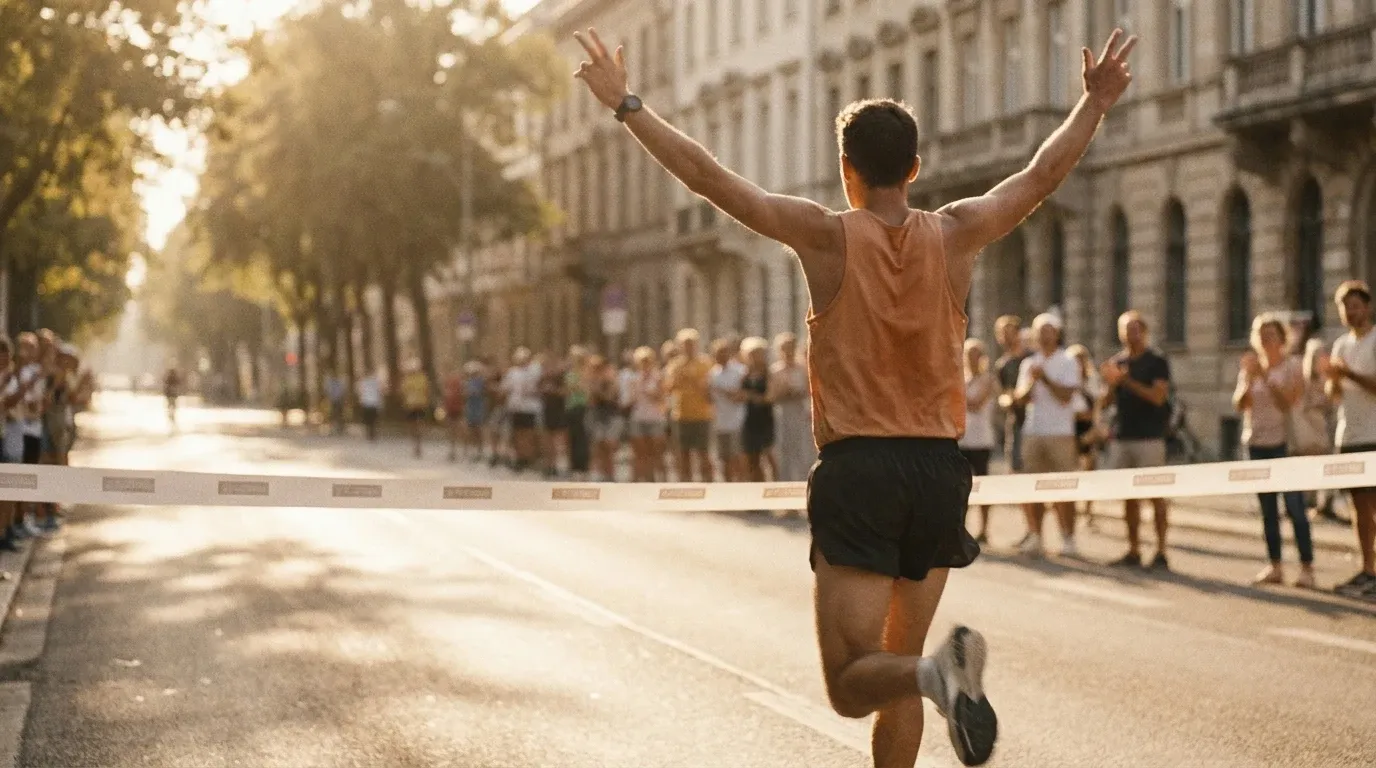
The 2026 Boston Half Marathon delivered exactly what the road racing community had been hoping for: event records, standout performances, and a finish line that had spectators talking long after the last runner crossed. This edition, presented by Dana-Farber Cancer Institute and the Jimmy Fund, raised the bar for what a half marathon in one of America's great running cities can look like.
If you follow the road racing circuit closely, you already know Boston carries a different weight. The city's relationship with competitive running runs deep, and the half has steadily grown into a marquee event in its own right. The 2026 edition made the case that it belongs in the same conversation as the country's most prestigious 13.1-mile races.
The Records That Defined the Day
Both the men's and women's course records were broken at the 2026 Boston Half, marking a genuine benchmark for the event. Fast conditions played a role. Cool temperatures, low humidity, and a course that rewarded disciplined pacing created near-ideal circumstances for elite athletes pushing the limits of what's possible at this distance.
The new marks didn't come from lone breakaway efforts either. They emerged from deep, competitive fields where athletes pushed each other through the final miles. That's the kind of racing that produces times that actually hold up, times set against real competition rather than perfect solo time-trial conditions.
Record-breaking performances at the half-marathon distance tend to reflect a broader trend in road racing: fields are getting faster, more international, and more strategically assembled. Race directors at events like Boston Half are investing in elite development and prize structures that attract athletes at peak fitness. That investment paid off visibly in 2026.
Dana-Farber and the Jimmy Fund: When Racing Has Purpose
The 2026 Boston Half isn't just a race. It's a fundraising platform connected to one of the most respected cancer research institutions in the world. Dana-Farber Cancer Institute and the Jimmy Fund have been part of Boston's identity for decades, and their partnership with the half marathon gives participants a reason to train and race that extends beyond personal performance goals.
Charity racing has evolved significantly. It's no longer just about slower runners carrying collection tins. Major events increasingly integrate fundraising at every level, from elite fields to amateur waves, and Boston Half does this with more intentionality than most. When you line up for this race, you're part of something larger than your finish time.
The Dana-Farber connection also brings institutional credibility to the event's health and wellness messaging. Cancer research funding relies on sustained public engagement, and endurance events are one of the most effective long-term vehicles for that kind of community commitment. The 2026 edition raised a significant sum for research programs, continuing a track record that makes this one of the country's more impactful charity races.
If you're thinking about which races to build your 2026 or 2027 calendar around, purpose matters. The Orlando Half Marathon, Florida's only sustainable race, is another example of an event that's earned its reputation by standing for something beyond the finish line. Boston Half belongs in that same category.
What Made the Conditions So Fast
Elite performance doesn't happen in a vacuum. The conditions at the 2026 Boston Half aligned in ways that runners and coaches will analyze for some time. Temperatures in the mid-40s Fahrenheit at the start kept core body temperatures manageable during the first half of the race, allowing athletes to hold aggressive early paces without overcooking.
Wind was minimal, which matters more than most recreational runners realize. Even a moderate headwind over 13.1 miles creates significant cumulative resistance. When conditions are calm, athletes can sustain form and cadence without the micro-adjustments that drain energy over time.
Course design also contributed. The Boston Half's layout rewards runners who can read elevation changes accurately and bank effort strategically. The 2026 field, particularly at the elite level, showed sophisticated race management. Athletes who went out at controlled effort in the first four miles were the ones who had something left to spend in the final three.
Nutrition strategy played a role as well. At the half-marathon distance, glycogen management isn't as complicated as it is for the full marathon, but it still matters. Research consistently shows that athletes who prioritize food quality in their training cycle, not just calorie targets, perform better on race day. If you're dialing in your fueling approach, the article on how ultra-processed foods affect athletic performance and recovery is worth your time.
The Competitive Field: What Depth Looks Like
Records mean more when they're set against serious competition. The 2026 Boston Half assembled one of the deepest fields in the event's history, with athletes from Kenya, Ethiopia, the United States, the United Kingdom, and several other countries represented in the top finishers.
The women's race was particularly compelling. The top five finishers were separated by less than 90 seconds, which is an unusually tight gap at this level. That kind of competition forces athletes to race honestly rather than conservatively, and it produces times that reflect genuine fitness rather than favorable circumstances.
On the men's side, the front of the race featured tactical positioning through the early miles before the field began to fragment around the 8-mile mark. The eventual winner didn't lead at the halfway point, which speaks to the competitive intelligence on display. Half-marathon racing at the elite level has become increasingly sophisticated, and the 2026 Boston Half showcased that evolution clearly.
For amateur runners, watching elite half-marathon racing is genuinely instructive. The pacing discipline alone is worth studying. If you're working on building a consistent running habit and eventually targeting a half, the approach outlined in how to turn a short run into a real habit offers a practical starting point that doesn't require elite fitness to be useful.
What the Results Signal for 2027
The road racing calendar is increasingly competitive. Race directors are fighting for elite athletes, sponsors, and media attention across a crowded field of events. The 2026 Boston Half's record-breaking performances send a clear message: this event is capable of attracting fields and producing conditions that generate meaningful results.
That matters for 2027 planning on multiple levels. For elite athletes, Boston Half has now demonstrated that it can deliver course records and competitive prize money in an environment that supports fast racing. That reputation is hard to build and easy to lose. The 2026 edition strengthened it considerably.
For amateur participants, the event's momentum creates a different kind of appeal. Racing an event with genuine prestige, strong charity ties, and a proven record of fast conditions is motivating in ways that a generic local half marathon simply isn't. Registration demand for 2027 is likely to reflect that.
The broader road racing ecosystem is also evolving. Formats like HYROX are pulling some fitness-focused athletes away from traditional road races, as explored in what HYROX's TV and Olympic push actually changes for athletes. But events like the Boston Half prove that classic road racing still commands serious attention when it's executed at a high level.
How to Use This as Motivation for Your Own Racing
You don't have to be an elite athlete to take something useful from what happened at the 2026 Boston Half. Record-breaking performances at high-profile events tend to lift the entire field, including amateur runners who set personal bests on the same course in the same conditions.
If you're targeting a half marathon in the next 12 months, look at the structural elements that made Boston Half successful: good conditions, a competitive atmosphere, and a course that rewards smart pacing. Those factors are replicable at your level if you choose events thoughtfully and prepare with intention.
Nutrition and recovery matter at every level of the sport, not just the elite tier. Athletes who underinvest in what they eat during training tend to show up to races already behind. Understanding the relationship between food quality and performance is worth your attention year-round, especially in the months before a goal race.
The 2026 Boston Half reminded everyone watching that road racing at its best is still one of the most compelling things in sport. Fast times, real stakes, and a cause worth running for. That combination doesn't happen by accident, and it doesn't get old.