
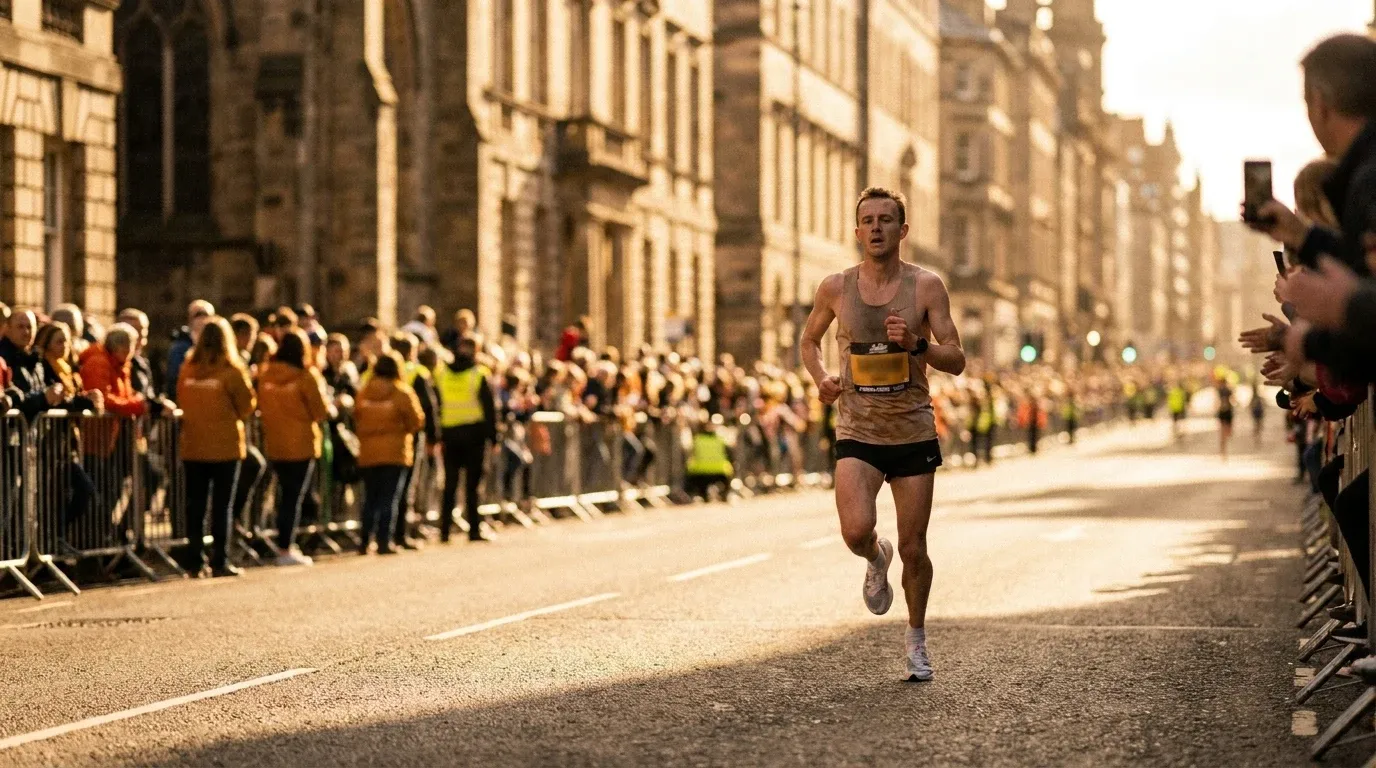
Clayton Young isn't guessing about where American marathon running is headed. He's living it. As one of the most consistent U.S. distance performers heading into 2026, Young has watched the domestic field evolve in real time, and he has opinions about what's working, what's stalling, and what it's actually going to take for American men to compete at the front of the world's biggest races.
This isn't a pep talk. It's a breakdown.
Where Young Stands in the American Picture
Young finished 11th at the 2024 Paris Olympics marathon, a result that placed him among the top Americans on the global stage. That performance didn't come from a single breakthrough. It came from years of methodical training, a strong collegiate base at BYU, and a willingness to adapt his approach as the marathon landscape shifted beneath him.
He trains under the kind of program that's become increasingly common in elite American distance running: high mileage, altitude blocks, and a deliberate focus on race-specific physiology. His 2:11 personal best puts him firmly in contention for major podiums, but he's candid about the gap that still exists between U.S. runners and the field leaders out of East Africa.
"We're closer than we've ever been," he's said in recent interviews. "But closer isn't the same as there."
The Training Culture Shift That's Actually Happening
The most significant change in American marathon development over the last decade isn't a single athlete or coach. It's a structural one. U.S. runners are finally building the kind of training environments that produce depth rather than isolated talent.
Groups like NAZ Elite in Flagstaff, the Bowerman Track Club, and various university-linked post-graduate programs have created ecosystems where athletes train together at altitude, share data, and push each other daily. That communal pressure, which has existed in Kenyan and Ethiopian training camps for generations, is now becoming part of the American model.
The results are visible. The U.S. men's marathon field at major World Marathon Majors events now routinely places multiple athletes inside the top 20. The women's side has arguably moved even faster, with runners like Emily Sisson and Keira D'Amato breaking American records in recent years and demonstrating that the infrastructure can produce world-class results.
This mirrors a broader trend in performance culture. Just as every road running brand is pivoting toward trail and performance, the training philosophy behind elite American running is pivoting toward what actually works at the global level, rather than what's always been done domestically.
What East Africa Still Does Better
Let's be direct about this. Kenyan and Ethiopian runners don't just train harder. They train in conditions that are structurally different from what most American athletes experience, and that gap is harder to close than mileage logs suggest.
The altitude advantage is real. Runners based in Iten, Kenya or Bekoji, Ethiopia grow up and train at elevations between 7,500 and 9,000 feet. American runners can approximate this with altitude camps or altitude tents, but approximation isn't the same as lifetime adaptation. The physiological ceiling isn't identical.
Beyond altitude, there's the volume of competition exposure. Young East African runners race frequently, often in local road races and cross-country events, before ever reaching the international circuit. That racing density builds race intelligence you can't fully replicate in training blocks.
There's also nutrition and recovery culture. The dietary patterns of elite Kenyan runners, high in complex carbohydrates, low in processed food, and timed around training sessions, have been studied extensively. If you're curious about how nutrition decisions interact with endurance performance, the research on fueling strategies is increasingly clear that diet shapes outcomes in ways training alone cannot match.
None of this is insurmountable. But it requires American programs to stop treating these factors as footnotes.
The Depth Problem: Progress and Remaining Gaps
One of the most encouraging signs for American marathon running is the growing depth of the field. A decade ago, a U.S. runner breaking 2:12 was a significant event. Now it's becoming table stakes for Olympic Trials qualification at the front of the pack.
That compression of times reflects better coaching, better training environments, and better athlete retention after college. The NCAA system still produces more elite distance talent than any comparable system globally, but historically the U.S. has been poor at converting collegiate success into professional marathon careers.
That retention problem is improving. Shoe company sponsorships, prize money structures at domestic races, and the rise of running-specific content and media platforms have made it more financially viable to pursue a professional marathon career in the U.S. The old reality where a talented 10,000m runner would simply walk away from the sport at 23 is less common than it was.
Still, the pipeline needs more volume at the back end. Young runners who peak at 27 to 30, the sweet spot for marathon performance, need to stay financially supported through their early professional years to reach that window. Coaching infrastructure at the post-collegiate level, while improving, remains inconsistent across the country.
Race Exposure and the Majors Problem
Here's a strategic issue that doesn't get enough attention. American runners often approach the World Marathon Majors as goal races, treating Boston, Chicago, or New York as annual peaks. Elite East African runners, particularly those competing through global road racing circuits, may run six to eight competitive marathons or half-marathons per year at the international level.
That volume of competitive exposure accelerates learning in ways that structured training simply cannot. You don't learn how to race the final 10 kilometers of a marathon at threshold effort by running tempo sessions. You learn it by doing it, under race conditions, repeatedly.
Young has spoken about this directly, noting that increasing his competitive racing calendar, rather than reducing it for "freshness," has been part of what's elevated his performance. The science on this is nuanced, but the pattern across top performers supports the idea that race-specific adaptation is a training stimulus in its own right. Research on lactate dynamics in sustained-effort events, like what's been documented in studies on athletes spending near-maximal effort for extended periods, reinforces that threshold exposure during competition creates adaptations you can't replicate in training alone.
What the Next Generation Actually Needs
If you're a young American distance runner looking at the elite marathon scene, here's what the evidence, and Young's trajectory, points to.
- Commit to altitude early. Runners who integrate altitude training before age 25 develop a physiological base that compounds over time. Waiting until you're already elite to start altitude blocks is late.
- Race more, not less. The American instinct to protect peak races by racing infrequently works against developing the race intelligence that wins major marathons. Build a calendar that includes competitive half-marathons and road races year-round.
- Find a real training group. The lone-wolf training model doesn't produce world-class marathoners at scale. If you're serious, you need athletes around you who are faster than you on their bad days.
- Take nutrition seriously as a discipline. Not as a supplement strategy, but as a fundamental training input. The gap between elite East African and elite American nutritional practices is real and underappreciated.
- Stay in the sport long enough. Marathon performance peaks later than track performance. Runners who leave the sport at 24 because sponsorship deals dried up never find out what they could have been at 29.
The structural pieces are coming into place. The global running calendar is expanding, and events like those covered in the rise of destination races as serious competitive platforms signal that opportunities for American runners to build international race experience are growing.
Is an American Marathon Champion Realistic?
Short answer: yes, but not by accident. The last American man to win the Olympic marathon was Frank Shorter in 1972. That's more than 50 years. Changing that requires not just producing one exceptional athlete but producing enough depth that American runners can dictate race tactics rather than react to them.
Young represents the current ceiling. He trains like a professional, competes internationally, and has demonstrated he belongs in the conversation at the world level. But he'd be the first to tell you that ceiling needs to move.
The gap between where American marathon running is today and where it needs to be to challenge for Olympic and World Championship medals isn't a talent gap. It's a systems gap. And systems can be built.
The question is whether the sport, its sponsors, its coaches, and its athletes are willing to do what it takes to build them. Based on what's happened in the last five years, the answer is cautiously, genuinely yes.