
Tracksmith just dropped its Overland collection, a trail-focused line from a brand that built its identity on road racing nostalgia, wool singlets, and a very specific idea of what running looks like. It's a significant move. And it's not happening in a vacuum.
Across 2025 and into 2026, brands with deep road-running roots have been pivoting hard toward trail. On Running, New Balance, and now Tracksmith are all chasing the same opportunity. Trail running participation has surged by an estimated 25 percent globally since 2020, according to industry tracking data. The money is following the movement.
The real question isn't whether trail is booming. It clearly is. The question is what happens to trail when everyone wants a piece of it.
The Brands Moving In
Tracksmith's Overland collection signals something important: even the most aesthetically principled brands in road running are treating trail as a growth category, not a niche. Tracksmith has always positioned itself around a particular kind of runner. Literary references, vintage race photography, the idea that running is a pursuit rather than a product. That brand identity doesn't obviously translate to mud, rocks, and three-hour mountain climbs.
But trail's growth numbers are hard to ignore. Participation in trail and ultra events has grown faster than road racing for three consecutive years in North America. Race entry waitlists at events like Hardrock 100 and Western States have become almost mythological. Gear spending in the trail segment is projected to exceed $1.2 billion in the US market by 2027.
That kind of data pulls brands in, whether their core DNA fits or not. For a deeper look at how this pattern plays out across fitness categories, it's worth reading about what trail running's explosive growth actually means for everyday runners.
What Road Brands Get Wrong About Trail Gear
Here's where this gets practical for you as a runner. A road brand entering trail doesn't automatically produce trail gear that works on trail. The design priorities are genuinely different, and the gap matters more than marketing language suggests.
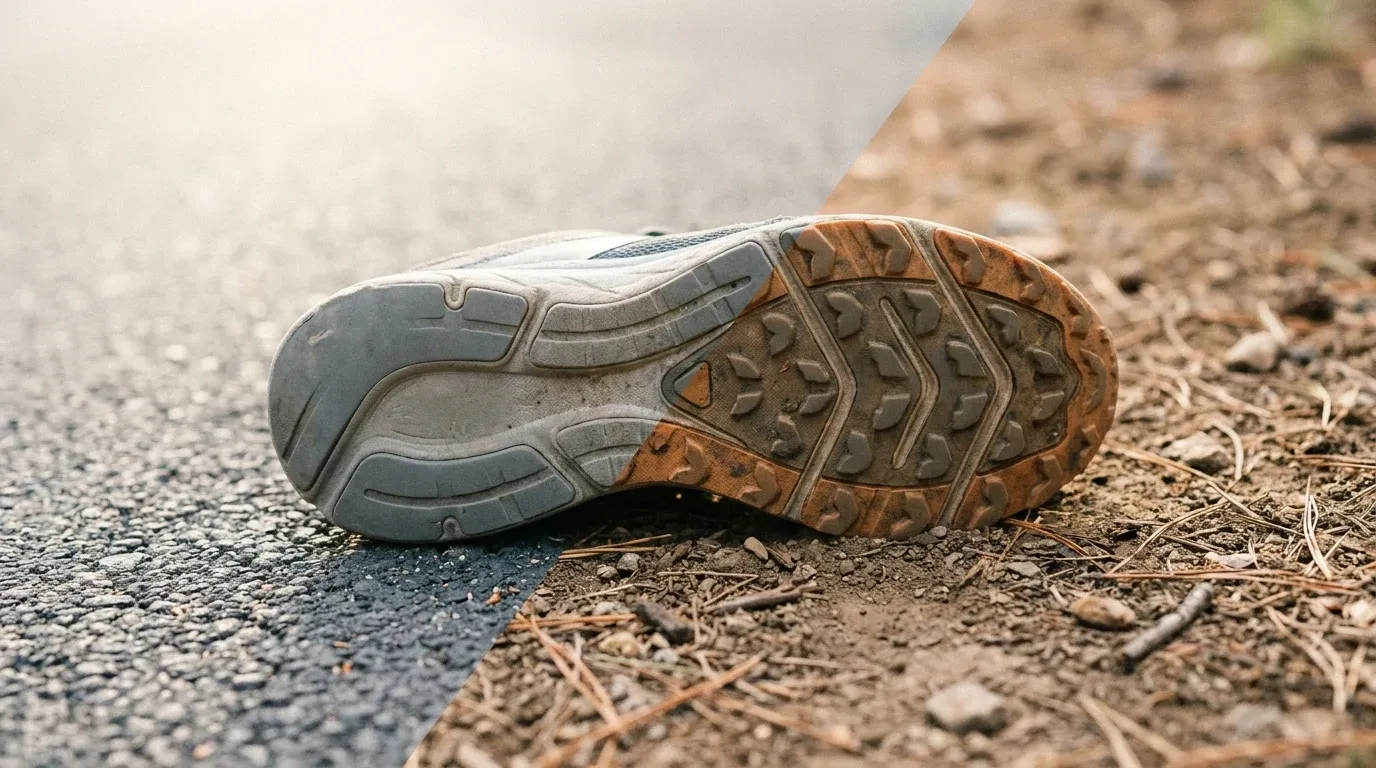
Road running shoes are engineered for consistent, predictable surfaces. Stack height, carbon plates, and maximalist cushioning are optimized for pavement mechanics. Trail shoes need lateral stability, protective rock plates, aggressive outsole lugs, and toe box volume that handles foot swell on long climbs. These aren't cosmetic differences. They're functional ones.
Several road brands entering trail have launched shoes that look the part but underperform technically. Outsoles that don't grip wet root systems. Uppers that lack the structural reinforcement for scree scrambling. Cushioning profiles that destabilize ankle mechanics on uneven terrain. When a brand's trail shoe is designed primarily in a road-shoe context, with road-shoe tooling and road-shoe aesthetic priorities, the results often show.
This doesn't mean road brands can't build good trail shoes. New Balance's Fresh Foam trail lineup has earned genuine respect. Altra has bridged both worlds effectively for years. But you should evaluate trail gear on trail-specific criteria, not on brand reputation earned in a different context. Check lug depth, rock plate coverage, heel-to-toe drop, and drainage port placement before trusting a brand's trail credentials.
If you're deep in your running journey and thinking about what kind of event to target next, choosing your next race after a big season is worth thinking through before you invest heavily in new gear categories.
The Culture Question Is Real
Trail running has always had a self-selecting identity. The people who showed up for it were, for a long time, runners who specifically didn't want what road racing offered. Less spectacle. Less timing chip optimization. More wilderness. The community that built around ultras, fastpacking, and mountain racing developed its own norms: self-sufficiency, course stewardship, a particular skepticism toward the kind of brand saturation that defines road running expos.
That culture is now under visible pressure. When brands with large marketing budgets enter trail, they bring the full infrastructure of modern fitness marketing with them. Ambassador programs, sponsored content, gear drops tied to race calendars. The aesthetic of trail gets extracted and used commercially in ways that don't always connect to actual trail values.
This tension has become public. Forums, podcasts, and community spaces in trail running have seen vocal debates about what mainstream attention does to the sport's character. Long-standing race directors have spoken openly about the challenge of maintaining course intimacy and community ethos when participation demand explodes and corporate sponsorship becomes a financial reality.
It's a pattern familiar to anyone who watched other fitness communities navigate rapid growth. The data on the pickleball boom and its deceleration is a useful reference point. Sports that expand fast tend to fragment culturally, even when the growth metrics look healthy on paper.
What More Competition Actually Means for You
There's a legitimate case for optimism here, and it shouldn't be dismissed. When more brands compete seriously in a gear category, prices tend to stabilize or fall. Product quality often rises as brands fight for differentiation. Retail availability improves. Runners in mid-sized cities who previously had to order trail shoes online can suddenly walk into a store and try four or five options.
The trail shoe market in 2020 was dominated by a short list of specialists. Salomon, Hoka, Inov-8, Scarpa, La Sportiva. Today, you have meaningfully more choice across a wider price range. Trail-capable shoes from brands like New Balance and Brooks are available at accessible price points, sometimes starting around $130 to $150, while premium options from specialist brands can run $200 or more. More competition created that spread.
The same dynamic applies to apparel and accessories. Trail-specific shorts, vests, and base layers are more available and more affordable than they were five years ago, partly because the market expanded and more brands entered it.
That said, more options create more noise. If you're a runner new to trail, the current landscape makes it harder, not easier, to identify which products actually perform and which are road-brand aesthetics in trail packaging. Marketing language in this category has become aggressive. Words like "technical," "mountain-ready," and "all-terrain" are applied liberally, often without meaningful performance differentiation behind them.
If you're navigating gear decisions for longer distances, nutrition and fueling strategy matters as much as footwear. Dialing in your race day breakfast to prevent digestive issues is the kind of marginal gain that trail running rewards more than road racing does, given the duration and variability of most trail events.
The Tracksmith Question, Specifically
Tracksmith's move into trail deserves its own assessment, separate from the broader industry pattern. The brand has genuine credibility. Its road gear has been respected for quality and construction. Its community marketing is sophisticated rather than hollow. There are reasons to believe the Overland collection was developed with real attention rather than opportunism.
But Tracksmith's trail entry also illustrates the central tension clearly. The brand's identity is built on a specific road-running aesthetic. Introducing a trail line asks customers to extend that trust into a different performance context. Whether the product earns that extension is something the trail community will evaluate on its own terms, regardless of how well the brand photography looks.
The runners most likely to benefit from Tracksmith going trail are those already in the Tracksmith ecosystem who want trail options they can trust from a brand they know. For runners who have been in trail for years, the proof is in the outsole grip, the pack fit, and the durability after six months of actual use.
How to Think About This as a Runner
The brand invasion of trail running doesn't require a strong opinion. What it requires is a useful filter.
- Evaluate trail gear on trail criteria. Lug depth, stability, protection, and drainage matter. Brand heritage on road doesn't transfer automatically.
- Seek community-sourced reviews. Trail runner forums, race-specific Facebook groups, and independent gear reviewers who actually run technical terrain will give you more reliable signal than brand content.
- Use the price competition to your advantage. More brands in the market means more opportunity to find quality gear at accessible prices, but read independent reviews before buying based on price alone.
- Don't confuse aesthetics with performance. Trail gear that looks good in a brand's lookbook may not be the same thing as trail gear that holds up on a 30-mile mountain run.
- Respect the culture even if you're new to it. Trail running communities have built real norms around environmental stewardship and race etiquette. Arriving with road-racing habits and road-brand allegiances doesn't automatically translate.
Trail running's growth is real, the participation numbers are genuine, and the gear is getting better across the board. What's also real is that the character of a sport changes when it becomes a large commercial category. Whether that's acceptable depends on what you're looking for when you step off the pavement.
The brands will keep coming. Your job is to stay skeptical, stay informed, and let your actual performance on actual trails be the measure of what's working.