
Seward, Alaska, July 4: America's most vertical race
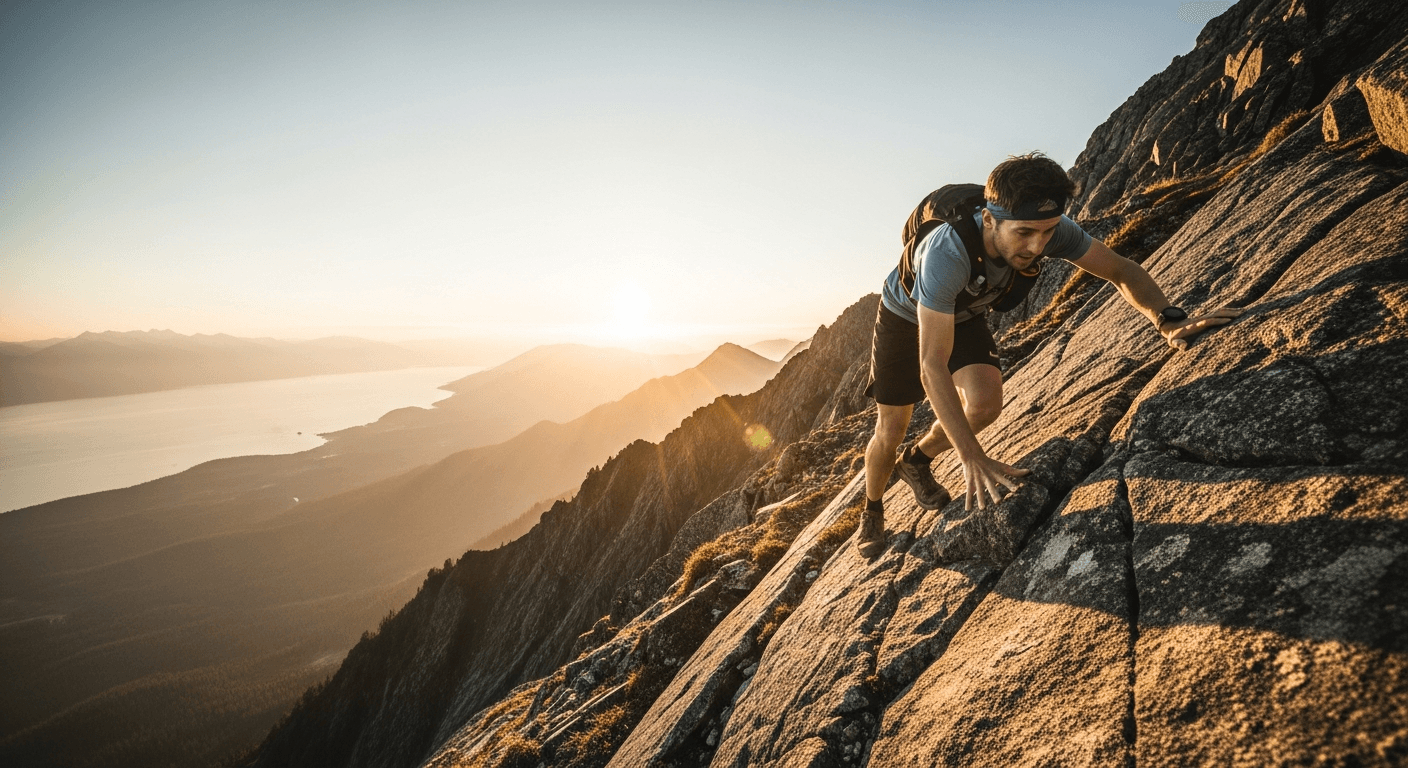
The Mount Marathon Race is one of the most brutal and iconic races in the United States. On July 4, 2026, more than 900 runners launched from Seward, Alaska to climb and descend the 3,022 feet of vertical gain on Mount Marathon — a course that doesn't follow a trail but a near-vertical slope, with sections hitting 70% grade.
Tyler Norris won the men's open division in 43:08. Allie Rhodes dominated the women's open in 49:55. In a race where falls and slides are a routine part of the course, those times represent elite-level performances.
A race founded in 1915
The Mount Marathon Race started as a bet in 1915 between Seward locals: who could climb and descend the mountain the fastest? Over a century later, it draws specialists from across the country and remains one of the most anticipated events on the US trail calendar. The format has barely changed: start from downtown Seward, go straight up the mountain, come back down. All on the Fourth of July. The crowd watching from below is a local institution.
What makes this race unlike anything else
The defining feature of Mount Marathon is the absence of a marked trail. Runners choose their own line up and down a slope covered in rock, grass, and early-season snow. Falls are common — especially on the descent, where some runners intentionally slide on snow patches to gain time. It's one of the few races where the descent strategy matters as much as the climb fitness.
The race also welcomes amateurs alongside the elites. Alongside Norris and Rhodes, hundreds of local Alaska runners compete for the tradition of it. Multiple age and gender divisions run the same course, and every category result carries its own prestige in the local community.
A full July 4 running calendar
The Mount Marathon ran on the same day as the Peachtree Road Race in Atlanta — two races at opposite ends of the format spectrum (10K road race in a city vs. mountain summit run), but both reflecting American running culture's deep connection to the Fourth of July. Between the two events, over 50,000 runners were on course on the same day, a reminder of just how broadly participation in running has grown in recent years.