
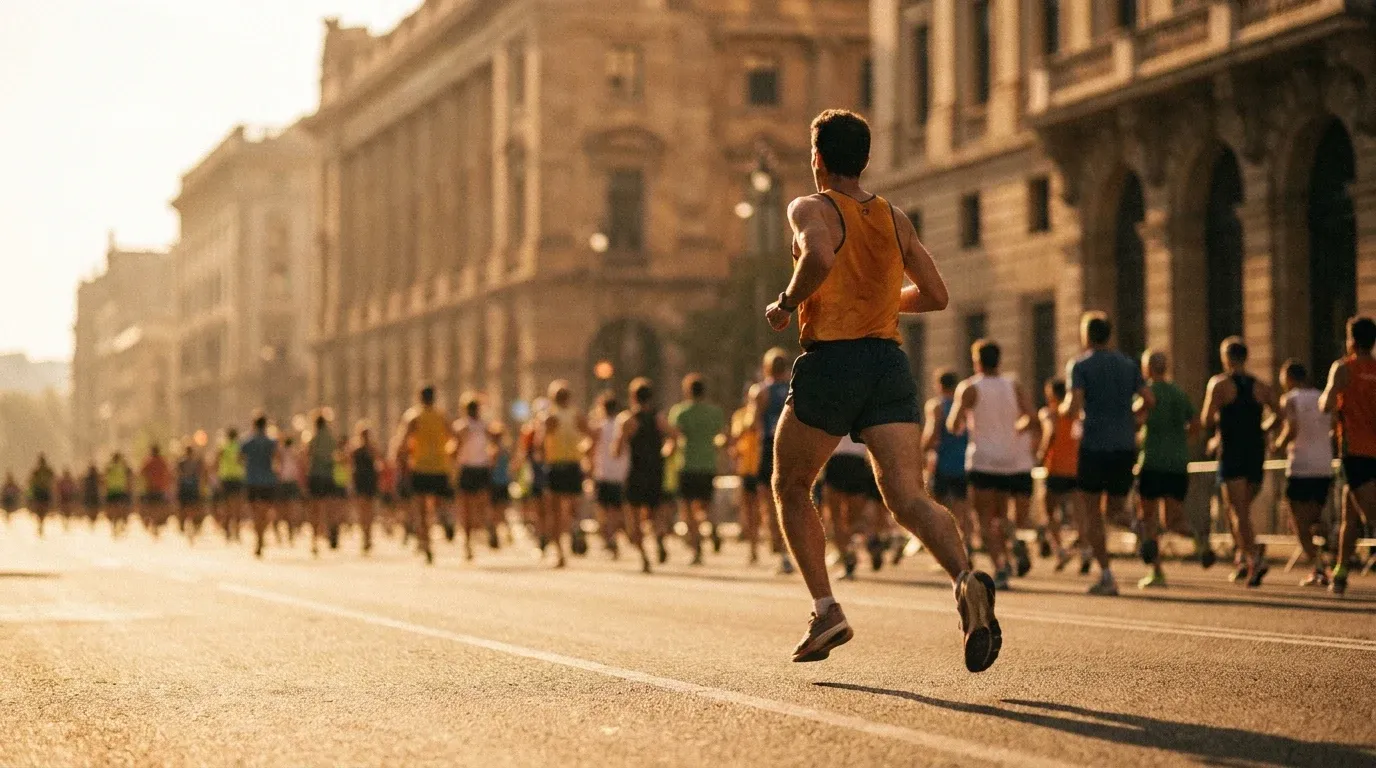
The 2026 Marathon Beneva de Québec just delivered one of the most remarkable editions in the event's history. A new course speed record fell for the first time in over two decades, and the starting field was the largest ever assembled at this race. Together, those two milestones put Quebec City firmly on the map as one of fall marathon season's most compelling destinations.
If you're tracking where marathon running is heading in North America, this is a story worth paying attention to.
A Record That Stood for 25 Years Is Gone
French runner Guillaume Ruel crossed the finish line in 2h22min28s, good enough for second place overall. That time is not just fast. It officially erases the previous course record that had been set in 2001, a mark that had survived a quarter-century of competitive fields.
To put that into perspective, course records at established marathons are notoriously stubborn. Race conditions, field depth, pacing strategies, and weather all have to align. The fact that this record survived 25 years before falling says something about both the difficulty of the Quebec City course and the caliber of performance Ruel put together on race day.
Ruel's 2h22min28s is elite-level running by any standard. For reference, the World Athletics qualifying standard for major international competition sits at 2h11min for men. Ruel's time is well within the tier that distinguishes serious competitive marathoners from the broader field. Finishing second at that pace suggests the top of the men's race was genuinely competitive throughout.
Record Attendance Signals a Growing Movement
Speed records make headlines, but the attendance figure tells a deeper story about where the sport is heading. The 2026 edition registered an all-time high in participant numbers for the Marathon Beneva de Québec, reflecting sustained growth in organized long-distance running across francophone North America.
This tracks with broader trends. Marathon participation globally has climbed steadily over the past decade, recovering fully from pandemic-era disruptions and then surpassing pre-2020 registration numbers at major events. Regional races are no exception. When a city-based marathon sets its own attendance record, it usually reflects a combination of smart event organization, improved course reputation, and a local running culture that's actively expanding.
Quebec City offers something that mega-marathons like Chicago or New York can't always replicate: a more intimate race atmosphere, distinctive scenery through one of North America's most historically rich urban environments, and a running community built around the specific culture of the region. That combination is proving to be a genuine draw.
If you're exploring the broader fall racing calendar and wondering which events are worth your time, the Trail Running in October: The Races Worth Signing Up For guide covers a range of options across formats and distances that compete for the same seasonal window.
Why the Double Record Matters Beyond Quebec
A simultaneous speed record and attendance record at the same event is genuinely rare. These two metrics don't always move together. Large fields often slow courses down through congestion and logistics. Elite-focused races sometimes sacrifice participation breadth for competitive depth. Quebec's 2026 edition achieved both at once.
That's a signal worth reading carefully if you're involved in race organization, coaching, or simply thinking about which events deserve more attention. The Marathon Beneva de Québec has earned a seat at the table alongside better-known fall marathons, and the 2026 edition gives it a credibility boost that marketing alone couldn't manufacture.
For a direct comparison of what a major fall marathon week looks like at the highest level of the sport, the Chicago Marathon 2026: Full Results and Key Moments breakdown offers useful context on how elite results and mass participation interact at a world-major scale.
What Ruel's Performance Tells Us About Pacing and Preparation
Running 2h22min28s in a second-place finish suggests the race was genuinely contested at the front. Elite marathoners don't typically post times that deep into the 2h22 range when they're running solo or in a tempo-only effort. Ruel was likely pushing through real competition for significant portions of the race.
Breaking a 25-year-old course record while finishing second also raises the obvious question: how fast did the winner run? At time of writing, full results confirm a winning performance that pushed Ruel into second despite his historic split. That kind of competitive depth at a regional Canadian marathon is not something you see every year.
From a training and preparation standpoint, performances at this level demand months of structured build-up. The final weeks before a race of this intensity are particularly critical. If you're targeting a fall marathon yourself and want a framework for peaking correctly, the Peak Week of Marathon Training: How to Nail It guide walks through exactly how elite and competitive amateur runners structure those final days before race day.
The Rise of Francophone North American Running
It's easy to overlook Quebec's running scene when the major media spotlight stays on events like Boston, New York, London, and Berlin. But the Marathon Beneva de Québec has been building quietly for years, and the 2026 edition represents a genuine coming-out moment.
Quebec City has a runner-friendly urban environment, a cooler fall climate that suits marathon pacing, and a population that has embraced endurance sport at a high rate relative to its size. The race itself has benefited from consistent organizational investment and title sponsorship that has helped it grow its profile beyond local and provincial audiences.
The attendance record is partly a reflection of that broader cultural shift. Running has become a mainstream fitness and lifestyle pursuit across North America, and francophone communities are participating in that growth on their own terms. Quebec's race is no longer a regional footnote. It's a legitimate destination marathon.
That kind of growth story isn't unique to Quebec. Across North America, race organizers are seeing new demographics show up at start lines. The surge in women-only events is one visible example of how the sport is expanding beyond its traditional participant base. The Women-Only Running Events Are Booming. Here's Why piece covers that trend in detail and helps explain why overall participation numbers are climbing across the board.
What This Means for You as a Runner
If you've been thinking about adding an international or destination marathon to your race calendar, Quebec City deserves genuine consideration. The course has now produced a sub-2h23 performance at its sharpest competitive level, which tells you something about conditions and organization. A course that produces fast times is typically well-measured, well-supported, and professionally managed.
The fall timing also works in your favor physiologically. Cooler temperatures in Quebec City during September and October align well with optimal marathon racing conditions, where research consistently shows that performance peaks in the 46-59°F (8-15°C) range. That's the kind of environmental advantage that flat, fast urban courses in warmer climates can't always offer in the same season.
One consideration worth factoring into any race-day plan, particularly in urban environments, is air quality. Training and racing in cities carries pollution exposure that can affect respiratory performance in ways that most runners underestimate. The How Air Pollution Is Quietly Sabotaging Your Training piece outlines practical strategies for minimizing that impact, especially during peak training blocks leading into a fall race.
A Benchmark Moment for the Event
The 2026 Marathon Beneva de Québec will be remembered as the edition that finally broke a 25-year speed record while simultaneously drawing its biggest-ever field. Those two facts, taken together, define what a benchmark moment looks like for a regional marathon with growing international ambitions.
Guillaume Ruel's 2h22min28s will be the new standard that future competitors aim to surpass. And the attendance figures set this year will be the floor that organizers now build from. Both records matter, and both will be hard to improve on. That's precisely what makes 2026 significant.
Fall marathon season produces memorable stories every year. This one, from Quebec City, earns its place among the best of them.