
The carbon plate revolution reshaped road running. Sub-two-hour marathons, podium shoes with price tags above $300, and a flood of peer-reviewed studies confirming real metabolic gains. Now the trail running industry is trying to replicate that narrative. New midsole compounds, embedded plates, and aggressive rocker geometries are appearing in technical trail shoes at similar price points. The problem is that the terrain doesn't cooperate with the lab data the way a flat road surface does.
Here's what the current research actually shows, what still matters most when you're buying trail shoes, and how to cut through the marketing noise before your next race.
Why Trail Terrain Breaks the Carbon Plate Story
The performance gains from carbon-plated road shoes are well documented. Studies consistently show a metabolic cost reduction of around 4% compared to conventional trainers, driven by longitudinal bending stiffness and energy return from compliant foam. That number is meaningful. It's also specific to flat, predictable surfaces where the plate can function as designed.
On trail, that condition rarely exists. Recent biomechanics research shows that on uneven or sloped terrain, the energy return from stiff-plate systems becomes inconsistent. The foot's natural pronation and supination response, which is critical for adapting to rocks, roots, and camber, is partially suppressed by a rigid longitudinal plate. In some test conditions, plated trail shoes showed no statistically significant improvement in running economy compared to non-plated models of similar weight.
That doesn't mean plates are useless on trail. On packed gravel or groomed dirt paths, modest gains are plausible. But the more technical the terrain, the less the plate contributes, and the more it may interfere. The variability of the surface is the variable the marketing campaigns consistently ignore.
A 2024 study from a European sports science institute found that trail runners wearing high-stack plated shoes showed increased ankle instability markers on rocky descents compared to lower-stack non-plated alternatives. That's a trade-off worth understanding before you spend $280 on a shoe because it shares a platform name with a road model.
The Three Variables That Actually Have Evidence Behind Them
Strip away the foam compound branding and the plate conversation, and three variables consistently show up in the research as meaningful for trail running performance and injury prevention.
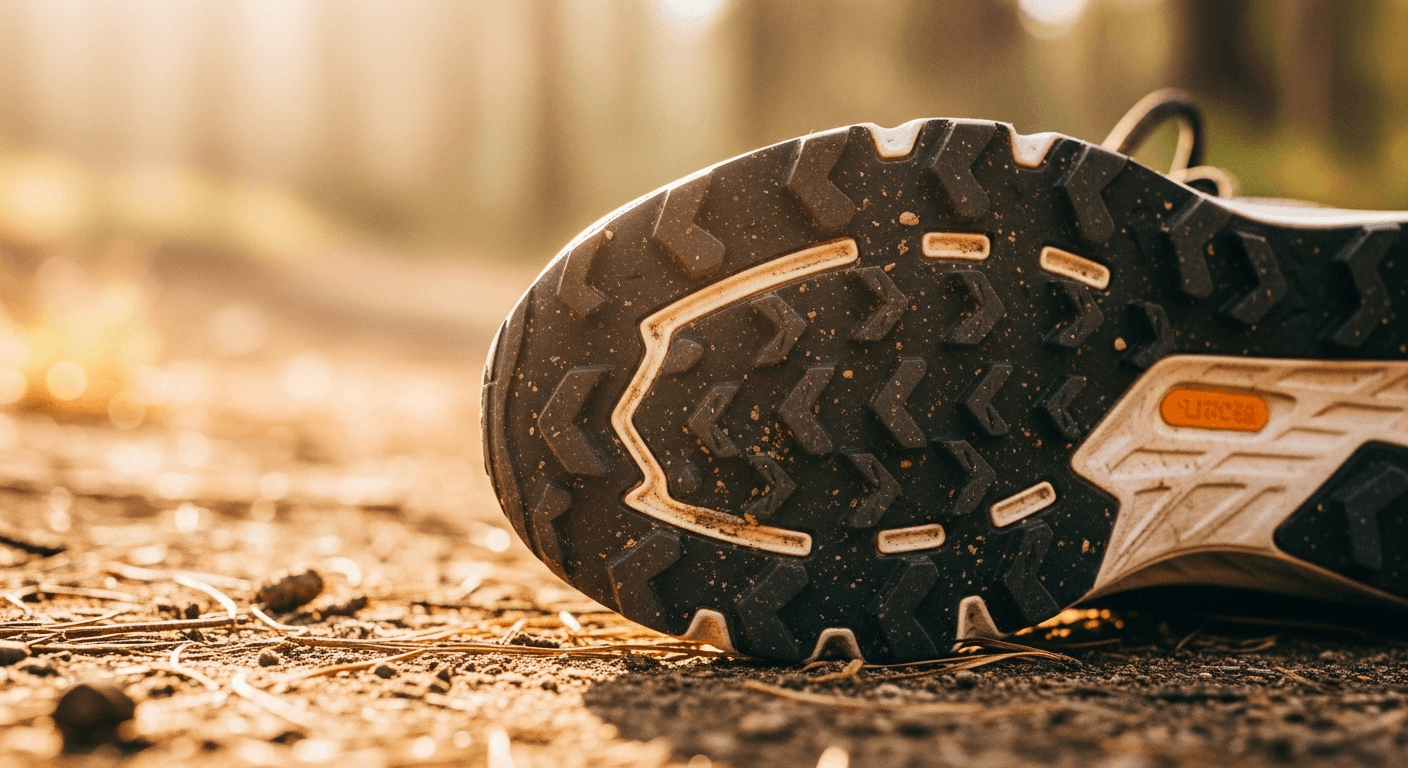
Outsole grip. This is not glamorous, but it matters more than almost anything else. Lug geometry, rubber compound hardness, and lug spacing all affect traction on wet rock, loose dirt, and mud in ways that are directly measurable. A shoe with appropriate grip for your target terrain reduces energy spent on corrective micro-movements and lowers the risk of slipping-related injuries. Soft-compound rubbers outperform harder compounds on wet surfaces but wear faster. Knowing your primary terrain type should drive this decision more than any foam marketing claim.
Stack height and stability. Higher stack provides more cushioning on long, hard efforts. It also raises your center of gravity, which has real consequences on technical ground. Research on ankle sprain biomechanics in trail running suggests that stack heights above 35mm significantly increase lateral instability risk without a corresponding improvement in cushioning benefit over 30-32mm. If you're racing over 50 miles, that trade-off discussion is worth having seriously with yourself before defaulting to maximum cushion.
Weight. The evidence here is straightforward. Every 100g of footwear weight adds approximately 1% to your metabolic cost over a long effort. On trail, where you're already managing uneven footing, muscle fatigue accumulates faster than on road. A lighter shoe preserves muscular capacity later in a race. The caveat is that ultra-light shoes often compromise on the grip and protection that technical terrain demands, so this is a balance decision, not a simple "lighter is better" rule.
The Hoka Colorway Problem (And What It Reveals About the Industry)
Hoka's 2025-2026 monochrome colorway refresh drew considerable attention online, generating social media engagement that rivaled coverage of the brand's actual midsole updates. That's worth sitting with for a moment.
Trail running, like road running, is not immune to the mechanics of consumer culture. Brand visibility drives purchase decisions as much as technical specifications, possibly more. A visually cohesive, identifiable aesthetic builds brand loyalty and shapes what feels credible at the start line. That's not a criticism of Hoka specifically. It's a structural truth about how performance footwear markets operate.
The risk for you as a consumer is conflating brand momentum with product performance. When a brand's colorway update generates the same media cycle as a foam compound innovation, the signal-to-noise ratio in your research process gets worse. Reading the spec sheet and the independent biomechanics data matters more in that environment, not less.
This dynamic runs parallel to broader patterns in performance sports consumption. Just as organic food and athletic performance research shows that premium labeling frequently outpaces the actual evidence for performance benefit, trail shoe marketing often invests more in positioning than in substantiated technical claims.
A Practical Pre-Race Checklist for Trail Shoe Selection
If you're targeting a specific race or training block, here's a structured way to evaluate a trail shoe before committing to it. These are the questions that matter more than what the product page says.
- Heel-to-toe drop. Lower drop (4-6mm) encourages a midfoot strike and engages the calf and Achilles more. Higher drop (8-10mm) shifts load toward the heel and may suit runners coming from road backgrounds. Neither is universally better. What matters is consistency with your training history. Switching drop too close to a race is a common source of Achilles and plantar issues.
- Lug depth and pattern for your specific terrain. 4-5mm lugs work well on firm dirt and packed trails. 6mm or deeper is appropriate for mud or loose terrain. On hard rock or dry granite, low-profile lugs with sticky rubber outperform deep lugs. Choosing by terrain type, not by brand prestige, is the right framework here.
- Toebox width under load. Your foot spreads when you run. A shoe that fits well standing still may compress your forefoot at race pace. Test in-store by standing on one foot and feeling for lateral compression. On descents particularly, toe box space prevents black toenails and blistering.
- Stack height relative to your race distance and terrain technicality. For races with significant rocky or rooted single-track, consider capping your stack at 30-32mm. For road-to-trail or groomed courses, higher stack is a reasonable choice for long-distance comfort.
- Midsole foam feel after 15 minutes, not just the first step. Many modern foams compress and change character once warmed up. Do a genuine 10-15 minute run test before deciding. The initial bounce is not the same as the feel at mile 20.
- Outsole coverage on the medial edge. Many trail shoes under-protect the inner edge of the midfoot, which takes significant wear on descents. Check the rubber coverage pattern, not just the lug depth.
- Upper breathability vs. protection trade-off. For races in wet or cold conditions, a more closed upper matters. For dry summer mountain racing, breathability and drainage reduce blister risk. This is terrain and season specific, and it's often ignored in generic "best trail shoe" guides.
Running your target course profile before selecting a shoe is the most direct approach. If that's not possible, breaking the course into its dominant terrain type and matching the shoe to that type is a reasonable proxy strategy.
How This Fits Into Your Broader Training Picture
Shoe selection matters, but it sits within a larger system. A technically well-matched shoe won't compensate for inadequate preparation for the demands of your race distance or terrain. If you're targeting a long-distance trail event this season, your training structure deserves as much scrutiny as your footwear choice. Building your base effectively in the lead-up months is foundational in a way that no shoe can replicate.
Similarly, physiological readiness. knowing where your aerobic capacity sits and how to develop it systematically. shapes your performance ceiling more than any equipment variable. Understanding how to improve your VO2 max through evidence-based training gives you a framework for honest performance gains that gear alone can't provide.
Nutrition also plays a role that's easy to underestimate during gear research phases. Managing fueling over long trail efforts is a skill that takes training in itself. Resources covering the complexity of gels, bars, and sports nutrition products can help you make smarter choices for race day fueling, particularly on efforts over three hours where gut management becomes a serious variable.
If you're preparing for a specific event, checking regional trail race calendars can also help you identify test races to use as dress rehearsals for your gear setup, including shoes, before a priority event.
The Bottom Line on Trail Shoe Tech in 2026
The technology in trail shoes is genuinely advancing. Foam compounds are lighter and more resilient. Outsole materials are better. Upper constructions are more durable at lower weights. Those are real improvements worth paying attention to.
What hasn't advanced is the marketing's relationship with honesty. The carbon plate story, which had legitimate data behind it in road running, is being borrowed for trail without the same strength of evidence. The terrain variable is the inconvenient complexity that most brand messaging skips.
Your best tool is specificity. Know your terrain. Know your distance. Test the shoe under load before committing. And weight the evidence-based variables, grip, stability, and weight, more heavily than the compound branding on the midsole.
The shoe that wins races is the one that fits your foot, your terrain, and your preparation. Not the one with the best color story.