
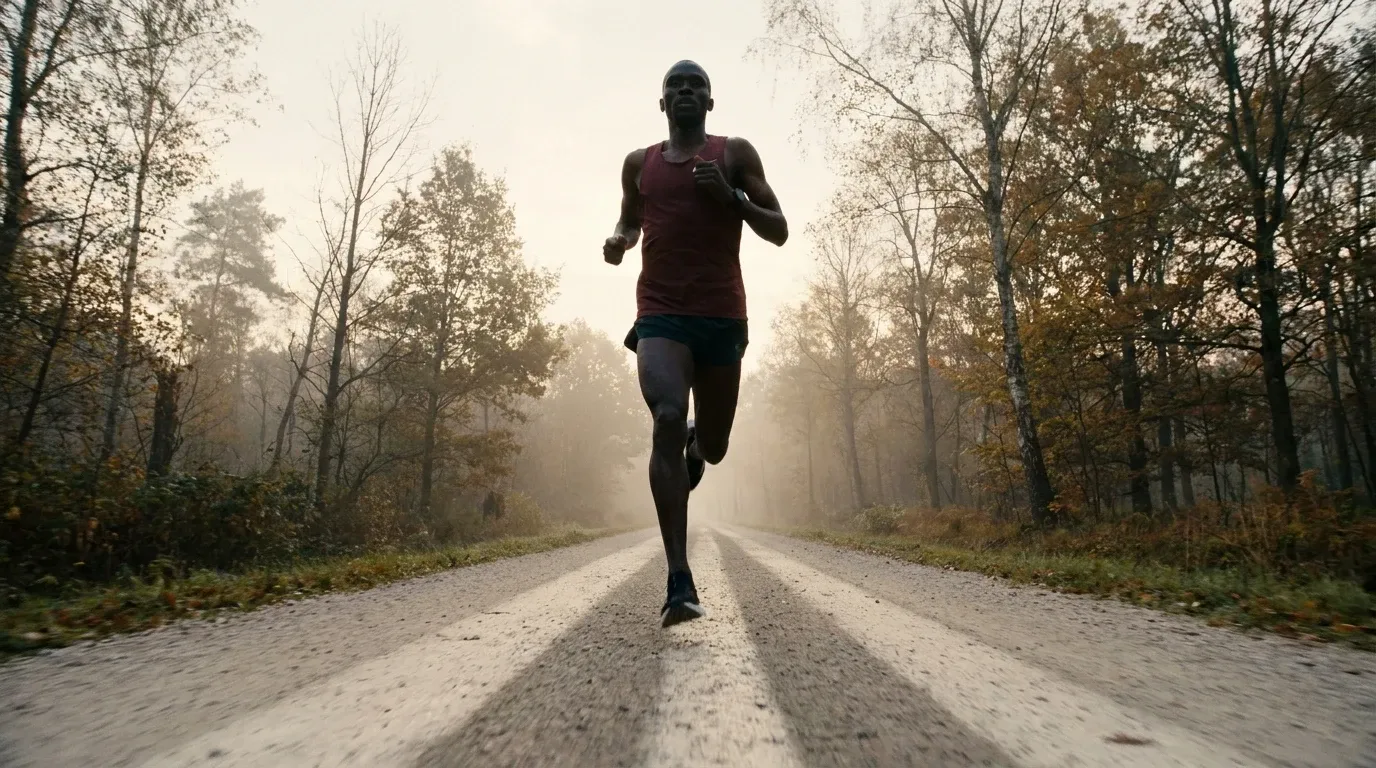
Flat courses used to be the quiet footnote of the ultra-running calendar. Not anymore. The Tunnel Hill 50-mile and 100-mile races in Vienna, Illinois, turned heads this past weekend with some of the fastest ultra performances of the fall 2026 season, drawing an elite field that showed up for two things: low elevation gain and real prize money.
The results confirmed what a growing number of coaches and athletes have been saying for the past two years. When you combine a fast course with meaningful financial incentive, the best runners in the world will show up. And when they show up, records fall.
What Tunnel Hill Actually Is
For those unfamiliar, Tunnel Hill runs along the former railroad corridor of the Vienna-to-Karnak trail in southern Illinois. The course is relentlessly flat. Total elevation gain across the 100-mile distance sits under 500 feet, making it one of the most honest speed tests in American ultra-running.
That flatness cuts both ways. There's nowhere to hide and no technical descent to reset your legs. You run, and you keep running. For athletes who've built their base around road speed and want to transition into ultras without sacrificing their strength on even terrain, it's a compelling option. The same logic applies to athletes studying what a pro cyclist turned physiologist learns from trail running, where aerobic efficiency and pacing discipline often matter more than mountain-specific technique.
The Performances That Stood Out
The 2026 edition delivered across both distances. In the 100-mile, the men's and women's winning times both pushed into the conversation for top-ten performances in the event's history. Conditions were close to ideal. Cool temperatures, low wind, and firm trail surface meant athletes could execute the pacing strategies they'd built their entire fall training blocks around.
The 50-mile saw an even tighter elite battle. Multiple athletes crossed with times that would rank them among the fastest Americans to ever cover the distance on a flat course. The field depth was notably stronger than in previous editions, a direct result of the elevated prize structure that organizers introduced for this year's race.
Pacing strategy at that distance is a science in itself. Athletes who've studied how performance degrades across extended efforts, including the kind of fatigue modeling explored in the HYROX fatigue curve and why you slow down, understand that going out too hard at mile one doesn't just cost you the last ten miles. It costs you everything after mile forty.
Alexander Burks and the USATF National Championship
The weekend carried extra weight on the national stage. Alexander Burks claimed the USATF 50 Mile Road National Championship title at Tunnel Hill, adding a formal title to what was already an impressive individual performance.
Burks ran a controlled, disciplined race from the front. His split execution was precise, and he managed the second half of the course without the kind of dramatic pace drop that eliminates most athletes from championship contention. Winning a national title at a flat ultra requires a specific athlete profile: strong aerobic ceiling, excellent fueling execution, and the mental architecture to hold form when every signal in your body is pushing you to slow down.
For Burks, the USATF title at this event adds to a 2026 season that has quietly positioned him as one of the most consistent American ultra performers on road-adjacent surfaces. It's a performance that will carry weight heading into the 2027 selection conversations for major national teams.
Prize Money Is Changing Who Shows Up
The bigger story behind Tunnel Hill 2026 isn't any single performance. It's the financial infrastructure that made the field possible.
Ultra-running has historically operated on a model where elite athletes absorbed enormous training costs for minimal financial return. Entry fees, travel, accommodation, and months of high-volume training blocks rarely resulted in anything beyond a finisher's buckle and social media recognition. That model is breaking down.
Tunnel Hill's expanded prize purse for 2026 brought legitimate money to both the 50-mile and 100-mile events. While the total figures haven't been fully disclosed at the time of publication, multiple athletes confirmed the payout structure was a primary factor in their decision to race here rather than at competing fall ultras.
The trend isn't isolated. Run Rabbit Run's recently announced $350,000 prize purse for its upcoming edition set a record for an American ultra-running event and sent a clear signal to the rest of the calendar. When one event raises the ceiling, others feel pressure to follow. Tunnel Hill's organizers appear to have read that signal early.
This shift mirrors what's happened across road racing over the past decade, where events like the Deauville Marathon have demonstrated that targeted prize structures attract faster fields, faster fields attract more media attention, and more media attention justifies the investment for future editions.
Why Flat Ultras Are Having a Moment
Trail ultra-running still commands the cultural imagination of the sport. Western States, UTMB, and Hardrock carry the prestige. But a quieter shift is underway among a specific category of elite athlete: runners who want verifiable, comparable times.
Trail course difficulty is nearly impossible to standardize. A fast time at a hilly hundred-miler in one state doesn't translate directly to a fast time at a different course with different vert, altitude, and surface. Flat ultras solve that problem. They create a common measuring stick.
As prize money enters the sport more seriously, that comparability matters. Sponsors, agents, and selection committees want data points they can defend. A sub-12-hour 100-mile on a flat, certified course is a data point. A top-five at a mountain race is a story, but it's harder to price.
The global marathon circuit has understood this for decades. East Africa's continued dominance of the global marathon circuit is partly a function of athletes chasing fast courses, flat profiles, and the prize structures attached to them. Ultra-running is now borrowing from that playbook.
What This Means for the Next Generation of Ultra Runners
If you're a runner currently sitting at the edge of the ultra world, thinking about whether to make the jump from marathon to 50-mile, the financial landscape is changing in your favor. The barrier between competitive running and sustainable income is narrowing, at least for athletes at the sharp end of the field.
That doesn't mean the sport is suddenly lucrative for everyone. Prize money at most events still concentrates heavily at the top three or five finishers. But the direction of travel is clear. More events are investing in prize structures. More sponsors are treating ultra finishes as legitimate media assets. And courses like Tunnel Hill are positioning themselves as annual proving grounds for athletes who want performance recognized in real terms.
The training demands are significant. Athletes preparing for flat 100-milers run weekly volumes that rival professional marathon programs. Recovery, fueling, and strength work all require the same systematic attention. The physiological profile required to race Tunnel Hill well, high aerobic capacity, durable connective tissue, and refined late-race pacing, is built over years, not months.
Looking Ahead to the 2027 Season
Tunnel Hill 2026 will likely be remembered as a marker year for the event. The combination of a national championship, standout times, and a competitive prize structure attracted a level of attention that organizers can now build on.
The question for 2027 is whether the prize money increases again, and whether other flat ultra events feel enough competitive pressure to match it. Run Rabbit Run's $350,000 benchmark has already raised expectations across the calendar. Tunnel Hill, with its natural speed advantages and established reputation among flat-course specialists, is well positioned to stay at the center of that conversation.
For athletes planning their 2027 race schedules now, this event belongs on the short list. The course is honest, the organization is solid, and the financial incentive to race fast is growing. That's a combination that tends to produce memorable weekends.
Ultra-running is not becoming road racing. The mountains aren't going anywhere, and the culture of the sport still prizes suffering over speed for its own sake. But Tunnel Hill 2026 showed that there's a growing space in the sport for flat, fast, well-funded events that reward precision. And the athletes chasing that niche are only getting better.