
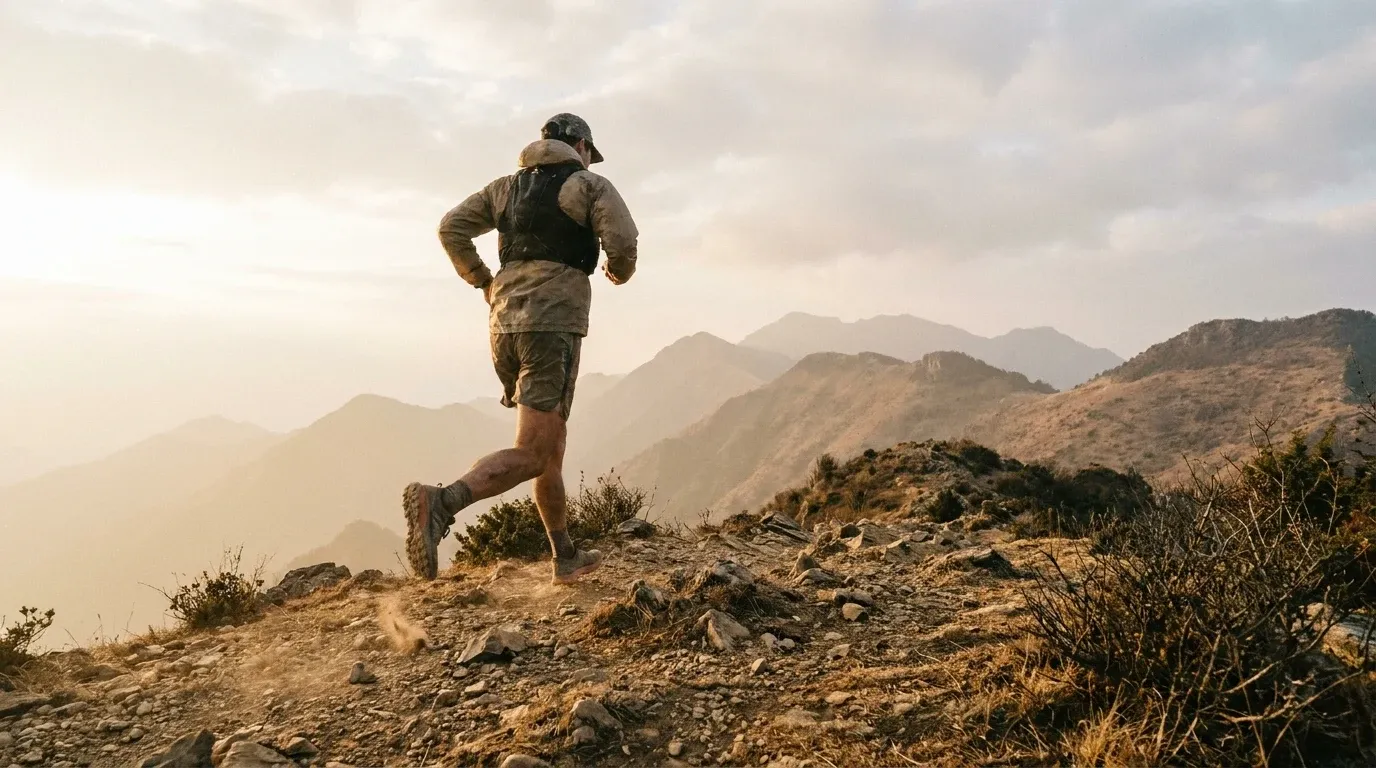
The mountains above Ninghai delivered a statement race in 2026. Rong-Chao Gu crossed the finish line first in the men's field, Veronika Leng claimed the women's crown, and together they handed the trail running world a clear signal: Asia isn't just hosting elite ultra events anymore. It's producing them.
Ultra-Trail Ninghai has steadily built its reputation over recent editions, threading through the rugged coastal ranges of Zhejiang Province in eastern China. This year's edition drew a genuinely competitive international field, and the results held up under scrutiny. These weren't soft wins on a soft course.
Rong-Chao Gu: A Local Win That Carries Global Weight
Gu's victory wasn't a surprise to those tracking the Chinese ultra scene closely. He's been building toward a performance like this for several seasons, consistently finishing in podium contention at domestic and regional races. What made Ninghai 2026 different was the quality of the field around him.
With runners from across Asia, Europe, and Oceania toeing the start line, the race had the depth to make a win meaningful on the world stage. Gu navigated the technical descents and punishing climb profiles with the kind of controlled aggression that separates regional standouts from genuine international contenders.
His result adds to a growing body of evidence that China's trail running talent pool isn't just wide. It's deep. The country has invested heavily in trail infrastructure over the past decade, building a domestic race calendar that now rivals smaller European nations in both volume and quality. That pipeline is starting to produce winners capable of competing anywhere in the world.
Veronika Leng: Building a Strong 2026 Season
On the women's side, Veronika Leng's win at Ninghai fits a pattern that's been developing across her 2026 season. She's been consistent, she's been competitive, and she's been making smart racing decisions that hold up over long distances on technical terrain.
Trail running rewards a specific kind of patience. The athletes who win ultras aren't always the ones going hardest in the first third. They're the ones who've learned to read their own physiology across hours of variable terrain, adjusting effort to what the course demands rather than what the competition is doing around them. Leng has shown that maturity throughout this year.
Her Ninghai result cements a 2026 campaign that positions her as one of the more interesting athletes to watch as the second half of the season unfolds. Whether she targets another Asian race or turns her attention to the European circuit, she's entering those conversations from a position of demonstrated form.
Ninghai and the Expanding Global Ultra Calendar
To understand why a result in Ninghai matters beyond the borders of China, you need to look at what's been happening to the ultra trail calendar over the past five years. The sport's traditional power centers, the French Alps, the Pyrenees, the American mountain West, still anchor the elite season. But the gaps between those marquee events are filling in fast with races from Asia, South America, and East Africa.
China in particular has moved aggressively to position itself as a serious host nation for high-level trail and ultra competition. The country's mountainous interior and coastal ranges offer genuine technical variety. Race organizations have improved athlete experience, timing systems, and safety protocols to meet international standards. And the domestic runner base has grown large enough to sustain a full-season domestic calendar alongside international events.
This mirrors what's happening in road racing. As Ethiopian stars have shown at the Hong Kong-Zhuhai-Macao Bridge Run, Asia is now a credible setting for elite competition, not just a market for running tourism. The sport is genuinely globalizing, and the calendar is following the talent.
Ultra-Trail Ninghai sits within this broader shift. It's part of a wave of Asian races working to attract international fields while simultaneously developing local talent capable of winning against them. That combination is exactly what transforms a regional event into a globally relevant one.
Asia's Emergence as a World-Class Trail Running Stage
The numbers behind trail running's growth in Asia are striking. Participation in trail and ultra events across China, Japan, South Korea, and Southeast Asia has expanded at rates that outpace virtually every other region in the sport. Race registrations in China alone have grown by several hundred percent over the past decade, with tens of millions of recreational runners now engaging with trail formats at some level.
Elite performance tends to follow that kind of mass participation over time. The more runners enter the sport at the base, the deeper the talent pipeline becomes at the top. Japan has demonstrated this for years with a culture of mountain and ultra running that consistently produces world-class athletes. China is now on a similar trajectory, just at a significantly larger scale.
What Gu's win at Ninghai represents, in that context, isn't an isolated result. It's the visible peak of a system that's been building for years underneath the international spotlight.
For global trail runners thinking about their own training and competition goals, understanding what's happening physiologically in long mountain events is increasingly relevant. What a pro cyclist turned physiologist learns from trail running offers a useful lens on the aerobic and muscular demands that define success in this format, regardless of where the race is held.
What These Results Mean for the Trail Running World
Results like Ninghai 2026 push the global trail running conversation in a few concrete directions.
- Course diversity matters. Athletes who train exclusively on one type of terrain are increasingly at a disadvantage as elite races spread to new geographies with different technical profiles.
- Asian races are legitimate targets. For international athletes building their race calendar, events like Ninghai now belong in the same planning conversation as mid-tier European races. Prize structures and international travel support are improving.
- Local talent is global talent. Wins by athletes like Gu on home soil against international fields dissolve the old distinction between local and international competition. The best are competing at a world level wherever they race.
- The calendar is spreading the season. More quality races distributed across more time zones means elite athletes can build longer competitive seasons without clustering everything into the European summer.
This matters for how you think about the sport if you follow it closely, and it matters for how the sport funds itself, attracts sponsors, and builds broadcast audiences over the next decade.
The Bigger Picture for Competitive Ultra Running
Trail and ultra running has always been a sport that rewards the patient. Performances build across years, not months. Races build reputations across editions, not overnight. What you're seeing in Ninghai, and in the broader Asian trail scene, is that patience paying off at a systemic level.
The Deauville Marathon earlier this year offered its own version of this story on the road. Murithi and Hamel's win at Deauville showed how results at high-quality but non-marquee events still carry genuine weight in the broader competitive conversation when the field and conditions are legitimate.
Ninghai fits that pattern exactly. It doesn't need to be UTMB to matter. It needs to be well-organized, technically demanding, competitively deep, and transparent in its results. By those measures, the 2026 edition delivered.
Road running's global spread has been documented extensively, particularly the continued dominance of East African athletes across the global marathon circuit. Trail running is following a different but parallel arc, one where geographic diversity of talent is happening faster because the sport itself is younger and the infrastructure gaps between regions are narrower.
Gu and Leng won a race in China. But they won it against an international field, on a course that challenged every runner on the start line, in an event that's becoming a fixture on the global ultra calendar. That context is what makes the result worth paying attention to, wherever you're watching from.
The mountains aren't going anywhere. Neither is the talent rising to meet them.