
You've just finished a brutal training session. Your legs are wrecked, your shoulders are tight, and you've got another session in 48 hours. So you do what feels right. Maybe you fill the bath with ice. Maybe you head to the sauna. Maybe you do both, hoping one of them sticks.
Here's the problem: cold and heat don't do the same thing. And using the wrong one at the wrong time doesn't just fail to help. It can actively work against the recovery outcome you need most. That's not speculation. It's what the most recent meta-analyses on recovery modalities are now confirming with enough consistency to change how serious athletes and coaches approach post-training protocols.
What the Latest Research Actually Says
A wave of systematic reviews and meta-analyses published between 2024 and 2026 has sharpened the distinction between cold and heat therapy in meaningful ways. Rather than treating these as interchangeable "recovery tools," the research now maps them to specific physiological outcomes.
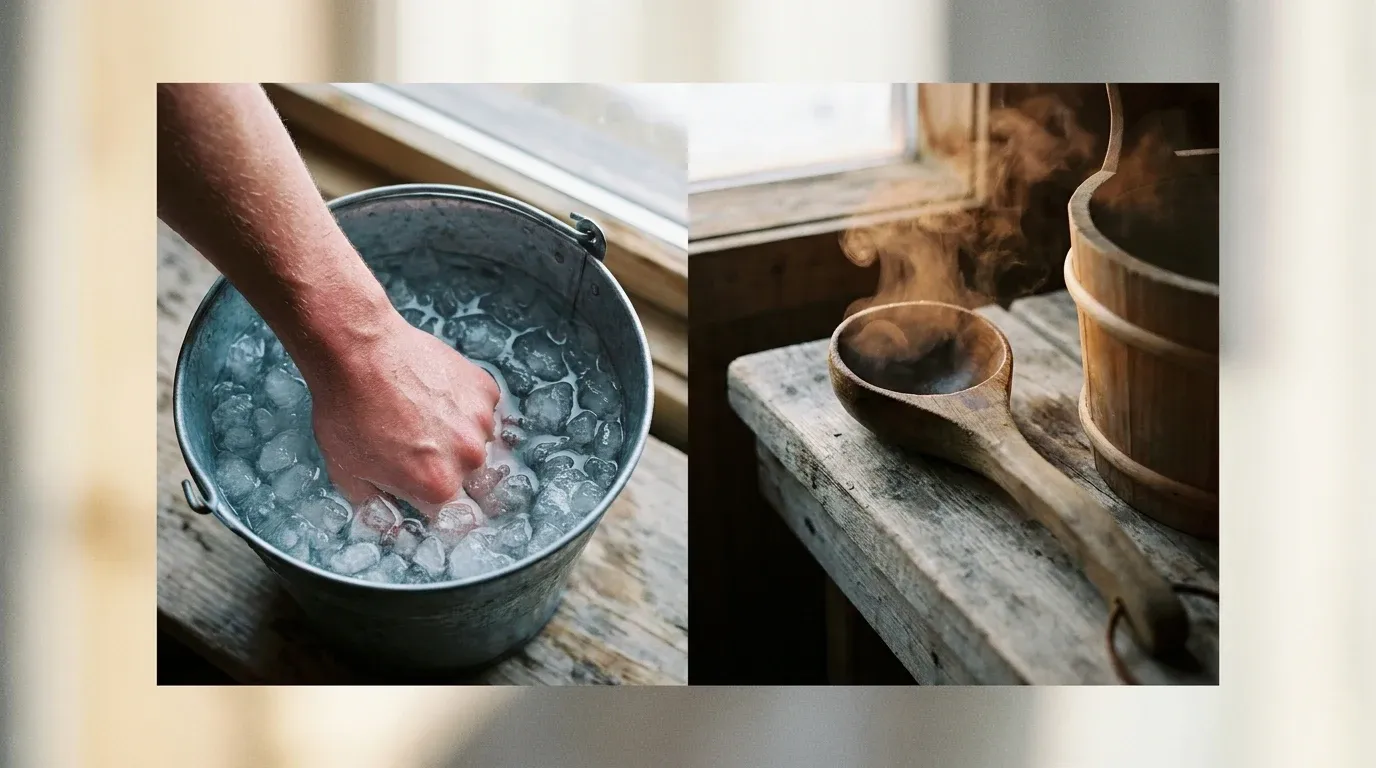
Cold water immersion (CWI) consistently outperforms other modalities when the primary goal is reducing delayed onset muscle soreness, commonly known as DOMS. Multiple pooled analyses confirm that immersion in water between 10°C and 15°C (50°F to 59°F) for 10 to 15 minutes significantly reduces perceived soreness in the 24 to 72 hours following intense exercise. The effect size is real and reproducible across team sport athletes, endurance athletes, and resistance-trained individuals.
High-temperature heat therapy, particularly sauna use at 80°C to 100°C (176°F to 212°F), tells a different story. The evidence points strongly toward heat's superiority for restoring neuromuscular function, preserving force output, and accelerating the return of muscle strength after high-intensity or heavy resistance efforts. Where cold blunts inflammation and soreness perception, heat appears to support the tissue repair and circulation patterns that allow your muscles to perform again sooner.
Cold Water Immersion: What It's Actually Good For
If your main complaint after training is soreness, and your main goal is feeling less destroyed the next day, cold water immersion is your tool. The mechanism involves vasoconstriction, reduced nerve conduction velocity, and a dampening of the local inflammatory response. This is exactly what makes it effective for DOMS, and exactly what makes it complicated in other contexts.
The anti-inflammatory effect is real. But inflammation isn't purely the enemy. It's also a signaling mechanism your body uses to initiate repair and adaptation. This is why the timing and context of cold exposure matters enormously.
CWI is most appropriate when:
- You need to manage soreness between back-to-back training days or competition days
- Your priority is subjective recovery and readiness, not long-term strength adaptation
- You're mid-season, mid-block, or in a phase where performance maintenance outweighs hypertrophy gains
- You're dealing with high training volumes and accumulating fatigue across multiple sessions
What CWI is less suited for is the post-training window when your goal is maximizing the training stimulus itself. Several studies suggest that habitual cold immersion after hypertrophy-focused sessions may blunt muscle protein synthesis and reduce long-term strength gains. It's a meaningful trade-off worth understanding before you make cold plunging a daily ritual.
Heat Therapy: When Function Matters More Than Soreness
Sauna use and other forms of high-temperature heat therapy work through an almost opposite pathway. Rather than suppressing the inflammatory environment, heat promotes vasodilation, increases blood flow to muscle tissue, supports growth hormone release, and activates heat shock proteins involved in cellular repair.
The functional recovery advantage is where heat separates itself. Meta-analyses focusing on strength and neuromuscular performance outcomes consistently show that heat exposure after intense resistance or power-based training helps restore force-generating capacity faster than passive rest or cold. If you're a strength athlete, a sprinter, or anyone whose next session demands you perform, not just move, heat may be the smarter choice.
Heat therapy is most appropriate when:
- Your priority is restoring muscle strength and power output before your next session
- You're in a hypertrophy or strength phase where preserving the anabolic signal matters
- You've completed a heavy compound session and need functional recovery within 24 to 48 hours
- You're managing general fatigue, stress load, or sleep quality alongside physical recovery
On that last point: heat exposure has shown consistent benefits for parasympathetic nervous system activation and sleep quality, both of which play a significant role in recovery. If stress and poor sleep are compounding your training fatigue, sauna use may offer a systemic benefit that cold doesn't replicate. This connects directly to broader recovery strategies covered in resources like Stress Management: What Actually Works and Too Much or Too Little Sleep Ages You Faster.
The Timing Problem: Why Using the Wrong Tool Hurts You
The most important takeaway from recent research isn't which modality is better. It's that choosing the wrong one at the wrong moment can actively undermine your specific recovery goal.
Use cold when you need functional strength recovery, and you may blunt the very repair processes you're trying to accelerate. Use heat when your main issue is crushing soreness before back-to-back sessions, and you're missing the most effective intervention available to you. These are not subtle differences. Across multiple studies, the gap in outcomes between the right and wrong modality for a given goal is statistically significant and practically meaningful.
Here's a simple framework for making the decision:
- Soreness is your primary problem, and the next session is within 24 to 48 hours: Use cold water immersion at 10°C to 15°C for 10 to 15 minutes.
- Functional strength or power recovery is your priority: Use sauna or heat therapy for 15 to 20 minutes at high temperature.
- You're in a peak hypertrophy block and want to protect the training stimulus: Lean toward heat or passive rest over cold immersion.
- You're mid-competition, managing soreness across multiple days: Cold is your primary tool, with heat as a secondary option for evenings when performance demands are lower.
What This Means for How You Structure Recovery
Recovery isn't a passive process that happens to you. It's a structured part of your training that responds to the choices you make in the hours after you train. That means recovery modalities deserve the same intentionality you bring to programming your sets, reps, and loading.
If you're building a serious training block, whether you're restarting after a break or restructuring your approach after a plateau, recovery decisions need to align with the phase you're in. A structured reset of your gym routine is the right time to audit your recovery tools alongside your training variables.
Nutrition also plays a role that can amplify or limit what either modality can do. Magnesium, for example, is involved in muscle relaxation, sleep quality, and recovery from exercise stress. If you haven't examined your intake, understanding which form of magnesium actually works for you is a practical addition to any recovery stack.
And if you're working with a coach or considering adding one, make sure recovery protocols are part of the conversation. Not every trainer has a clear evidence-based position on cold versus heat therapy, and it's worth raising. Knowing which questions to ask in a training consultation helps you evaluate whether the guidance you're getting is actually grounded in current evidence.
Practical Considerations Before You Commit to Either
Both modalities carry some practical requirements worth being honest about. Cold water immersion at effective temperatures requires either access to a cold plunge facility, a chest freezer setup, or a bath with enough ice to consistently hit the 10°C to 15°C range. Home setups are increasingly accessible, but there's a real cost and effort threshold involved.
Sauna access is similarly dependent on your situation. Many gyms include dry sauna access in standard memberships. Standalone sauna sessions at wellness facilities in the US typically run $20 to $50 per session, with memberships available in the $80 to $150 per month range at most major urban facilities. Home infrared saunas vary widely, from $800 for entry-level portable units to $3,000 and above for permanent installations.
Neither tool needs to be used every day or after every session. The most evidence-supported approach is intentional use, deployed when it matches your specific recovery need for that training phase. Overusing either, particularly cold during a hypertrophy phase, creates diminishing returns or counterproductive effects.
The Bottom Line
Cold reduces soreness. Heat restores function. Those are different goals, and the distinction is now supported by enough research that it should change how you make recovery decisions.
Stop asking which one is better in the abstract and start asking which one serves your specific goal in your current training phase. That question has a clear, evidence-based answer. And getting it right consistently is what separates athletes who recover well from those who just recover.